In many modern frameworks, life is often understood through separation. The individual is seen as independent, self-sufficient, and distinct from others. Success is personal, failure is personal, and identity is treated as something owned rather than shared. Yet, within the Igbo worldview, a different understanding takes shape, one that challenges this separation at its core. It begins with a simple but profound idea: nothing stands alone.
This philosophy presents life as a network of relationships where every being exists in connection with others. The human person is not an isolated unit but part of a wider structure that includes family, community, the spiritual realm, and the natural world. Identity, in this sense, is not constructed in isolation but emerges through interaction, recognition, and participation.
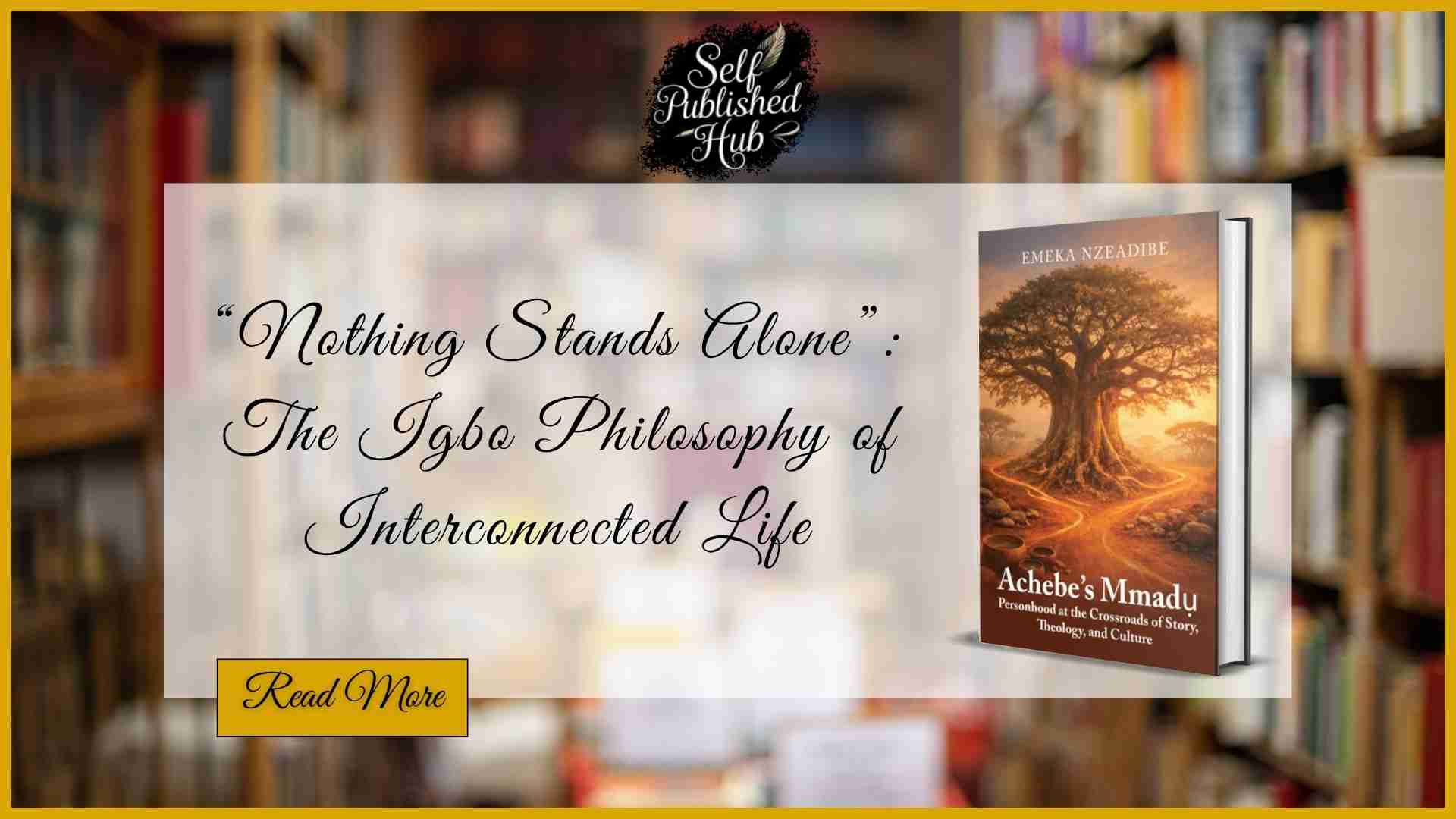
The concept explored in Achebe’s Mmadụ: Personhood at the Crossroads of Story, Theology, and Culture by Emeka Nzeadibe brings this vision into sharp focus. It reveals a worldview where existence itself is relational. To exist is to be connected. To act is to affect others. To grow is to grow within a shared environment that shapes and responds to every individual.
This interconnected perspective transforms how life is understood. Relationships are not secondary to existence; they are foundational. Family ties, communal bonds, and shared traditions all contribute to shaping the human person. One does not simply belong to a community. One becomes who they are through that belonging.
This way of thinking also extends beyond human relationships. The visible and invisible are not separate domains. The spiritual dimension remains actively involved in daily life, influencing direction, purpose, and meaning. The human person stands within a web that includes both physical presence and unseen forces, forming a complete and integrated understanding of existence.
Such a framework carries significant implications for responsibility. Actions are never isolated. They ripple outward, affecting the balance of relationships within the community and beyond. This creates a strong sense of accountability, not enforced from outside but rooted in the awareness that one’s life is tied to the lives of others. Harmony becomes essential, not as an ideal but as a necessity for maintaining balance within this interconnected system.
This philosophy also reshapes the idea of success. It is no longer measured solely by personal achievement or individual gain. Instead, success is understood through contribution, recognition, and the ability to sustain meaningful relationships. A person is valued not only for what they accomplish but for how they engage with others and uphold shared values.
At the same time, this interconnected vision does not erase individuality. It refines it. The individual still acts, decides, and grows, but always within the context of relationships that give those actions meaning. Personal identity becomes deeper, not weaker, because it is anchored in something larger than the self.
What makes Achebe’s Mmadụ: Personhood at the Crossroads of Story, Theology, and Culture particularly compelling is its ability to bring this philosophy into contemporary discussion. Through careful exploration of Igbo thought and its expression in Achebe’s literary world, the book offers a perspective that speaks directly to modern challenges. In a time marked by isolation, fragmentation, and disconnection, the idea that nothing stands alone provides a powerful alternative.
It invites a reconsideration of how people define themselves, how they relate to others, and how they understand their place in the world. It suggests that meaning is not found in separation but in connection. It reminds readers that identity is not something built alone but something formed together.
To embrace this philosophy is to recognize that life is shared at every level. Every decision, every relationship, and every moment exists within a broader network of meaning. Nothing stands alone because nothing was ever meant to.
For More Details: https://www.librarything.com/profile/EmekaNzeadibe