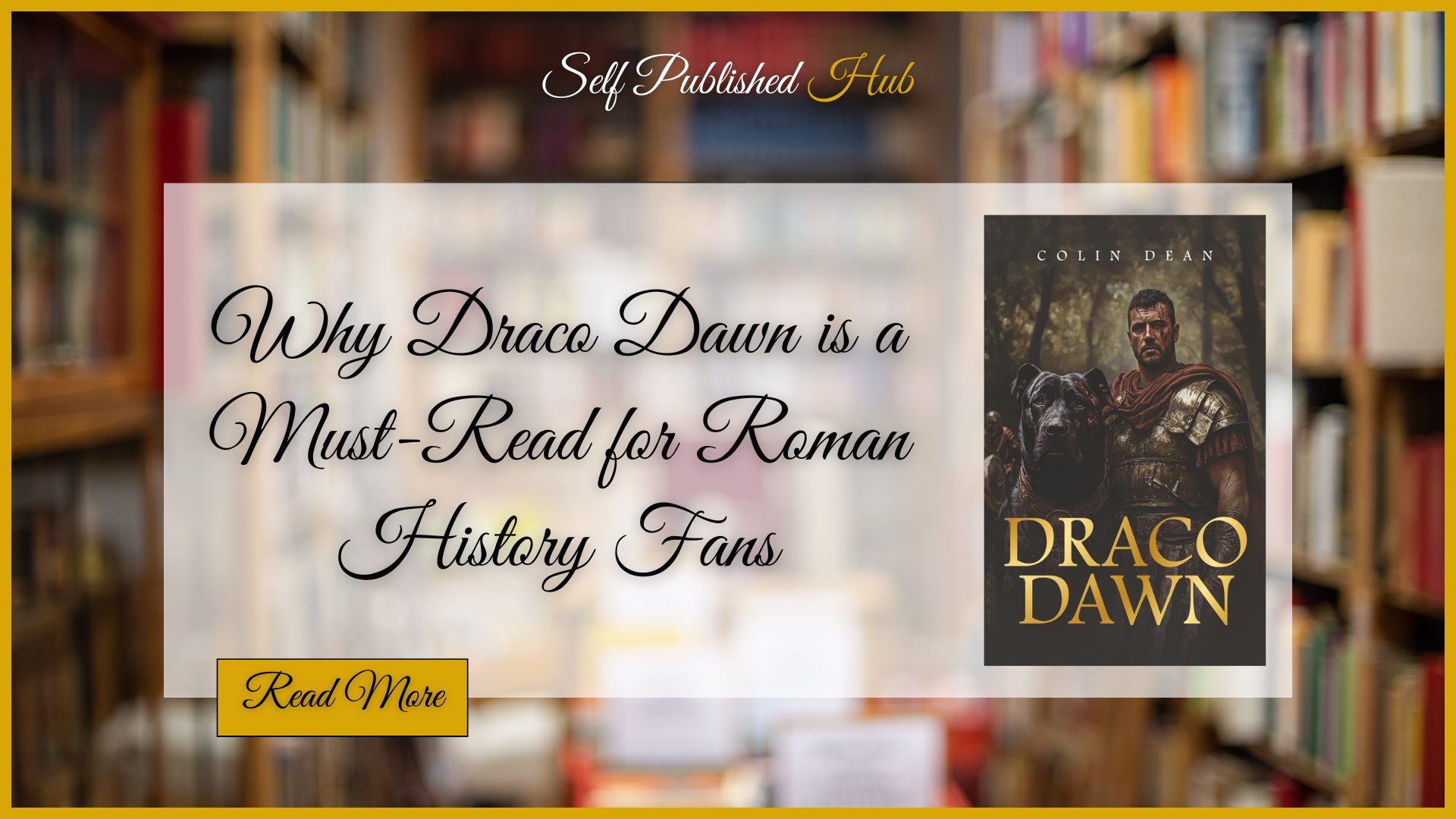
The ancient world has long captured the imagination of readers. But rarely is it portrayed with the grit, urgency, and human cost. Draco Dawn is here to change the game. This is the first book in Colin Dean’s new Roman trilogy. Set during the savage Dacian Wars in the late first century AD, this historical fiction novel goes far beyond polished togas and gleaming marble. It plunges the reader headfirst into muddy battlefields, fractured loyalties, and the unforgiving mountains of enemy territory. If you’re a fan of Roman history, military storytelling, or survival drama, Draco Dawn deserves a top spot on your reading list.
We meet Titus Livius Decimus, a Roman scout sent on a dangerous mission directly by Emperor Domitian. His orders? Infiltrate enemy lines, find the source of Dacian gold, and destabilise their resistance from within. But when the Roman army is shattered in a catastrophic ambush during the crossing of the Carpathian Mountains, Titus finds himself cut off from command, surrounded by brutal enemies, and forced to survive on instinct, training, and courage.
What sets Draco Dawn apart from many other Roman novels is its ability to blend large-scale historical context with deeply personal, emotionally grounded storytelling. Titus is not simply a brave soldier. He is a man of conflicted heritage, raised with discipline but haunted by past violence and personal sacrifice. Through him, Dean explores what it means to remain loyal in a world where orders contradict morality, and survival often requires breaking rules.
Titus’s war dog Lakon deserves special mention. Lakon is essential to the story. He is a trained Canis Molossus, massive and battle-scarred, but also loyal, intelligent, and protective to the point of death. His presence adds tension, heart, and an emotional thread that keeps readers hooked. Some of the most powerful scenes involve Lakon defending Titus or mourning his loss, proving that the bond between man and beast can be as deep and compelling as any human relationship.
Dean’s research shows on every page. For example, the Roman legions are portrayed as highly organised, flawed, and sometimes brutal machinery of empire. The author’s descriptions of Roman camps, testudo formations, engineering feats like floating bridges, and the structure of military ranks add incredible depth to the narrative. The Dacians, too, are not reduced to stereotypes. Their cultural pride, war tactics, and spiritual beliefs are given weight and nuance, especially through characters like King Decebalus and the wolf-warrior priesthood.
Perhaps the most harrowing section of the book is the ambush at Tapae. Dean builds this set piece with slow-burning tension that pays off in one of the most immersive and violent battle scenes you’re likely to read this year. The falling trees, flying logs, and collapsing Roman formations are not only visually gripping but also emotionally devastating. It is not victory that defines this story, but loss and the fragile human will to endure it.
At 50,000 words, Draco Dawn is a substantial read, but the pacing rarely drags. Dean balances action with reflection, world-building with character work. The result is a narrative that feels grounded, lived-in, and emotionally rich. Readers with a background in Roman history will appreciate the accuracy, while newcomers will find the clarity and structure easy to follow.
Draco Dawn is not just another story of Roman conquest. It is a story of survival, honour, and quiet rebellion. With unforgettable characters, authentic detail, and real emotional stakes, Colin Dean has crafted a historical novel that earns its place alongside the best of the genre. It is bold, brutal, and deeply human. And it is only the beginning.
This book is a must-read for anyone who enjoys historical fiction, particularly that set in the Roman Empire. Order your copy on Amazon: https://www.amazon.co.uk/dp/1968296484/