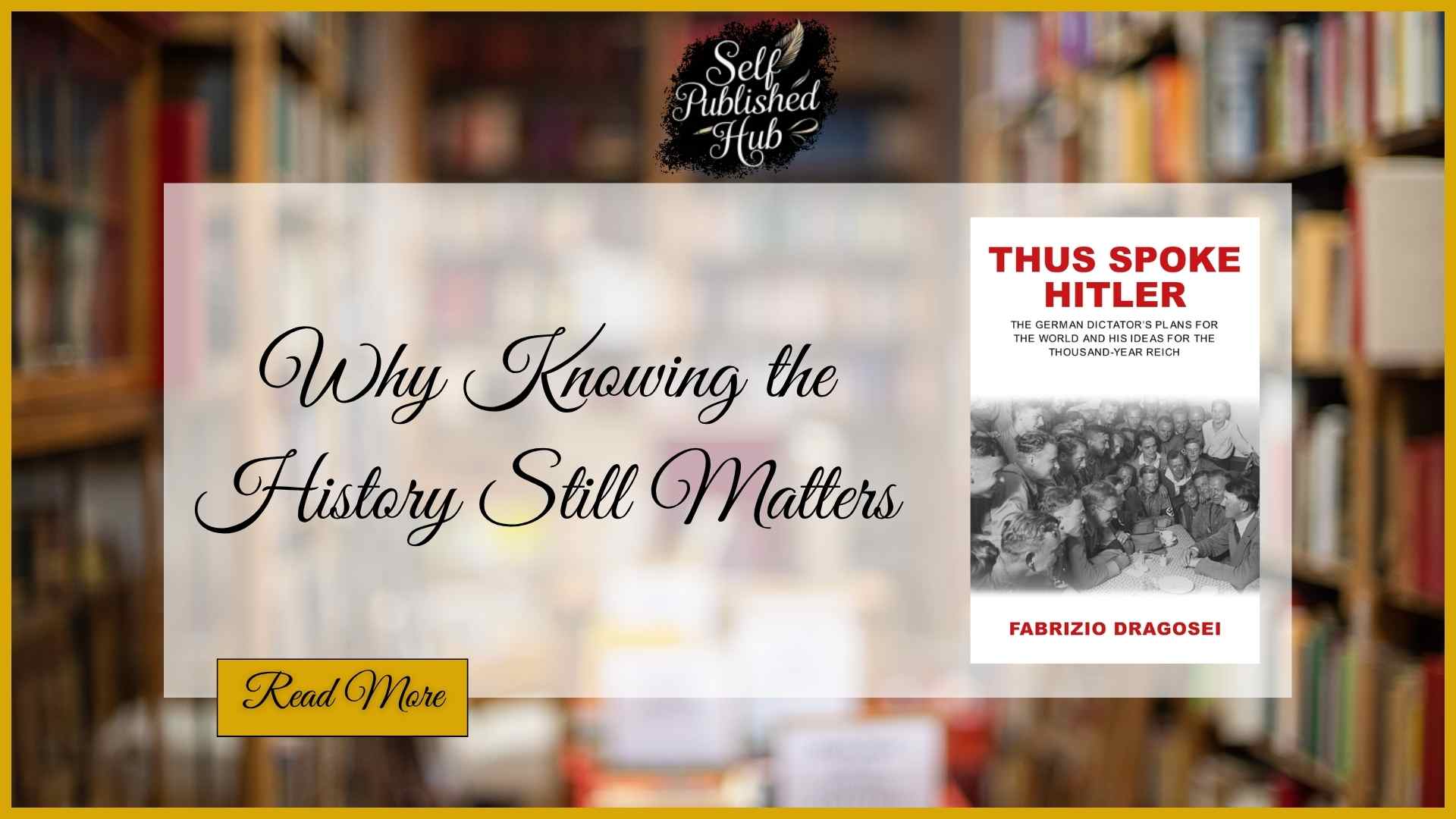
Reading Thus Spoke Hitler by Fabrizio Dragosei is an unsettling experience, not because it recounts unfamiliar horrors, but because it exposes how easily language and authority can reshape reality. This is not a book about monsters. It is a book about how ideas become systems and how systems consume societies. Dragosei does not rely on shock or sensationalism. Instead, he presents a carefully documented portrait of a regime built step by step through persuasion, repetition, and the steady erosion of moral resistance.
What makes Dragosei’s work so powerful is its focus on Hitler’s own words. Rather than relying solely on retrospective judgment, the book allows readers to witness the progression of thought as it happened. Hitler’s speeches, conversations, and directives reveal a man who believed absolutely in his mission and who repeated his beliefs until they became unquestioned truths within the state. These words were not isolated outbursts. They formed a continuous stream of ideological reinforcement that shaped policy, justified violence, and silenced doubt. By placing these statements within their historical context, Dragosei shows how language functioned as a governing tool rather than mere propaganda.
The book also highlights a critical lesson about complacency. Many of Hitler’s early actions succeeded because they were tolerated. Each concession made in the name of peace normalized the next escalation. Political leaders hesitated, institutions adjusted, and ordinary citizens adapted. Dragosei demonstrates that authoritarianism rarely arrives fully formed. It grows through incremental acceptance, through the gradual redefining of what is considered normal, acceptable, or inevitable. The danger lies not only in overt brutality but in the quiet moments when resistance seems inconvenient or unnecessary.
Equally important is the book’s examination of personal responsibility. Thus Spoke Hitler makes clear that systems do not operate independently of human choices. Bureaucrats, generals, intellectuals, and citizens all played roles, whether through action, compliance, or silence. Dragosei does not present history as fate but as consequence. This perspective challenges readers to reflect on their own assumptions about power and obedience.
In an age where political rhetoric once again dominates public life, Thus Spoke Hitler by Fabrizio Dragosei serves as a reminder that words shape consequences. The book encourages readers to listen critically, question certainty, and resist narratives that divide humanity into absolutes. Its relevance lies not in comparison but in awareness, in understanding how easily language can be used to narrow thought, justify exclusion, and prepare the ground for irreversible harm.
For readers who want to explore these events through Hitler’s own documented statements and the rare archival discoveries presented in the book, Thus Spoke Hitler by Fabrizio Dragosei offers a clear and revealing account of how warnings were ignored until it was too late.
Book available on https://www.amazon.com/dp/B0FT68K2C2/