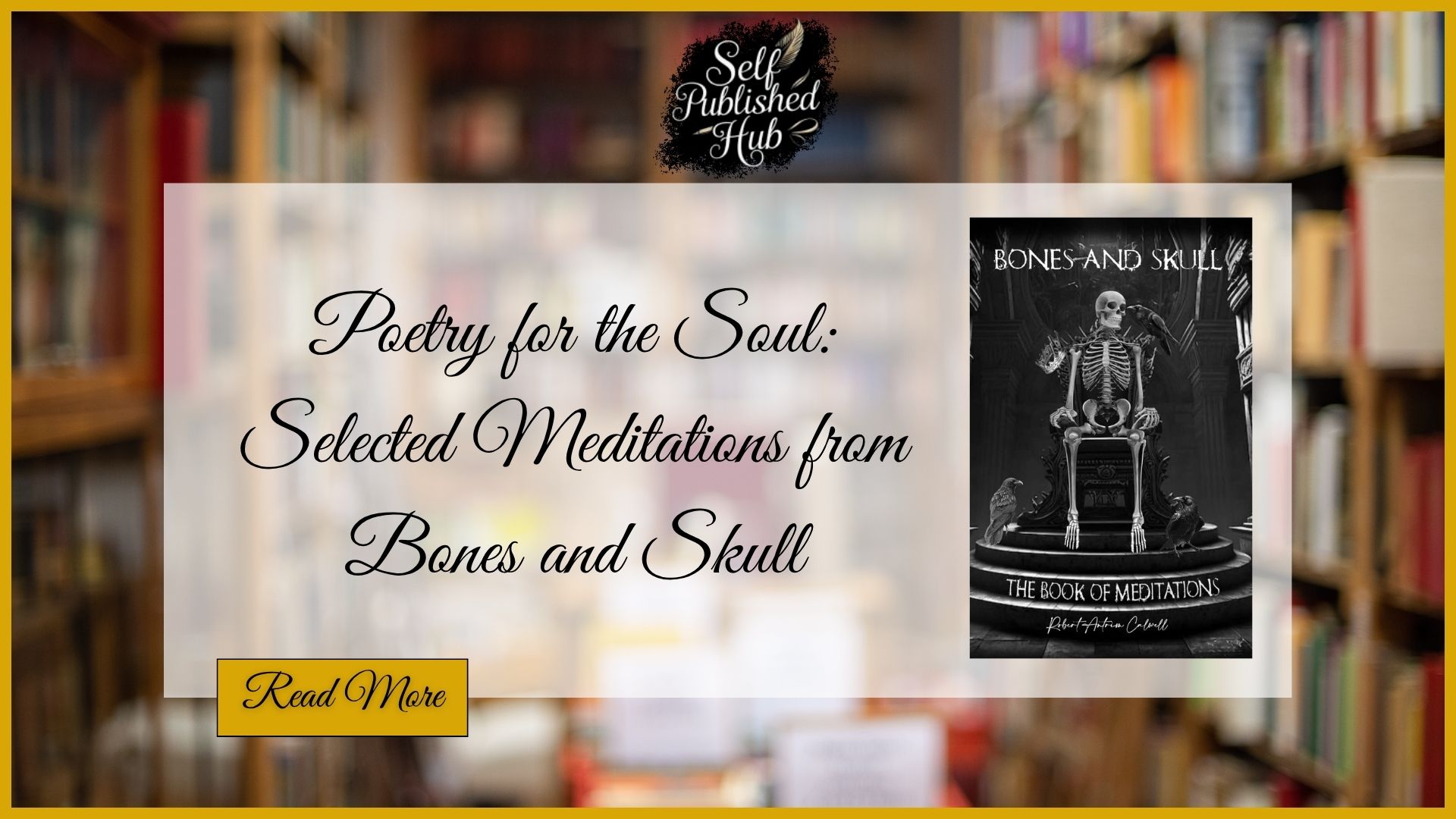
In a fast-moving world, true moments of reflection can feel increasingly rare. However, poetry has always offered a place to pause, breathe and reconnect with the deeper questions of life and rekindled our consciousness. In regard to this, BONES AND SKULL: The Book of Meditations by Robert Antrim Calwell invites readers into a richly imagined world where meditation, storytelling, folklore and poetry intertwine.
This is not a conventional poetry collection. It is a journey through memory, mortality, redemption, innocence and hope. Throughout the book, readers encounter recurring symbols of ravens, mountains, rivers, children, skulls and stars that serve as guides through both darkness and light.
At the heart of the collection lies the tale of The Weaver, a mysterious figure whose story unfolds on Weaver’s Mountain above Teardrop Falls. Alongside this narrative are meditative poems that encourage readers to contemplate loss, healing and to endure the possibility of transformation.
One of the book’s most touching passages comes from Every Heart To Pass:
Why must the old build many trails,
When Fairies write the book of tales.
Simple Gods watch all that share,
The Children play with little care.
The above lines from Every Heart To Pass beautifully capture the innocence and wonder that flow throughout the collection, which reminds us that wisdom can be found not only in age and experience, but also in childlike curiosity and imagination.
The world of Bones and Skull is filled with beauty, but it never ignores suffering. Throughout the poems, the book explores how compassion and redemption can emerge from pain. This theme is especially powerful in the story of The Children, whose innocence and courage ultimately transform the fate of Weaver’s Mountain.
The haunting presence of The Weaver is introduced through some of the book’s most memorable imagery:
The Weaver lives in mountain’s care,
With Horsenhead, his servant mare.
In dusken light The Children’s steps,
But Weaver’s madness never rests.
As readers journey deeper into the lines, the poetry and metaphor within it become both darker and more profound. This reflects the challenges that every soul must face. Even in its darkest moments, the book stays hopeful, as a particularly powerful stanza states:
Little dreams that see tomorrow,
Caught in threads of hanging sorrow.
In just two lines, Calwell captures the fragile balance between fear and hope, loss and perseverance. It is this emotional depth that makes the collection resonate long after the final page.
As the narrative unfolds, redemption becomes a central theme. The Children face fear, sacrifice and heartbreak, yet continue to believe in a better future. Their story ultimately reminds readers that healing is possible even after profound suffering.
As the book concludes, its closing meditations offer a vision of renewal that lingers in the imagination:
Heaven holds the child’s crocus,
Hearts that never lose their focus.
Ravens watch at Teardrop Falls,
On Weaver’s Mountain, Bones And Skull.
These verses reflect the spirit of the entire collection and remind us that even in a world marked by loss, there remains beauty worth protecting and goodness worth pursuing.
What makes BONES AND SKULL: The Book of Meditations unique is its ability to blend poetic meditation with mythic storytelling. As you explore these poems, you’ll find yourself not just reading words but stepping into a vibrant world where each poem holds significance and every line and stanza guides you toward a deeper understanding and purpose.
For readers who appreciate reflective poetry, allegorical tales and spiritual exploration, Robert Antrim Calwell’s work offers an experience that is both imaginative and deeply personal. The book encourages us to slow down, listen more carefully and rediscover the wonder that often hides beneath the surface of everyday life.
Whether you are seeking inspiration, comfort or simply a thoughtful escape from the noise of modern life, BONES AND SKULL: The Book of Meditations offers a collection of meditations that linger in the mind and speak directly to the soul.