Across mist-covered hills and quiet woodland clearings, stone circles have long stirred the imagination. They stand as silent witnesses to a distant past, their purpose debated for centuries. Popular culture often paints them as sites of sacrifice, secret rites, and mystical ceremonies led by cloaked figures under moonlit skies. Yet, when examined through archaeological evidence, the truth becomes both more grounded and, in many ways, more intriguing.
Stone circles date primarily to the Neolithic and early Bronze Age, roughly between 3000 and 1500 BCE. These monuments appear across Britain, Ireland, and parts of Europe, often positioned with remarkable precision in relation to the landscape. Many align with solar or lunar events, particularly solstices and equinoxes. This has led researchers to conclude that they were not random constructions but carefully planned spaces tied to time, season, and environment.
The myth of constant ritual sacrifice at these sites has little solid evidence behind it. Early antiquarians and later Victorian writers often exaggerated or invented such practices, influenced by romantic ideas of druids and ancient pagan religions. Archaeology has uncovered very few remains that support widespread sacrificial activity within stone circles. Instead, findings suggest gatherings, ceremonies linked to seasonal change, and possibly communal observances that brought people together rather than divided them through fear.
What makes stone circles fascinating is not what they confirm, but what they leave open. Their builders left no written records. Meaning must be drawn from alignments, artefacts, and surrounding features such as ditches, banks, and nearby settlements. Some circles appear to have been used over long periods, adapted by different generations who may have interpreted them in evolving ways.
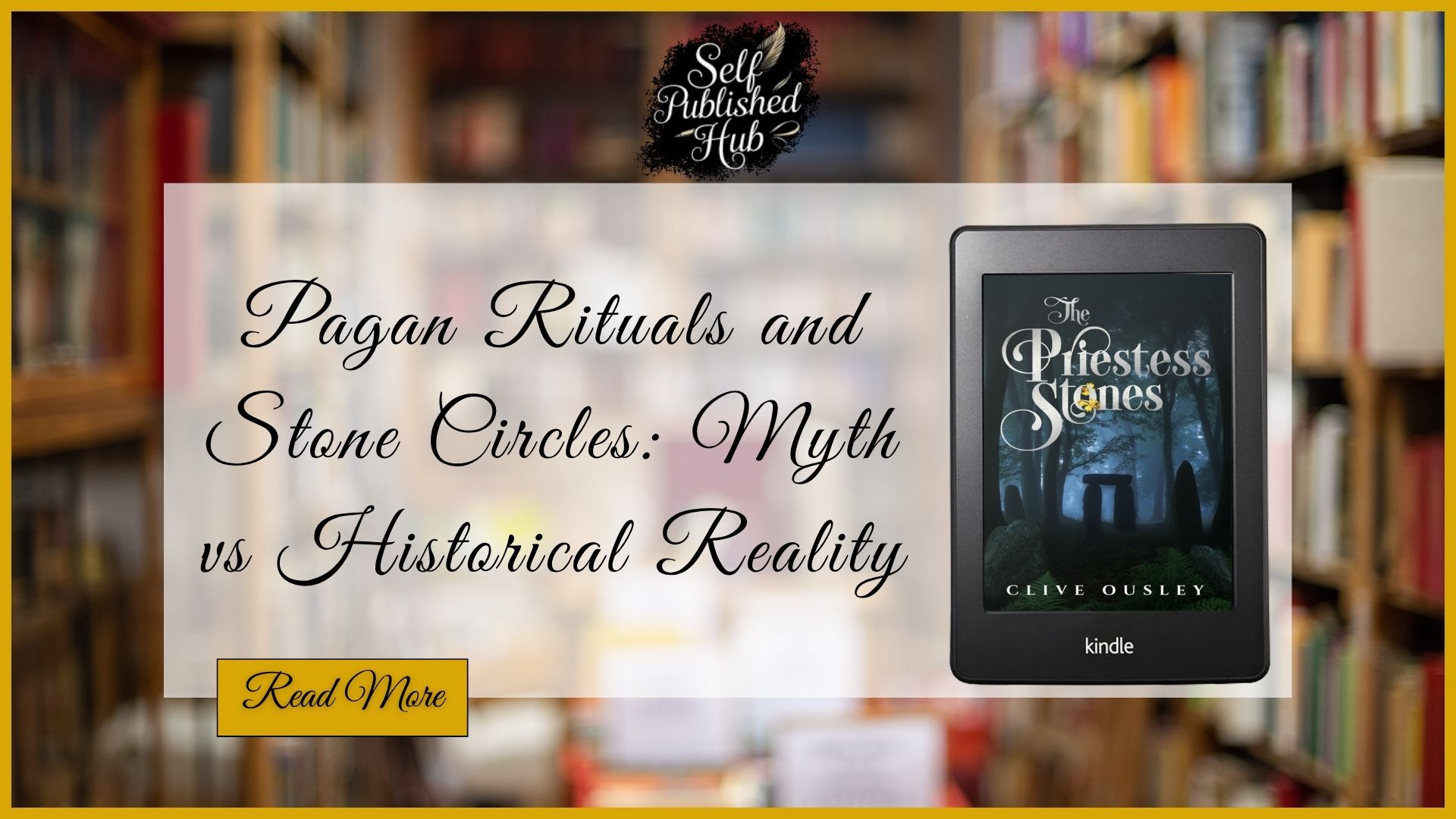
This tension between myth and reality forms the beating heart of The Priestess Stones by Clive Ousley. The novel captures the allure of these ancient monuments while grounding the story in the uncertainties that surround them. A hidden manuscript, a mysterious stone circle, and fragments of Latin text set the stage for a narrative that explores both the academic and the imagined. The story does not simply present stone circles as relics of the past. It treats them as living puzzles that continue to shape those who seek them.
One of the most compelling aspects of the book is how it reflects the dual nature of interpretation. On one side lies careful investigation, driven by method and evidence. On the other stands belief, shaped by symbolism, personal conviction, and the human need to find meaning in the unknown. This balance mirrors the real world, where archaeological reasoning coexists with centuries of storytelling.
The figure of the priestess within the narrative adds another layer to this exploration. Historically, there is limited evidence for organised priesthoods associated with stone circles in Britain. However, the idea of individuals acting as spiritual guides or custodians of sacred spaces is not implausible. The novel uses this possibility to deepen its mystery, presenting a character whose beliefs challenge the rigid structures of her time.
The Priestess Stones taps into that question with precision. It invites readers to consider whether the line between myth and reality is as clear as it seems. The story suggests that even when evidence is scarce, the search itself holds value. Each clue, each interpretation, brings us closer not only to understanding ancient societies but also to understanding our own fascination with them.
In the end, stone circles endure not because they provide clear answers, but because they resist them. They challenge assumptions, inspire investigation, and fuel imagination. That enduring mystery is exactly what makes Clive Ousley’s novel so engaging. It does not claim to solve the past. It invites readers to step into it, question it, and perhaps see it in a new light.
Read this book now, available on Amazon: https://www.amazon.co.uk/dp/B0G3XVSQDJ?.