When society begins to fracture, the instinct to restore order becomes immediate and urgent. Laws tighten, authority expands, and control replaces choice. Martial law is often presented as the final safeguard, a necessary step to prevent total collapse. But the question remains difficult and deeply uncomfortable. Is it ever truly justified, or does it create a different kind of danger?
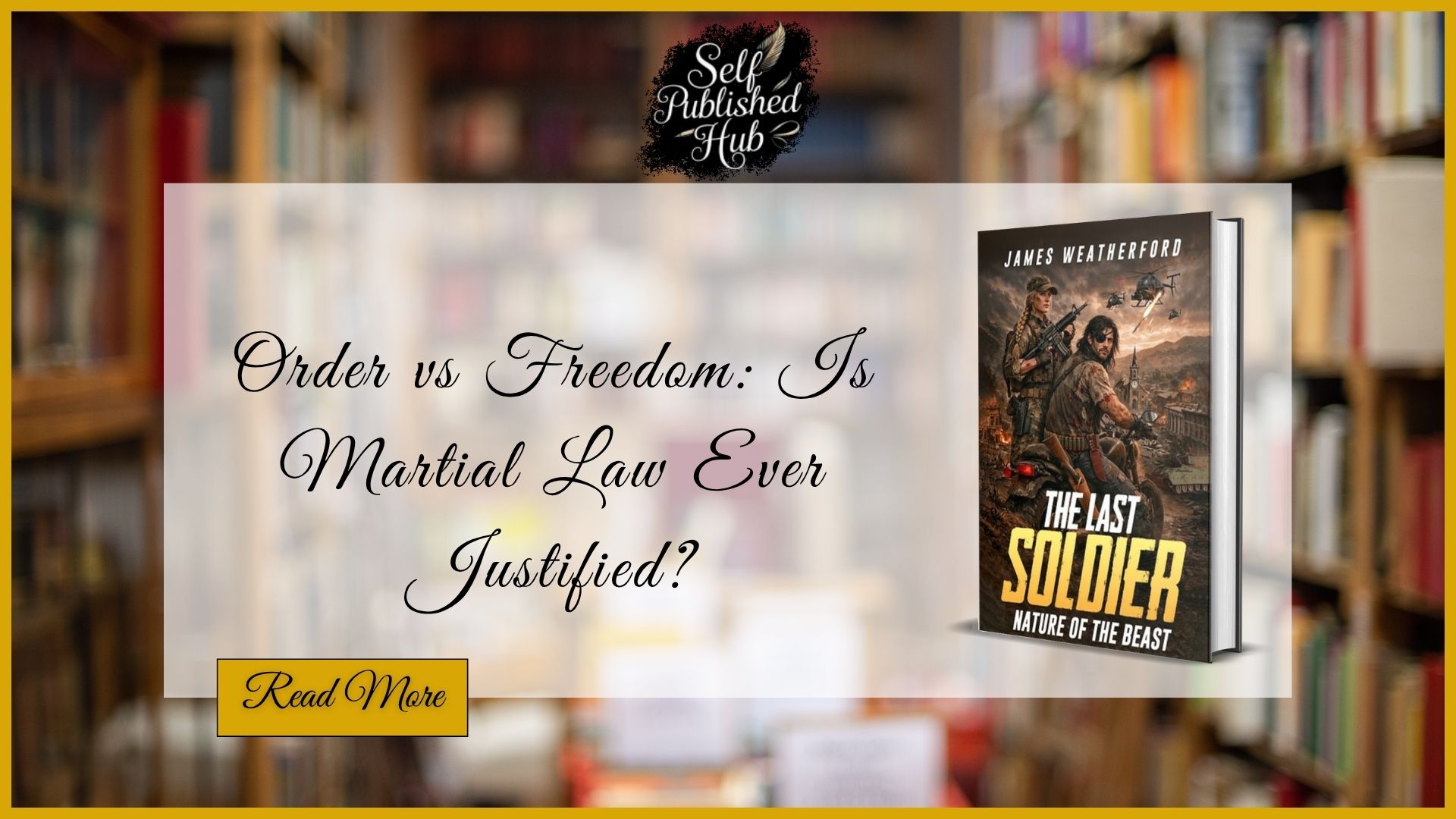
The Last Soldier: Nature of the Beast by James Weatherford places this question at the center of its world. In a society overwhelmed by overpopulation, resource scarcity, and instability, governments impose martial law to regain control. At first, the intention appears logical. Without structure, chaos would spread unchecked. Food distribution would fail. Violence would escalate. The system steps in to prevent exactly that.
Martial law, in the novel, does not simply reform order. It reshapes society. Citizens are relocated, monitored, and stripped of autonomy. Entire populations are concentrated into controlled zones, where survival depends on compliance. The promise of safety comes with a cost. Freedom becomes secondary, almost irrelevant, in a system focused on efficiency and survival.
Order offers stability, but it demands control. Freedom allows individuality, but it risks disorder. In extreme conditions, the balance between the two becomes nearly impossible to maintain. The novel shows how quickly that balance can tip. What begins as a temporary measure evolves into a permanent structure, one that prioritizes control over humanity.
A key insight from the story is that martial law is rarely neutral. It reflects the intentions and limitations of those enforcing it. Leadership decisions shape how power is used. In The Last Soldier, authority is not always exercised with fairness. Some within the system exploit their position, while others struggle to uphold integrity. This inconsistency creates an environment where trust erodes, even as control increases.
Another critical aspect is the psychological impact. When people lose the ability to make choices about their own lives, frustration builds. Compliance may be forced, but it does not equal acceptance. Over time, resentment grows beneath the surface. The very system designed to prevent unrest can become the source of it.
The novel also raises an important point about dependency. Under martial law, individuals rely on centralized systems for basic needs. Food, shelter, and movement are all controlled. While this ensures short term survival, it reduces self-sufficiency. If the system falters, those dependent on it are left vulnerable. In this way, control can weaken resilience rather than strengthen it.
Still, the argument for martial law cannot be dismissed entirely. In situations where infrastructure collapses and immediate coordination is required, decisive authority can prevent greater harm. Without it, the breakdown might accelerate beyond recovery. The challenge lies in determining when such measures are necessary and how long they should remain in place.
The Last Soldier: Nature of the Beast does not present a simple answer. Instead, it reveals the consequences of leaning too heavily toward control. It shows that order achieved through restriction can preserve life, but it can also strip away what makes that life meaningful.
The question, then, is not just whether martial law is justified. It is whether it can be implemented without losing sight of the people it is meant to protect.
In a world tested to its last limits, the line between protection and oppression becomes dangerously thin. This novel forces readers to confront that reality, offering a powerful reminder that maintaining order is only part of the equation. Preserving humanity within that order is the greater challenge.
Read this book now on Amazon: https://www.amazon.com/dp/B009H66YQM