Few political leaders have generated as much discussion, analysis and historical interest as Fidel Castro. Over the course of more than six decades, his speeches, interviews, public statements and political reflections addressed an extraordinary range of subjects, including revolution, socialism, sovereignty, education, culture, economics, international relations, leadership, ethics and social justice. Together, these contributions created a vast body of political thought that continues to be studied worldwide.
Yet for many readers, researchers and students, one question remains: How can such an extensive collection of ideas be organized in a way that makes them accessible and meaningful?
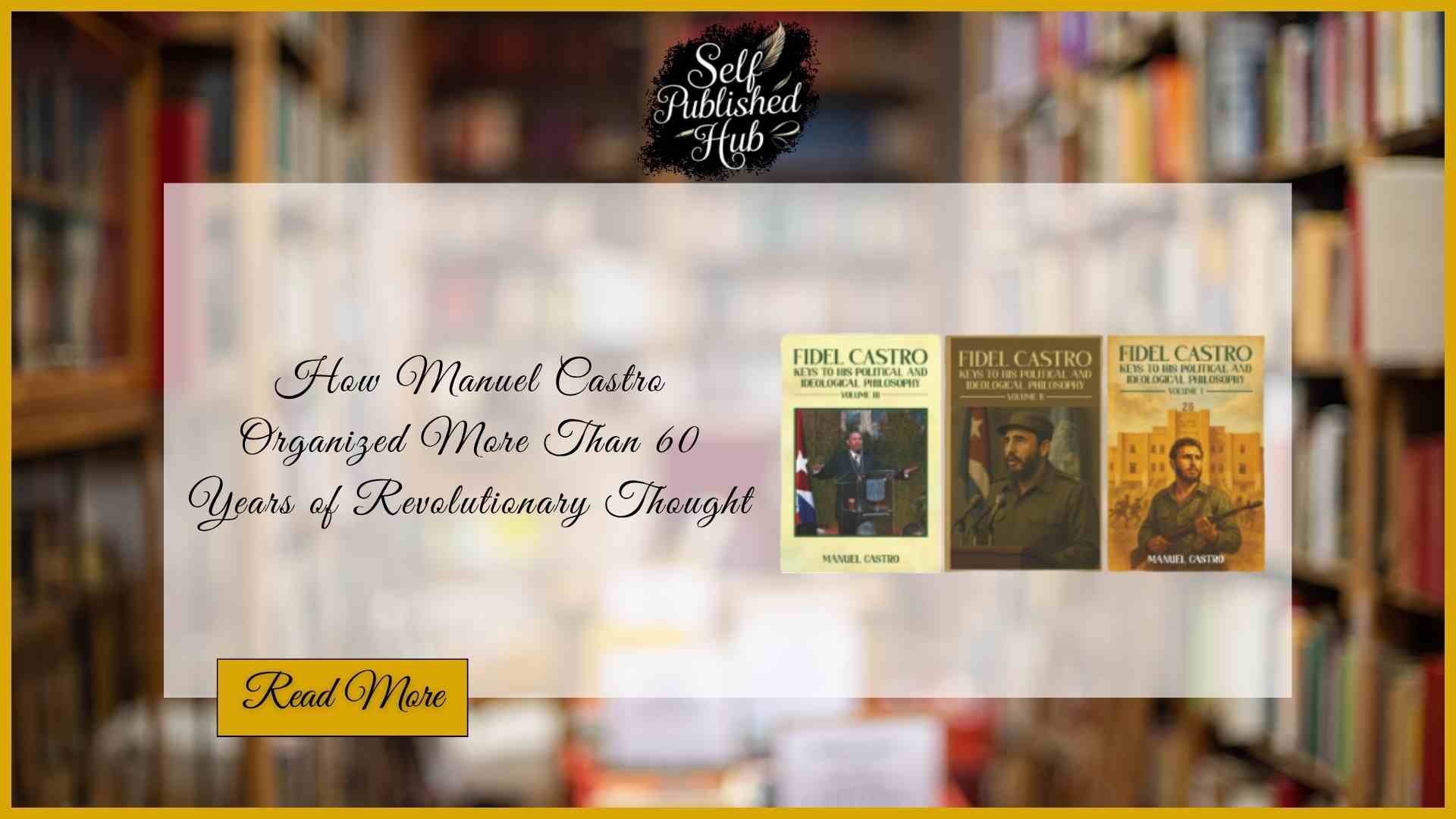
Manuel Castro provides a compelling answer through his three-volume work, Fidel Castro: Keys to His Political and Ideological Philosophy. Rather than presenting Fidel Castro’s ideas as a simple chronological history, Manuel Castro developed a structured framework that organizes decades of revolutionary thought into clearly defined themes and concepts.
The result is a unique intellectual resource that helps readers understand not only what Fidel Castro said, but also how his ideas connected to form a broader political and ideological vision.
One of the greatest challenges in studying Fidel Castro is the sheer volume of material available. Across decades of leadership, his speeches addressed changing national and international circumstances while continually returning to key principles. Themes such as independence, sovereignty, equality, education, international solidarity and revolutionary consciousness appeared repeatedly, often in different contexts and with evolving applications.
Without organization, these ideas can seem overwhelming.
Recognizing this challenge, Manuel Castro approached Fidel Castro’s thought through what the books describe as a system of key variables and thematic categories. Instead of focusing solely on historical events, he identifies and examines the concepts that shaped Castro’s worldview. This method allows readers to study individual themes while also understanding their relationship to the larger ideological framework.
Fidel Castro: Keys to His Political and Ideological Philosophy (Volume I) introduces many of the foundational ideas that defined Fidel Castro’s political and ideological philosophy. Readers encounter concepts such as revolution, socialism, culture, education, values, patriotism, sovereignty, public health and internationalism. These themes provide insight into how Castro viewed social transformation and national development.
Fidel Castro: Keys to His Political and Ideological Philosophy (Volume II) expands the analysis into broader political and global subjects. Topics such as capitalism, imperialism, democracy, poverty, development, communication, human rights, nationalism and international institutions help readers understand Castro’s interpretation of world affairs and his perspective on global challenges.
Fidel Castro: Keys to His Political and Ideological Philosophy (Volume III) completes the project by exploring additional concepts, including political science, ethics, justice, freedom, globalization, revolutionary consciousness and the “Battle of Ideas.” It also includes a valuable inventory of Fidel Castro’s speeches and a reflection on the continuing relevance of his political thought in the twenty-first century.
What makes Manuel Castro’s work particularly important is its accessibility. Researchers can use the trilogy as a reference source to explore specific concepts, while students and general readers can follow a clear path through a complex body of political thought. By organizing ideas thematically rather than chronologically, the books make it easier to identify recurring principles and understand how those principles evolved over time.
The trilogy also highlights the remarkable consistency of certain themes throughout Fidel Castro’s public life. Concepts such as sovereignty, education, social justice, national independence and collective responsibility recur throughout his political philosophy, underscoring their central role.
For historians, political scientists, educators and readers interested in revolutionary movements, Fidel Castro: Keys to His Political and Ideological Philosophy offers far more than a collection of speeches. It provides a carefully structured guide to understanding more than 60 years of revolutionary thought.
Through rigorous organization and thematic analysis, Manuel Castro has transformed a vast historical archive into a comprehensive resource that helps readers explore the ideas, principles and intellectual legacy of one of the most influential political figures of the modern era.
Discover the framework. Start reading today.
Volume I: https://www.amazon.com/dp/197213454X
Volume II : https://www.amazon.com/dp/1972134558
Volume III : https://www.amazon.com/dp/1972134566