What actually makes a revolution succeed?
Is it sheer determination? Strong leadership? The right moment in history? Or something deeper, something less obvious?
It is a question that has fascinated historians, political thinkers and curious minds for decades. And if there’s one figure who spent a lifetime exploring the answer in real time, it’s Fidel Castro.
But here’s the interesting part: Castro didn’t just lead a revolution, he studied it, shaped it and refined it as it unfolded. His approach wasn’t random. It followed patterns, principles and a clear ideological framework.
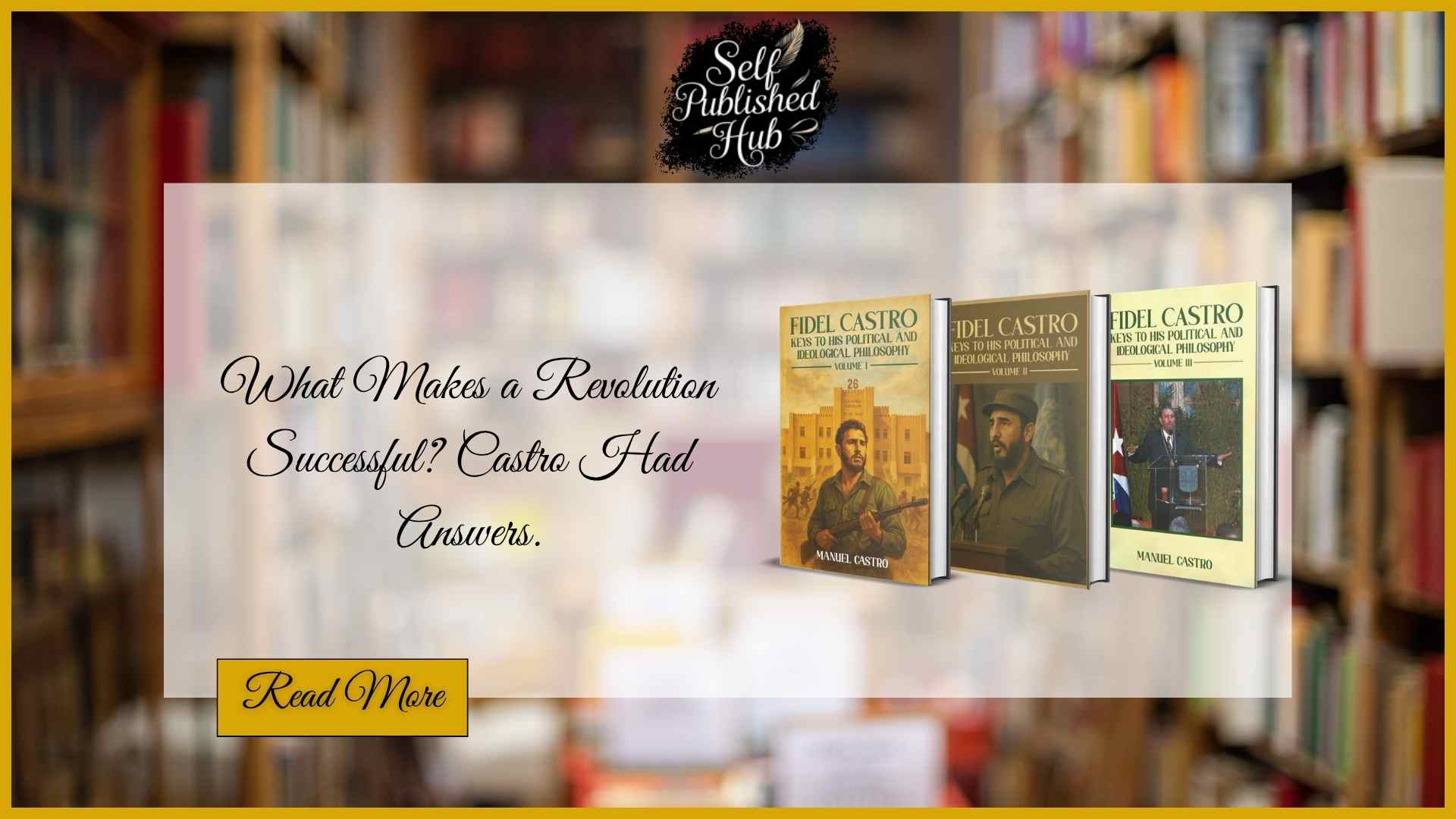
That’s exactly what Manuel Castro unpacks in Fidel Castro: Keys to His Political and Ideological Philosophy (Volumes I, II and III), a three-part series that goes beyond events and digs into the mechanics of revolutionary success.
So, what did Castro get right?
Let’s break it down.
First, clarity of purpose.
A revolution without a clear goal is just chaos. One of the key insights from Volume I is how Castro grounded his movement in specific, relatable objectives addressing inequality, sovereignty and social change. These weren’t vague ideas; they were tangible goals that people could understand and support. When people know what they are fighting for, they are far more likely to stay committed.
Second, the power of communication.
Ideas don’t spread unless they are communicated effectively. Castro’s speeches weren’t just informative; they were persuasive, emotional and often deeply personal. In Volume II, Manuel Castro highlights how this ability to connect with people turned ideology into momentum. It wasn’t just about what was said, but how it was said.
Third, consistency over time.
Revolutions aren’t one-day events. They are long, evolving processes. Castro understood this and repeatedly reinforced his core ideas, even as circumstances changed. This consistency helped build a strong ideological identity, one that people could recognize and rally around.
Fourth, adaptability.
Now here’s where things get interesting. While his core beliefs remained steady, Castro was not rigid in his approach. He adapted to new challenges, shifting political landscapes and changing global dynamics. Volume III explores this flexibility in depth, showing how it helped sustain the revolution beyond its initial phase.
And finally, belief.
This might sound simple, but it’s crucial. People can tell when a leader truly believes in what they’re saying. Castro’s conviction, whether you agree with his views or not, gave his message weight. It made his leadership feel authentic and that authenticity played a big role in maintaining support over time.
What makes Manuel Castro’s trilogy so compelling is how it connects all these elements.
You start to see that successful revolutions aren’t accidents. They are built on a combination of clear ideas, effective communication, strategic consistency and the ability to evolve. Remove one of these elements and the entire structure becomes less stable.
And here’s the bigger takeaway.
These principles don’t just apply to revolutions.
They show up in leadership, movements and even everyday efforts to create change. That’s what makes this series more than just a historical analysis; it is a lens for understanding how transformation happens on any scale.
So, what makes a revolution successful?
There’s no single answer. But Castro’s experience offers a powerful framework for thinking about it.
If you are curious about how ideas turn into action and how action turns into lasting impact, Fidel Castro: Keys to His Political and Ideological Philosophy is well worth exploring.
Because in the end, revolutions aren’t just about changing systems.
They are about understanding how change itself works.