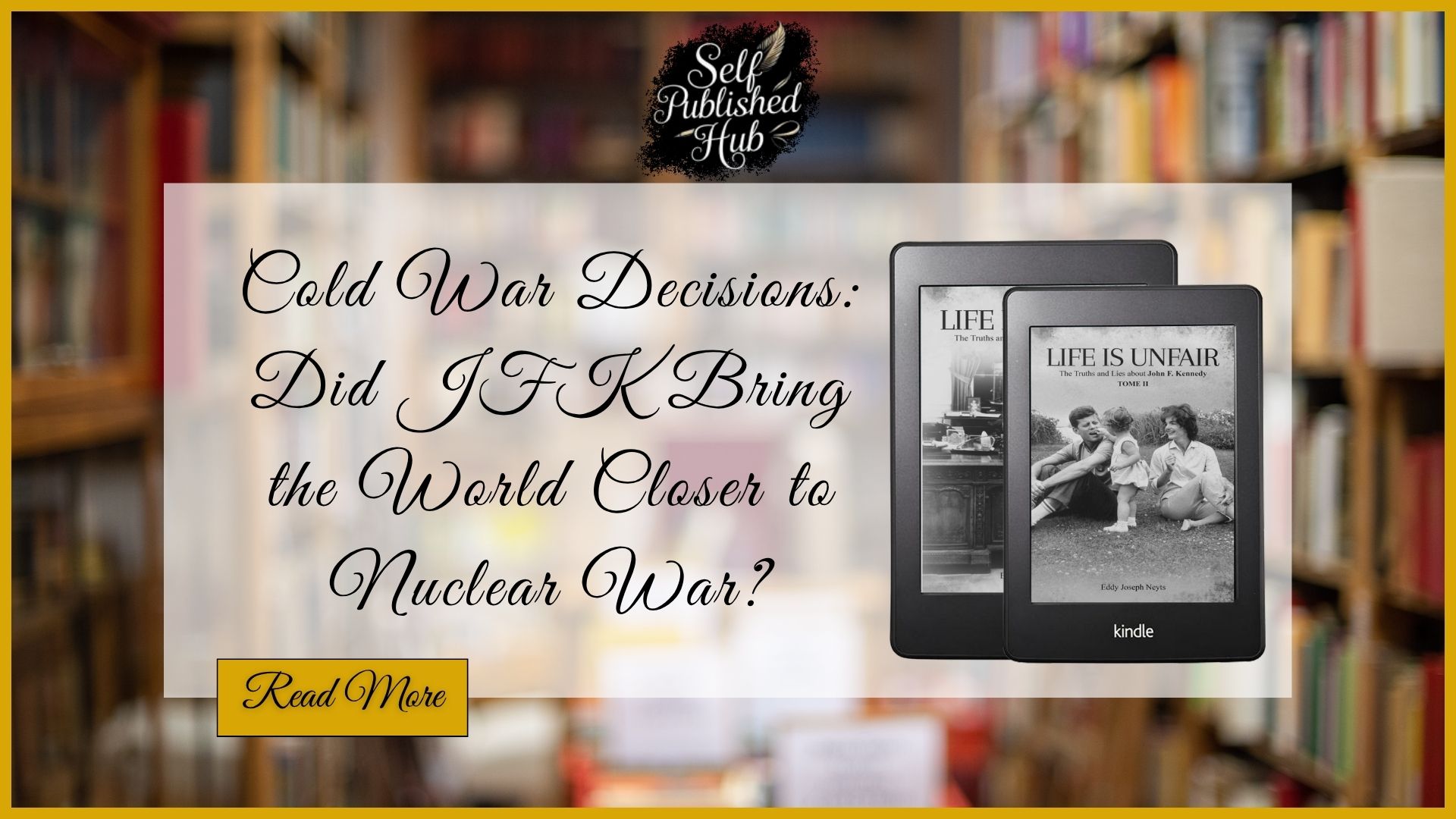
The presidency of John F. Kennedy unfolded at one of the most dangerous moments in modern history, when global tensions between the United States and the Soviet Union threatened to erupt into nuclear conflict. The Cold War was not just a political rivalry; it was a high-stakes struggle where a single miscalculation could have catastrophic consequences. This raises a critical and often debated question: did JFK’s decisions bring the world closer to nuclear war or did they ultimately help prevent it? This complex issue is explored across both volumes of LIFE IS UNFAIR: The Truths and Lies about John F. Kennedy by Eddy Joseph Neyts, offering a nuanced perspective on leadership under extreme pressure.
When Kennedy entered office in 1961, Cold War tensions were already high. The United States and the Soviet Union were locked in an ideological and military rivalry, each striving for global influence while building massive nuclear arsenals. Early in his presidency, Kennedy faced the failed Bay of Pigs invasion, an operation intended to overthrow Fidel Castro in Cuba. Although the plan was inherited from the previous administration, Kennedy’s decision to proceed with it exposed weaknesses in judgment and intelligence coordination. The failure not only embarrassed the United States but also emboldened the Soviet Union, potentially escalating tensions rather than easing them.
However, it was the Cuban Missile Crisis of 1962 that brought the world closer to nuclear war than ever before. When U.S. intelligence discovered Soviet nuclear missiles in Cuba, the situation quickly escalated into a global standoff. For thirteen days, the world watched as Kennedy and Soviet leader Nikita Khrushchev navigated a crisis that could have ended in catastrophe. Some critics argue that earlier decisions, such as the aggressive stance toward Cuba and the broader Cold War strategy, contributed to the conditions that led to this confrontation. From this perspective, Kennedy’s policies may have intensified the very dangers they were meant to contain.
Yet, others view Kennedy’s handling of the crisis as a defining moment of restraint and strategic thinking. Instead of launching an immediate military strike, he chose a naval blockade, creating space for negotiation while avoiding direct conflict. This approach demonstrated a willingness to balance power with caution, ultimately leading to a peaceful resolution. The agreement that followed, which included the removal of Soviet missiles from Cuba and U.S. missiles from Turkey, highlighted the importance of diplomacy in defusing nuclear tensions. According to Neyts, this episode illustrates the dual nature of Kennedy’s leadership, capable of both escalating risks and managing them effectively.
Another aspect to consider is Kennedy’s evolving approach to the Cold War. Early in his presidency, his policies often reflected a firm stance against communism, aligning with the broader U.S. strategy of containment. However, as his presidency progressed, there were signs of a shift toward de-escalation. His advocacy for a nuclear test ban treaty and improved communication with the Soviet Union suggested a growing recognition of the need to reduce the risk of nuclear confrontation. This evolution raises an important question: was Kennedy learning from earlier mistakes or were these changes part of a broader strategic vision?
Tome II of Neyts’ work also explores the uncertainties surrounding Kennedy’s future decisions, particularly regarding Vietnam. While it is impossible to know with certainty how he would have acted, the debate itself reflects the broader ambiguity of his Cold War legacy. Would he have escalated U.S. involvement, potentially increasing global tensions or pursued a path of withdrawal and negotiation? These unanswered questions contribute to the ongoing discussion about whether his leadership ultimately reduced or heightened the risk of nuclear conflict.
The challenge in answering whether John F. Kennedy brought the world closer to nuclear war lies in the complexity of the historical context. The Cold War was shaped by multiple actors, competing interests and unpredictable events. While Kennedy’s decisions played a significant role, they were part of a larger system that influenced outcomes in ways no single leader could fully control. Neyts emphasizes that understanding this period requires looking beyond simple judgments and considering the interplay of factors that defined the era.
In the end, Kennedy’s Cold War record reflects both risk and restraint. His early actions may have contributed to rising tensions, but his later decisions demonstrated a capacity for careful judgment and diplomacy. Rather than fitting neatly into a narrative of success or failure, his presidency reveals the challenges of leading in a nuclear age, where every choice carried unprecedented consequences.
LIFE IS UNFAIR: The Truths and Lies about John F. Kennedy encourages readers to confront these complexities and reconsider simplified interpretations of history. By examining both the decisions that increased tension and those that helped resolve it, the book provides a deeper understanding of Kennedy’s role in one of the most perilous periods of the 20th century.
Amazon Book Link : https://www.amazon.com/dp/1915424542/