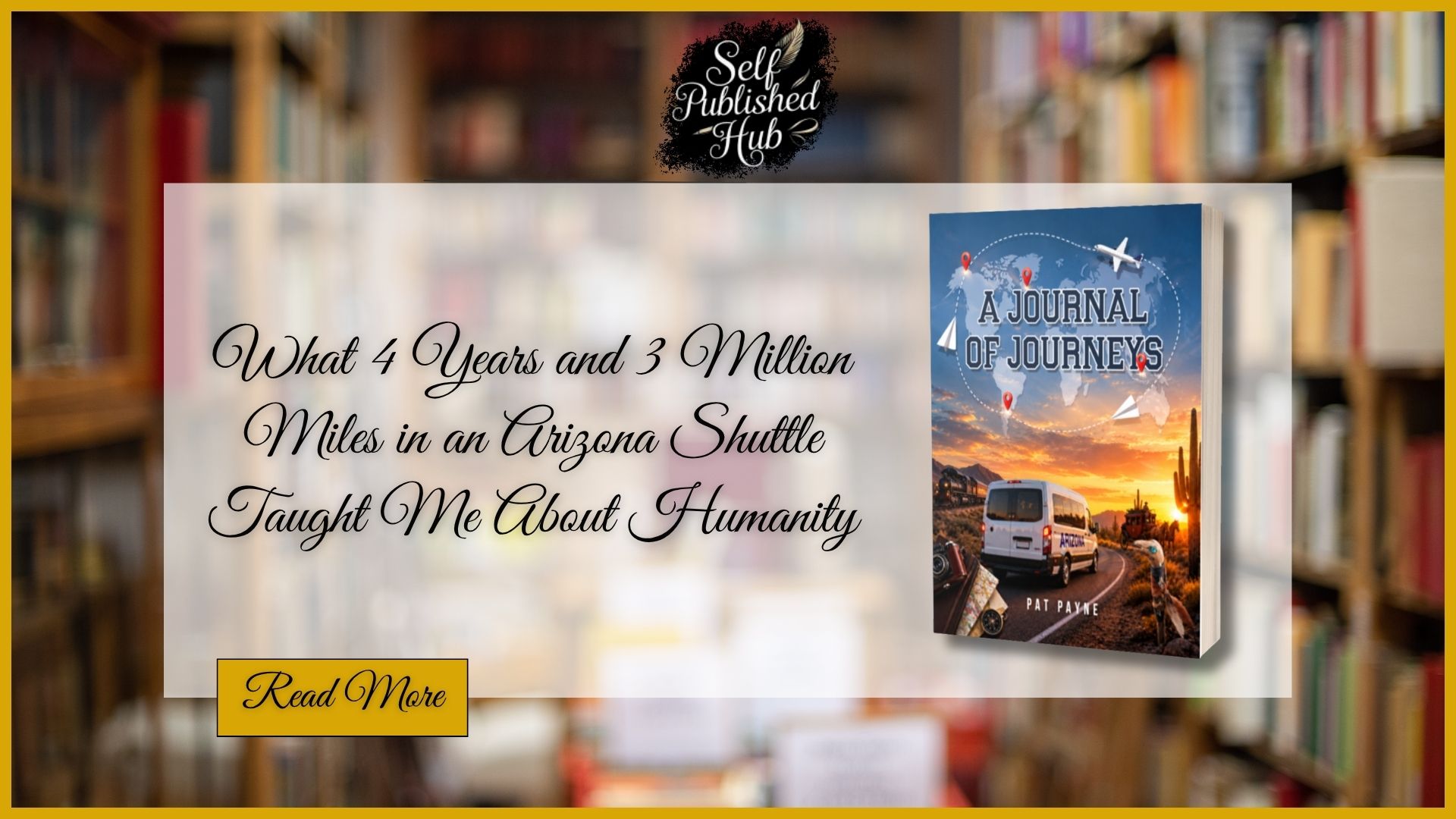
When most people hit their eighth decade, they are looking to slow down, sink into a comfortable armchair, and let the world spin at its own pace. But when I hit my eighties, I decided to do something a little different. Instead of waiting for death to swallow me, I stepped into the office of a regional transit company, looked the manager in the eye, and told him, “I can drive anything you’ve got, anywhere and anytime.” To his credit, he hired me.
Little did I know that for the next four years, I would log millions of miles behind the wheel of a shuttle van, navigating the breathtaking, steep switchbacks between Flagstaff, the red rocks of Sedona, and the sprawling desert metropolis of Phoenix. What I expected was a job to keep me busy; what I actually found was a profound, deeply moving love story written in the brief encounters with thousands of beautiful strangers.
Driving a shuttle van is a form of intensive listening. In that compact space, stripped of the usual distractions of daily life, people tend to unpack more than just their suitcases. They unpack their lives. Over three million collective miles, my passenger cabin became a living, breathing cross-section of the world. I gave rides to international athletic teams training in the thin air of Flagstaff, silent Hopi artisans carrying centuries of tradition in their hands, and tourists from every corner of the globe star-struck by their first glimpse of the Grand Canyon.
But it was the deeply personal, unexpected connections that forever altered how I view humanity. I remember a young man I picked up near the Winslow prison. He was fresh out of incarceration, clutching nothing but a Gideon Bible and a heart full of terrifying uncertainty about the future. We didn’t talk about his past; we talked about second chances, the open road, and the simple dignity of moving forward. By the time I dropped him off, the heavy armor of a former inmate had melted away, replaced by the vulnerable face of a young man ready to try again.
There were high-stakes, breathless nights, too. On one unforgettable New Year’s Eve, a massive winter whiteout rolled across the high country, pairing a brutal blizzard with a federal government shutdown that left the Grand Canyon stranded in darkness. I was dispatched on a rescue run to Maswik Lodge to retrieve an Amish family of ten. As the snow swirled blindly outside the windshield, the family sat quietly in the back, their serene calm acting as an anchor for my own nerves. Bending company policies to keep people safe, altering routes to outsmart flash floods, or sharing a warm cup of coffee with an incredibly anxious passenger became my daily currency.
What these four years taught me is that under the surface of our political, cultural, and generational divides, we are all remarkably fragile and remarkably kind. When people step into a shuttle, they lay down their defenses. They are vulnerable because they are in transit, caught between where they were and where they are going. In that middle space, if you offer them a steady hand, a warm greeting, and an open ear, they will almost always show you their best selves.
In the end, I could say that entering a brand-new, high-responsibility career in my eighties wasn’t a burden. In fact, it was the great privilege of my twilight years that proved to me that aging isn’t about closing doors. If you also think that retirement has put a stop to your life, perhaps you should check out my book, in which I have shared my travel journeys with the people I met. By meeting them, hearing their stories, and sharing mine, I learned that you are never too old to fall in love with humanity all over again, one mile, one story, and one passenger at a time.
So, read A Journal of Journeys, and join me as I will take you through snow-blinded mountain passes at midnight, share quiet moments with Hopi elders and wildfire “hotshots,” and discover why a scrubby juniper bush on Interstate 17 becomes a mysteriously decorated Christmas tree each December.
Get your copy from Amazon to learn more: https://a.co/d/0hzoAIhb