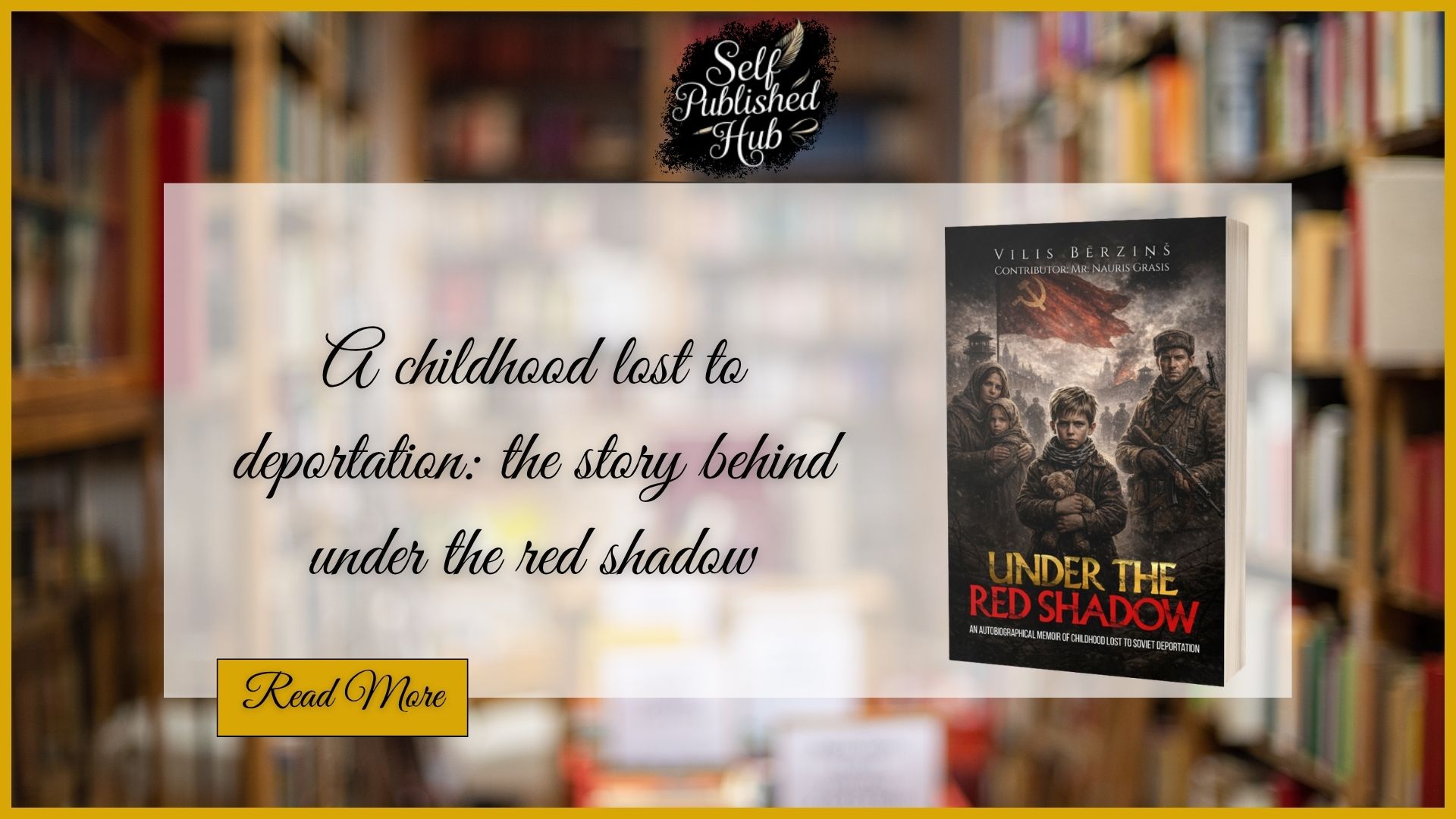
Childhood is usually remembered through school days, family routines, games and the small adventures that shape growing up. For Vilis Bērziņš, however, childhood became inseparable from fear, forced removal and exile. His forthcoming memoir, UNDER THE RED SHADOW: An Autobiographical Memoir of Childhood Lost to Soviet Deportation, tells that story from the perspective of someone who lived it.
Born in Latvia in January 1941, Bērziņš entered the world during a period of political upheaval. By the age of eight, he had already learned that certain words carried fear. One of them was “Siberia.” He remembers hearing adults speak about it and trying, as a child, to understand what it meant. At first, Siberia existed in his imagination as a distant and frightening place. Soon, however, it became part of his own life.
In March 1949, Bērziņš and his family were forced from their home. Soldiers arrived, belongings were gathered in haste and the familiar world of childhood was suddenly replaced by uncertainty. He describes being pushed toward a truck and taken to a railway station filled with families, children, armed guards, shouting and confusion.
What followed was a journey east in crowded freight cars.
Bērziņš recalls cold air entering through the carriage doors, people struggling to find space, sick children, limited food and the growing realization that no one knew when or where the journey would end. The conditions were severe, yet even there, he noticed moments of human decency. Passengers gave up better sleeping spaces for mothers and young children and strangers began helping one another as though they had become one large family through shared hardship.
That contrast is central to UNDER THE RED SHADOW. The memoir does not focus only on suffering. It also records how people tried to preserve dignity, humor, companionship and hope when so much had been taken from them.
The story behind the book is almost as remarkable as the memories themselves.
Bērziņš began writing his account in 1971 and continued into the early 1980s. Yet the manuscript remained unpublished for decades. His grandson, Nauris Grasis, later recalled that even in 1999, years after Latvia had regained independence, his grandfather still feared the consequences of publishing what he had written. Bērziņš died in 2002, leaving the manuscript behind.
Then, in 2022, Grasis rediscovered the fragile pages in a family cupboard. What had once been a private record of trauma became a family responsibility to preserve a voice that might otherwise have disappeared.
UNDER THE RED SHADOW therefore offers readers more than a historical memoir. It is the testimony of a child whose ordinary life was overtaken by forces beyond his control and the preservation of a story that waited decades to be heard.
For readers drawn to personal history, survival narratives, twentieth-century Europe and stories of resilience, Vilis Bērziņš’ memoir offers an intimate look at what deportation meant at the human level.
UNDER THE RED SHADOW is currently in the publishing phase and will be available soon.
Want To Discover More? Head Over To Our Website: https://www.librarything.com/profile/VilisBerzins