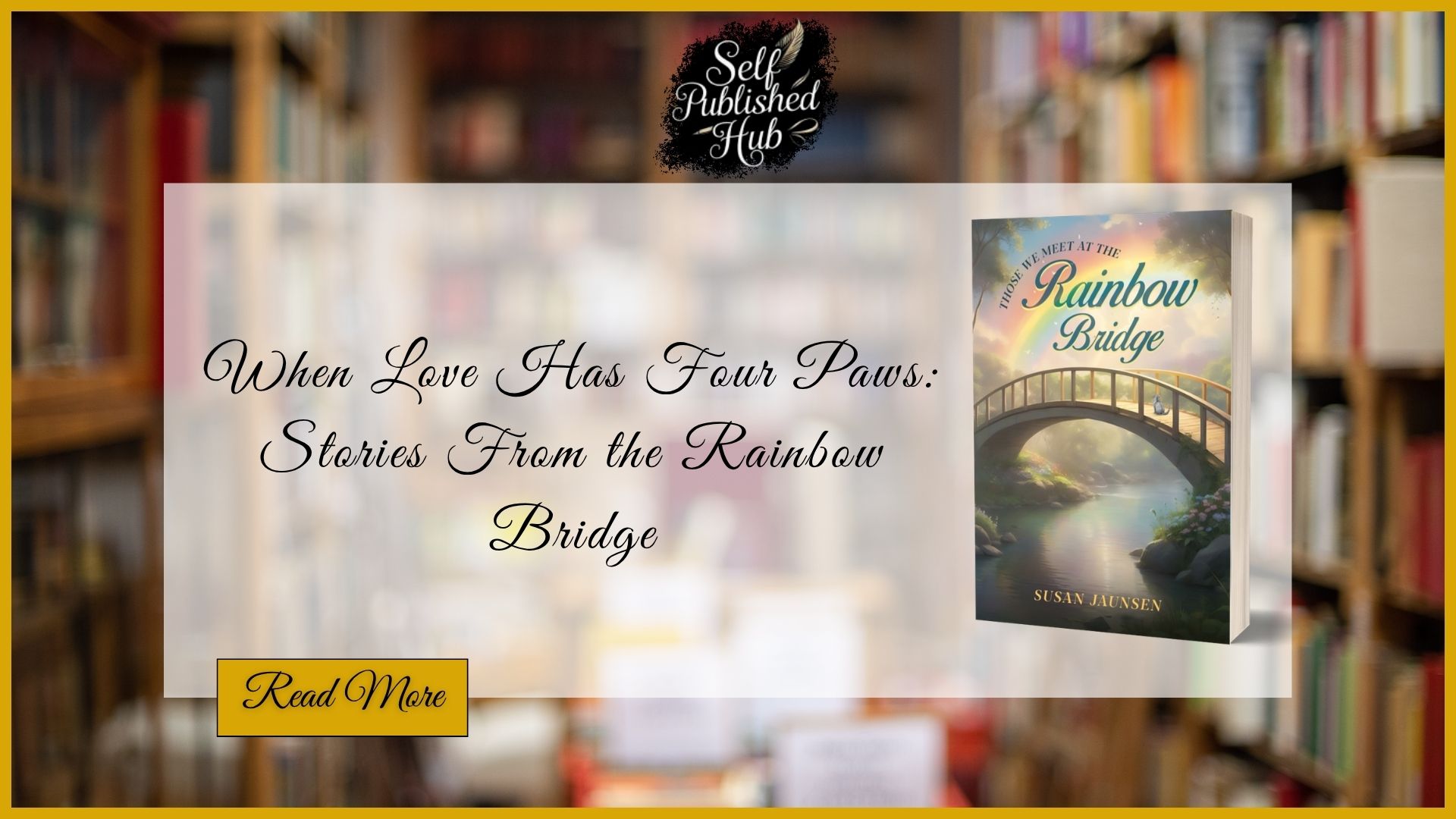
Some stories are not simply read; they are felt, lived through memory and carried quietly in the heart long after the final page is turned. Those We Meet at the Rainbow Bridge by Susan Jaunsen is one such book, offering readers a deeply emotional journey through real-life animal rescues, lifelong companionship and the enduring question of what love becomes when life ends.
At its core, this is a book about connection. Not just between humans and animals, but between moments, memories and meaning itself. Each chapter unfolds like a lived experience, raw, tender and grounded in real encounters with bees, birds, cats and dogs who each arrive with their own personality, struggle and story. From a hidden honeybee colony carefully relocated to safety, to a neglected cockatoo named Clarence who finds healing in a sanctuary, every narrative reflects the quiet heroism of compassion in action.
Yet what makes the book truly distinctive is not only what happens in life, but what continues beyond it.
Susan Jaunsen weaves a spiritual thread through these real-world experiences known as the Rainbow Bridge, a place of reunion where animals who have been loved and lost gather again in light, memory and peace. It is here that readers encounter Willow, Shadow, Chloe, Oliver, Bama and many others, each returning not as distant memories but as living presences filled with voice, personality and emotion.
In these passages, grief transforms into reunion. The animals speak, remember and wait. They greet one another as if no time has passed at all, as though love itself has preserved them beyond the limits of physical life. The effect is both comforting and thought-provoking, inviting readers to consider love not as something that ends, but something that changes form.
Among all these stories, one absence becomes especially powerful. Willow, the deeply bonded companion whose presence threads through the entire narrative, becomes the emotional center of the book. His absence at the Rainbow Bridge raises a haunting question that lingers beyond the page: where is he and why is he not there? This unanswered moment gives the book its emotional gravity, turning it from a collection of stories into a reflection on attachment, longing and acceptance.
What sets Those We Meet at the Rainbow Bridge apart is its ability to move seamlessly between grounded reality and symbolic imagination. One moment, readers are witnessing the careful rescue of feral cats or the rehabilitation of a neglected bird; the next, they are standing in a luminous meadow where those same animals reunite, speak and wait in eternal companionship. The shift feels natural, even necessary, like breath moving between inhale and exhale.
The writing is lyrical without losing clarity, emotional without becoming distant. It honors the intelligence, individuality and emotional depth of animals in a way that feels both respectful and deeply personal. At the same time, it reflects on the human experience of caregiving, loss and the quiet ways animals shape our lives without asking for recognition.
Ultimately, this book is not just about saying goodbye. It is about learning how to carry love forward. It is about recognizing that every pawprint left behind continues to echo in memory and that every bond formed with an animal leaves an imprint that time cannot erase.
Those We Meet at the Rainbow Bridge invites readers into a world where love does not disappear; it simply changes its shape. And in that transformation, it asks a gentle but powerful question: when love has four paws, does it ever truly leave us at all?