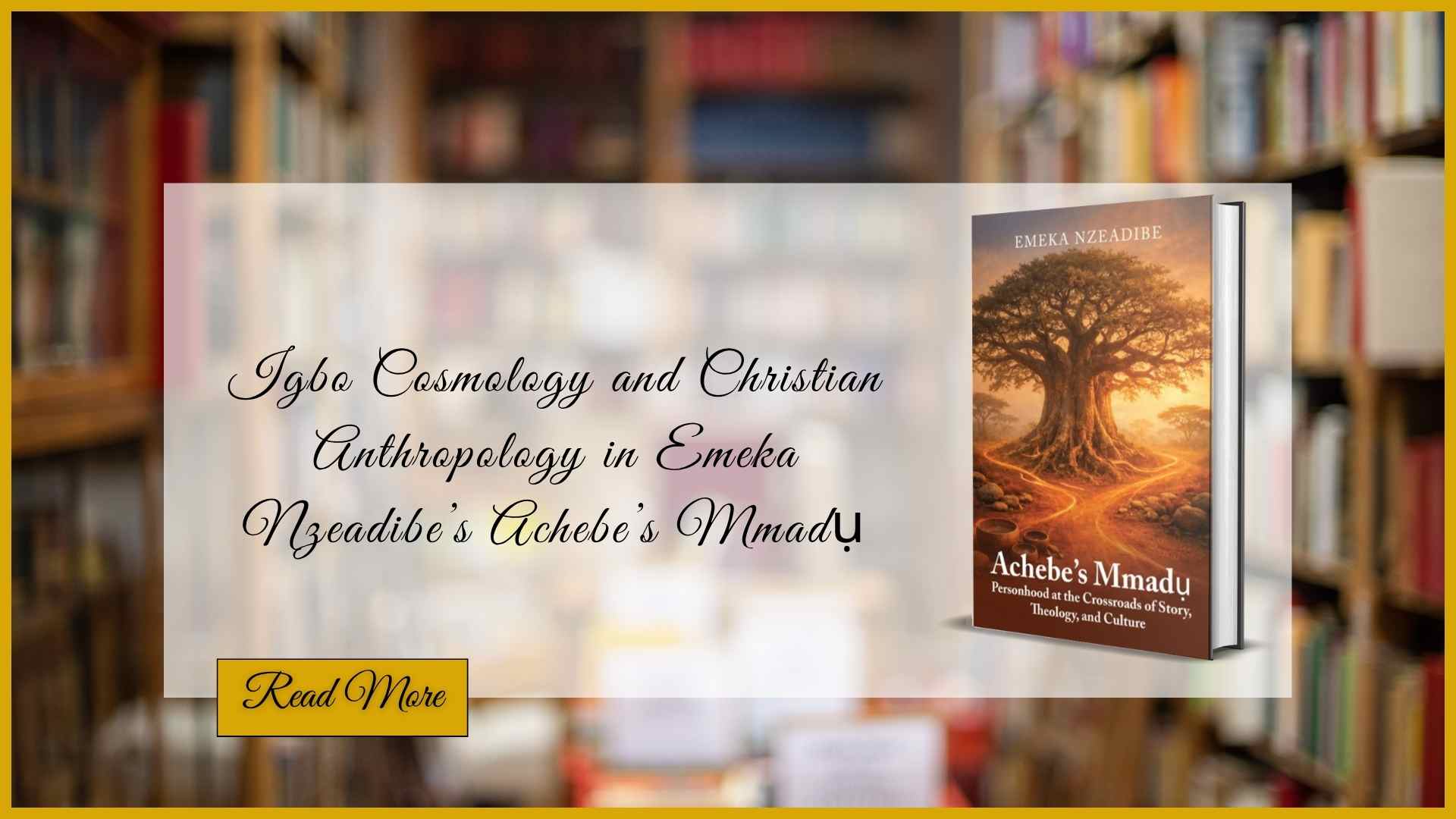
In Achebe’s Mmadụ: Personhood at the Crossroads of Story, Theology, and Culture, Emeka Nzeadibe brings Igbo cosmology and Christian anthropology into a rich and meaningful conversation. Through Chinua Achebe’s literary world, the book explores what it means to be human, how dignity is understood, and why personhood must be seen through culture, faith, community, and story.
Igbo cosmology presents the human person as part of a living order where the visible and invisible worlds remain closely connected. Life is not reduced to physical existence. The person is shaped by family, ancestors, community, the gods, moral duty, and spiritual destiny. In this world, Mmadụ means more than a human being. It points to personhood, dignity, identity, responsibility, and the deep value of human life.
Nzeadibe shows that Achebe’s fiction gives this vision powerful expression. In works such as Things Fall Apart and Arrow of God, characters do not live as isolated individuals. Their choices affect the clan, the household, the sacred order, and the future of the community. This makes Achebe’s world a fertile place for thinking about the human person as relational, moral, and spiritually grounded.
The book also connects this Igbo understanding of the human person with Christian anthropology, especially the belief that every person carries divine worth. By placing Mmadụ beside the Christian idea of the human person created in the image of God, Nzeadibe opens a fresh path for readers interested in theology, culture, and human dignity. He does not flatten Igbo thought into Christian categories. Instead, he allows both traditions to illuminate each other.
This conversation is one of the strongest features of Achebe’s Mmadụ. It shows that African wisdom has much to offer global theological reflection. Igbo cosmology reminds readers that personhood is not only about reason, freedom, or individual choice. It is also about belonging, moral formation, sacred connection, and the responsibility to live well with others.
For modern readers, this message is deeply relevant. Many societies today struggle with loneliness, broken community, cultural loss, and shallow measures of human worth. Nzeadibe’s study invites us to recover a fuller understanding of the human person. To be Mmadụ is to be someone of value, someone placed within relationships, someone called to dignity, responsibility, and meaningful life.
Emeka Nzeadibe’s Achebe’s Mmadụ is an important book for readers of Chinua Achebe, African literature, Igbo culture, theology, philosophy, and human identity. It presents Igbo cosmology not as a distant tradition, but as a living source of insight. Through its dialogue with Christian anthropology, the book offers a compelling vision of humanity that is rooted, relational, spiritual, and urgently needed.
Get your copy today! https://www.amazon.com/dp/B0GZFB5P25/