Robotics is no longer a distant idea found only in science fiction. It is already shaping factories, hospitals, farms, transport systems, homes, and public services. As machines become more capable, the future of work is changing rapidly. Tasks that once required long hours of repetitive human effort can now be completed with greater speed, precision, and consistency. Yet this progress also raises important questions about responsibility, fairness, employment, safety, and the role of human judgement.
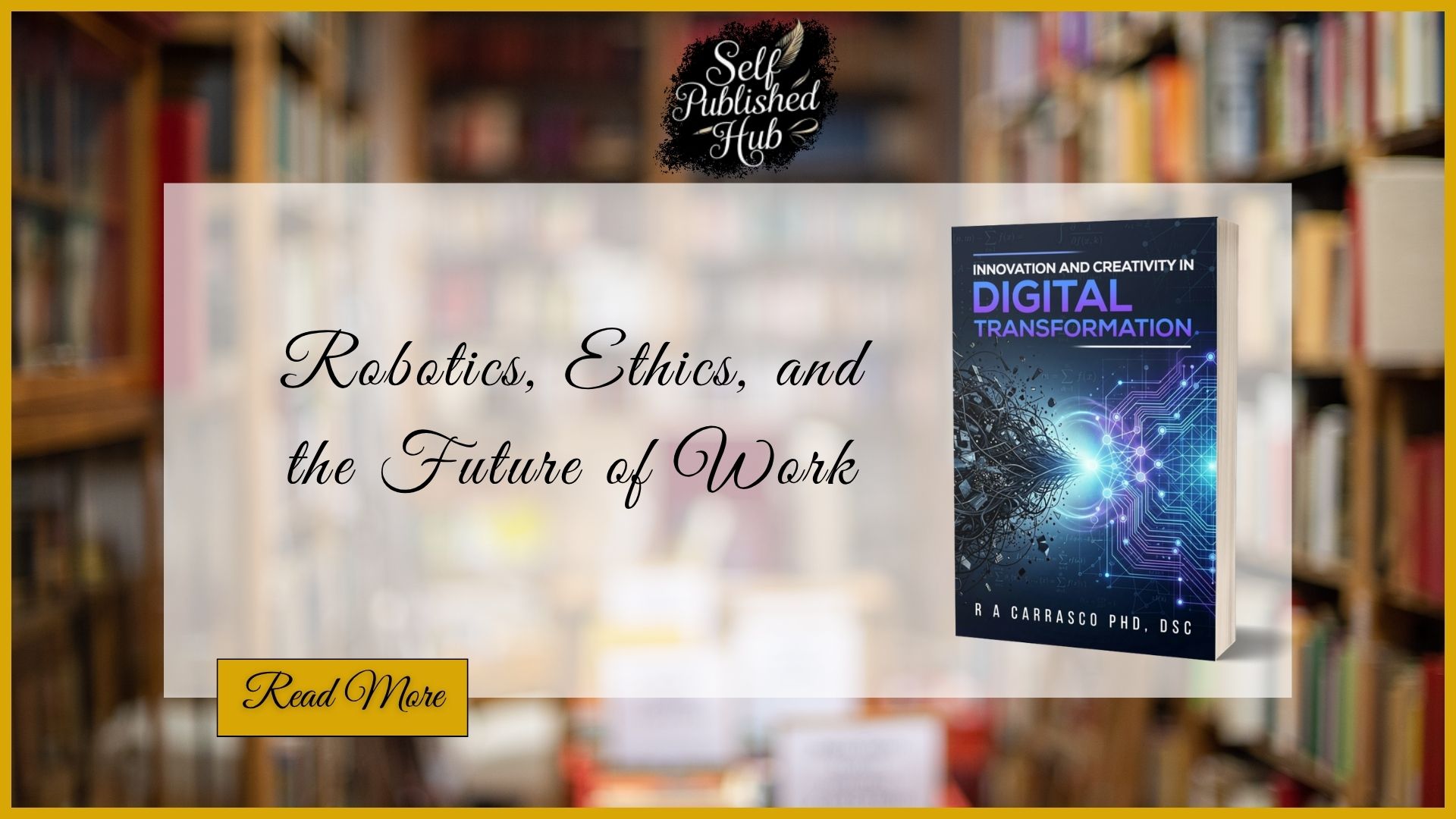
Innovation and Creativity in Digital Transformation by R A Carrasco explores these questions with clarity and depth. The book examines robotics not only as a technical development, but as part of a wider transformation affecting society, business, education, health services, agriculture, and industry. It helps readers understand why automation must be considered alongside ethics, policy, skills, and human wellbeing.
Robots can improve productivity and reduce risks by taking on dangerous or physically demanding tasks. In manufacturing, they can support consistent production and reduce human error. In medicine, they can assist with surgery, rehabilitation, transport, sanitation, and care delivery. In agriculture and fisheries, they can help improve efficiency and support more sustainable production. These developments show the promise of robotics when it is used thoughtfully.
However, the rise of robotics also demands careful reflection. What happens when machines replace certain jobs? How should workers be supported as industries change? Who is responsible when an automated system causes harm? Should machines be expected to follow ethical rules in complex situations? These are not merely technical questions. They are human questions that require leadership, creativity, and social responsibility.
Carrasco’s book is valuable because it does not treat technological progress as automatically positive or negative. Instead, it encourages readers to understand both the benefits and the challenges. Robotics can open new opportunities, but only if organisations prepare people for new kinds of work, invest in training, and use technology to strengthen human potential rather than simply reduce costs.
The future of work will not be defined by machines alone. It will be shaped by the choices made by governments, organisations, educators, engineers, managers, and workers. The most successful societies will be those that combine technological capability with ethical awareness and practical innovation.
Innovation and Creativity in Digital Transformation by R A Carrasco is an important guide for anyone who wants to understand this changing world. It offers readers a broad and thoughtful view of robotics, automation, and their impact on modern life. For students, professionals, business leaders, and researchers, the book provides a strong foundation for thinking about how technology can be used responsibly in the workplace of tomorrow.