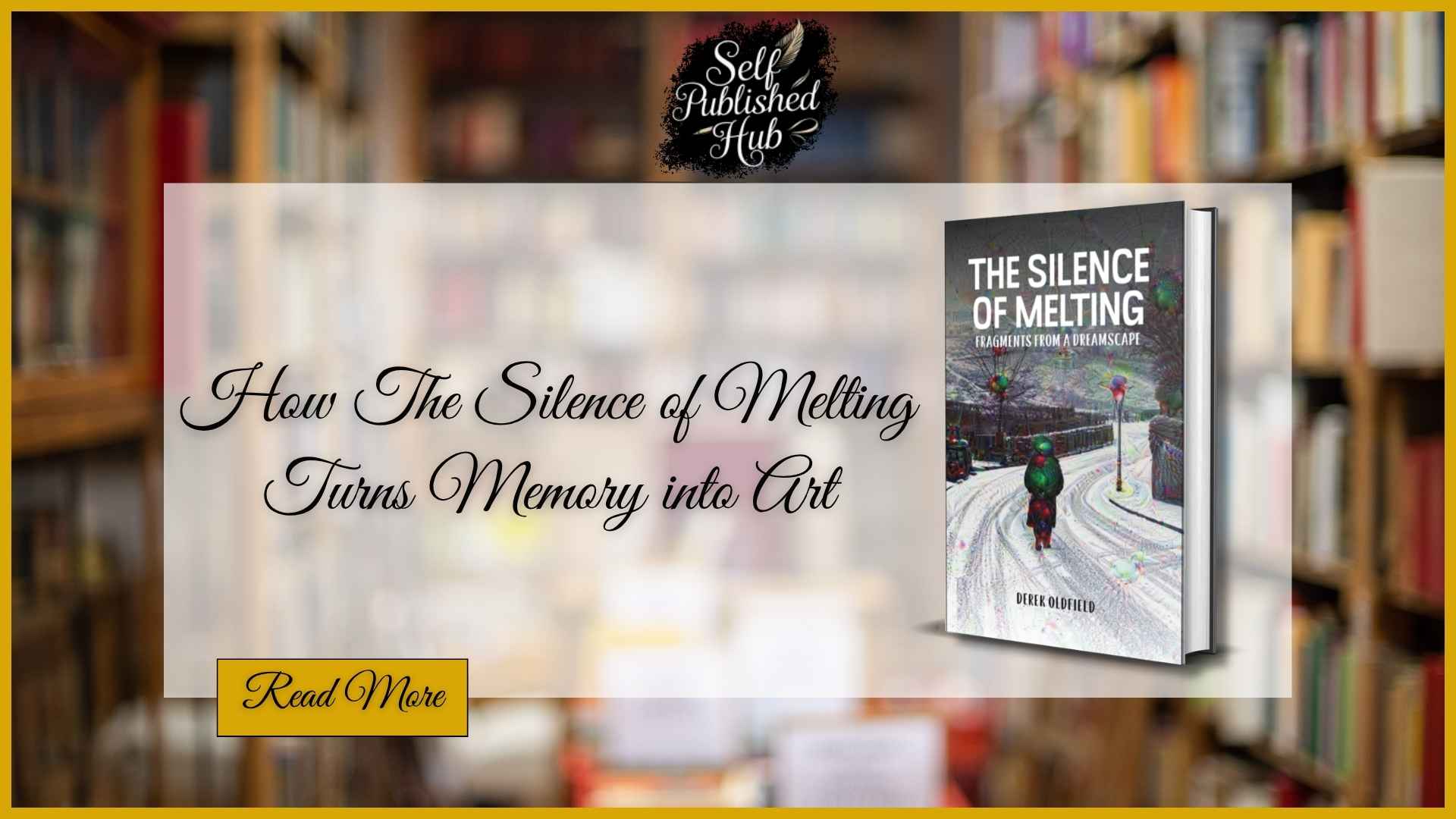
Memory is rarely still. It moves, fades, returns, changes shape, and often appears in fragments rather than complete scenes. Derek Oldfield’s The Silence of Melting: Fragments from a Dreamscape captures that movement with unusual sensitivity. This debut poetry collection turns memory into art by giving the past colour, texture, rhythm, and atmosphere.
Oldfield writes as both poet and visual artist. His poems do not simply recall events or describe feelings. They transform them into images that feel alive on the page. A quiet room, a lonely moor, a sea view, a garden, a railway station, or a cobbled street becomes more than a setting. Each place holds emotional weight. Each detail seems to carry something remembered, lost, desired, or feared.
The collection is filled with images that feel dreamlike but deeply human. Colours shimmer, shadows move, landscapes dissolve, and silence becomes part of the emotional language. Through this style, Oldfield shows how memory often works in the mind. We do not always remember life in straight lines. We remember light on a wall, a familiar street, a voice, a room, a season, a face, or a feeling that returns without warning.
In The Silence of Melting, memory is closely connected to love and loss. The poems often reach toward people and moments that seem both near and distant. There is tenderness in the remembering, but also ache. Oldfield understands that memory can comfort and wound at the same time. His poetry gives that contradiction a visual form, allowing readers to feel the beauty and pain of looking back.
Nature also plays an important role in this transformation. Moors, flowers, birds, rain, sea, autumn leaves, moonlight, and changing skies become mirrors of the human mind. The outer world reflects inner feeling. A landscape can suggest loneliness. A colour can hold longing. A fading horizon can become a picture of time passing.
This is what gives the book its lasting appeal. The Silence of Melting is not only a poetry collection. It is an artistic record of memory as it is felt, not merely remembered. It invites readers to slow down and notice how deeply the past can live inside ordinary images.
For readers who appreciate reflective poetry, visual language, and emotional depth, Derek Oldfield’s The Silence of Melting offers a memorable journey through dream, silence, and remembrance. It is a book for anyone who has ever looked back and found that memory itself had become a work of art.