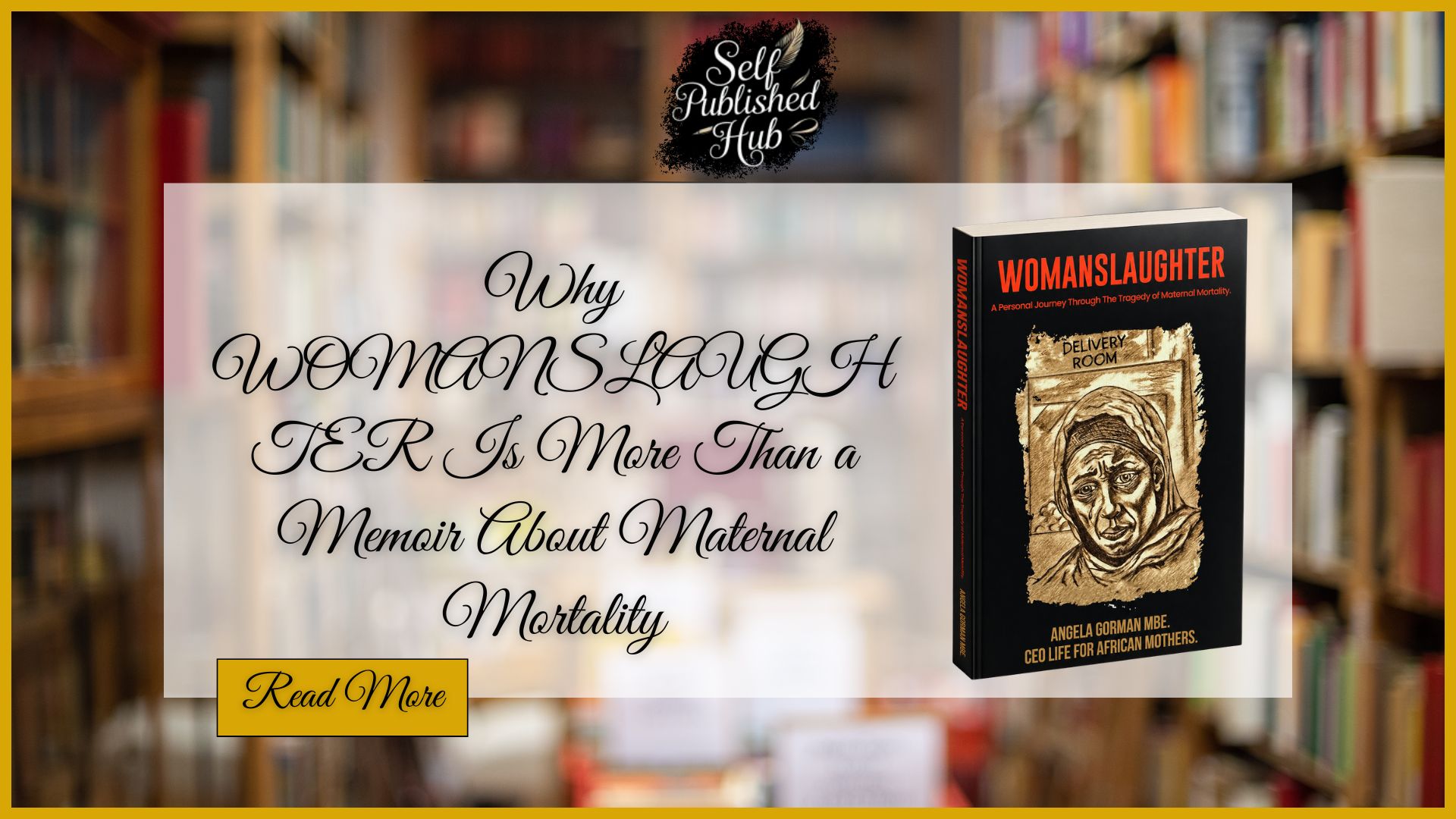
Some memoirs tell the story of a life. Others reveal how one moment can redirect a life toward an entirely unexpected purpose. WOMANSLAUGHTER: A Personal Journey Through The Tragedy of Maternal Mortality by Angela Gorman, MBE, does both.
At first glance, the book may appear to be a personal account of maternal mortality and humanitarian work. Yet its impact reaches much further. It is a story about injustice, courage, persistence, family legacy and the extraordinary difference an ordinary person can make after deciding not to look away.
Angela Gorman’s journey began in 2005 when she was 57 years old and working as a senior neonatal intensive care nurse. After an exhausting hospital shift, she watched the BBC Panorama documentary Dead Mums Don’t Cry. The programme showed pregnant women dying in Chad because hospitals lacked medications and resources that were routinely available in wealthier countries. Instead of allowing the programme to become another upsetting story that would soon be forgotten, Angela opened her laptop and wrote an email that changed the direction of her life.
That decision is what makes WOMANSLAUGHTER so compelling. The book does not simply ask readers to feel sympathy. It shows what can happen when compassion becomes action.
Angela’s efforts grew from supporting one hospital into a wider campaign that reached communities across Africa. Through Life for African Mothers, she helped provide lifesaving medication, supported maternity services, encouraged professional training and connected healthcare workers, charities, governments and donors. Over two decades, the organisation contributed more than six million Misoprostol tablets across all or part of seven countries, with Angela estimating that around two million women received the medication free of charge.
However, the book never reduces these achievements to numbers. Angela takes readers into hospitals where women give birth without dependable electricity, adequate medication, oxygen, sterile equipment or basic protective supplies. She describes heartbreaking encounters with mothers, babies, midwives and doctors who continued working under conditions that would be unimaginable in well-funded healthcare systems.
The memoir also explores the wider consequences of losing a mother. Maternal death can leave babies without nourishment, force children out of school, deepen poverty and place the future of an entire family at risk. Angela therefore presents maternal mortality not merely as a medical issue, but as a crisis of inequality and human worth.
At the heart of the narrative is an intensely personal connection. Angela’s paternal grandmother, Hannah Granville, died in 1915 following premature labour and catastrophic postpartum haemorrhage. Decades later, Angela discovered that she had spent much of her career and humanitarian life fighting the same condition that had taken her grandmother away from her family.
That discovery transforms the book into a story of legacy. Angela’s work becomes not only a response to the women she encountered across Africa, but also a tribute to the grandmother she never knew.
WOMANSLAUGHTER is more than a memoir because it refuses to let preventable death remain an abstract statistic. It gives mothers names, families, histories and futures. Most importantly, it challenges readers to reconsider the familiar thought that “someone should do something.”
Angela Gorman did and her remarkable journey proves that meaningful change can begin with one person, one email and one decision to act.