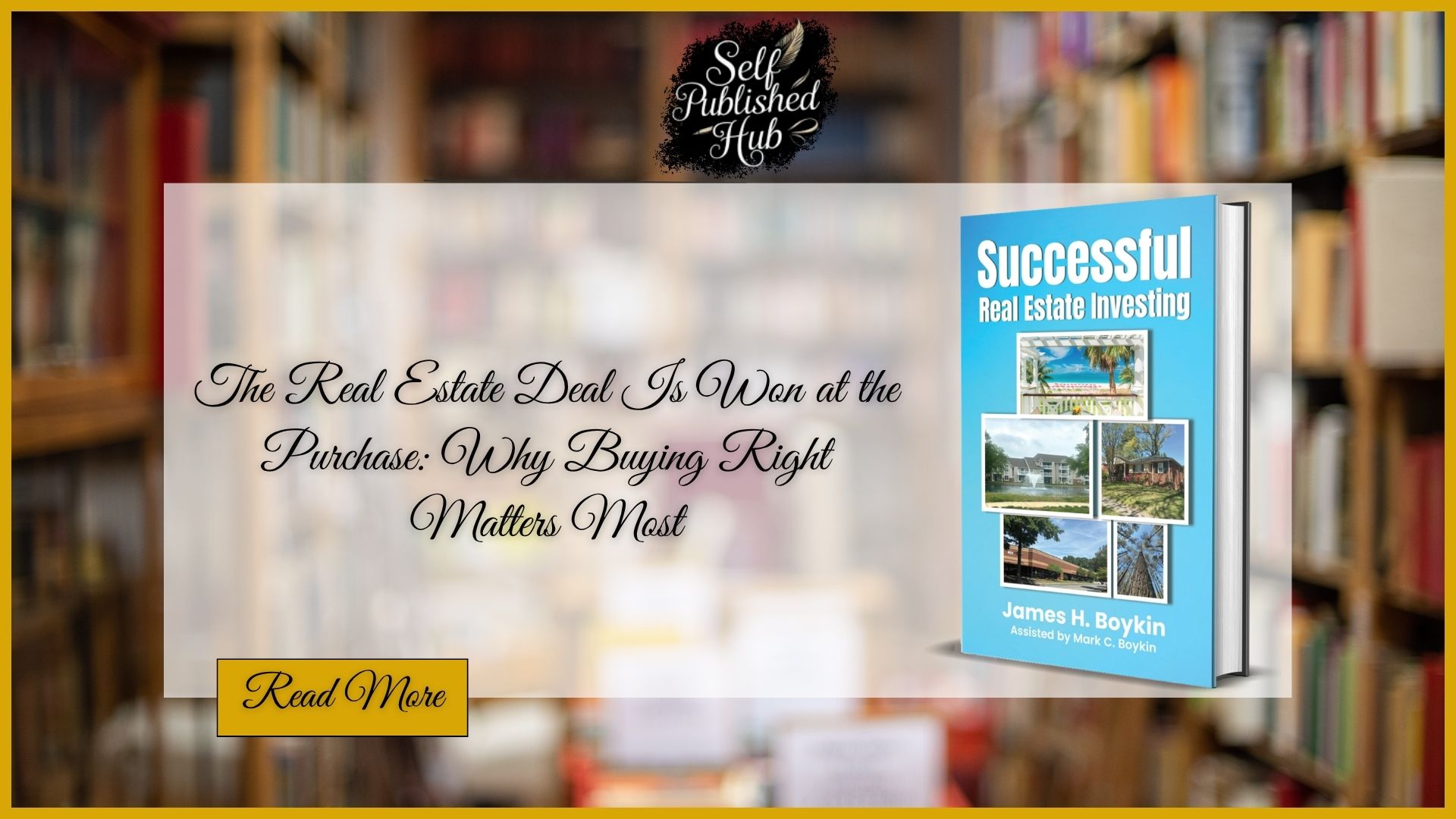
Real estate investors often focus on the future sale. They imagine appreciation, rental growth, renovations and the profit they hope to collect years later. But according to James H. Boykin, author of Successful Real Estate Investing, much of that future success is determined much earlier, at the moment the property is purchased.
One of the book’s most memorable lessons is that a profitable sale depends heavily on buying at the right price. Boykin puts it plainly: if an investor buys badly, it becomes much harder to sell profitably later. A favorable purchase price creates a cushion, improves long-term return potential and gives the investor more room to absorb market changes or unexpected expenses.
A Low Price Is Not Always a Good Deal
Buying right does not simply mean paying less than the asking price.
A property can be inexpensive and still be a poor investment. Boykin warns readers to look beyond the surface and consider construction quality, neighborhood conditions, location, renovation needs and resale potential. A so-called bargain may require so much repair work that the total investment exceeds what the property could reasonably be worth.
That is why disciplined investors examine the complete picture. Purchase price, renovation costs, financing, operating expenses, rental potential and future marketability all need to work together.
Know the Market Before Making an Offer
Successful investors do not negotiate in the dark.
Boykin encourages buyers to study comparable properties, price trends, local demand and neighborhood performance before committing capital. He also advises investors to consider the future resale prospects of a property from the beginning.
Location matters, but the book goes further. It identifies timing of purchase and sale, along with skilled management during ownership, as other major factors in successful real estate ownership.
In other words, buying right means understanding not only the property itself, but also the market surrounding it.
Let the Numbers Challenge Your Excitement
It is easy to become emotionally attached to a property that appears to have potential. Boykin repeatedly cautions against allowing enthusiasm or ego to replace objective analysis.
Investors should question optimistic rent projections, underestimated expenses, deferred maintenance and seller claims about future performance. In the book’s discussion of financial analysis, Boykin recommends beginning with actual income and expense information rather than relying on what the seller says the property “should” produce.
That distinction matters because projected profits are meaningless if the assumptions behind them are unrealistic.
Sometimes the Best Deal Is the One You Leave Behind
Buying right also requires the confidence to walk away.
A serious structural defect, deteriorating neighborhood, poor design, environmental concern or repair budget that destroys the profit margin may be enough to reject a deal. The book makes clear that not every problem should be negotiated around. Some are genuine deal breakers.
That mindset may feel cautious, but caution can protect capital.
Start the Profit Before You Own the Property
Successful Real Estate Investing by James H. Boykin offers readers a practical, disciplined way to think about property investment, from finding opportunities and analyzing finances to negotiating, financing, leasing, managing and eventually selling.
The central lesson is powerful: profit is not something an investor should hope to create only at the end.
It should begin with a smart purchase.
Learn more in Successful Real Estate Investing by James H. Boykin and discover how better decisions at the beginning can shape stronger results at the end.
Read the book on Amazon: https://a.co/d/0gjvN7zf