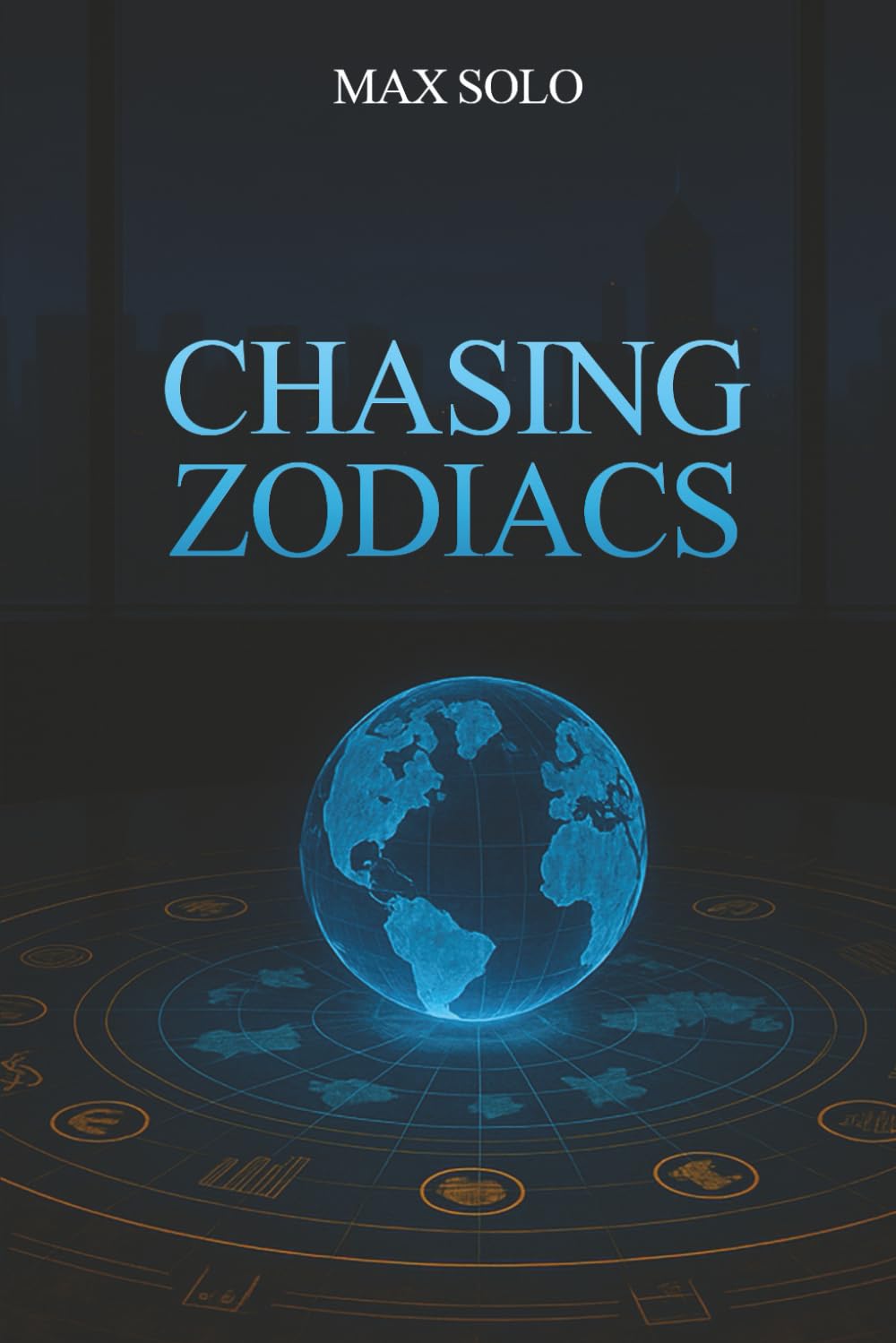
Human trafficking is often described as a hidden crime, but what remains even more hidden is the true cost of it, the lives lost, the communities broken, and the systems that quietly allow it to continue. Behind the statistics and news headlines lies an industry that thrives on silence. In Chasing Zodiacs by Max Solo, this silence is given a chilling face through the fictional organisation “Human Asset Management,” a network that controls lives for profit. While the story unfolds in a dystopian world, the reality it reflects is disturbingly close to our own.
At the centre of the book’s world is an uncomfortable truth: people can be reduced to assets. It is not far from how human trafficking works today. Across the globe, millions of men, women, and children are trafficked for labour, sex, and criminal exploitation. The United Nations estimates that human trafficking generates more than 150 billion dollars a year, making it one of the largest criminal industries globally. Traffickers prey on poverty, displacement, and vulnerability, turning human suffering into a business model. The victims are not just numbers. They are individuals whose freedom and dignity have been traded for convenience, greed, or ignorance.
In Chasing Zodiacs, the corporation’s cold efficiency mirrors the real systems that operate beyond public view. Bureaucratic language, coded policies, and profit charts hide the suffering beneath. That is what makes the idea of “Human Asset Management” so haunting. It strips away humanity and replaces it with metrics. The novel uses fiction to reflect a moral reality: when power is unchecked and money outweighs conscience, exploitation becomes a routine part of life.
The hidden cost of trafficking is not only paid by its victims. It is paid by societies that lose trust in justice, by economies built on invisible labour, and by future generations who inherit a world that normalises control over compassion. Consider the modern supply chains that rely on cheap labour in factories or the domestic workers who remain unseen in homes across the world. Many of these people are victims of coercion or deceit, caught in cycles of dependency that resemble the very systems Chasing Zodiacs warns about.
Governments and organisations continue to fight this global issue, but the battle is not just fought in courts or on borders. It begins with awareness and empathy. When readers understand the mechanics of control, they begin to recognise how power can be abused, whether through political systems, corporate structures, or social indifference. Fiction can make that understanding personal, and that is where Chasing Zodiacs becomes more than a thriller; it becomes a mirror.
The novel’s exploration of corruption, survival, and redemption reminds us that justice begins with exposure. Every hidden system thrives in darkness, and every act of awareness brings light. The world may not have a single “Human Asset Management” by name, but in many ways, it has thousands operating under different disguises.
To look deeper into how power manipulates humanity and what resistance might look like, Chasing Zodiacs by Max Solo is a powerful place to start.
Grab this book now, available on Amazon: https://www.amazon.com/dp/B0FVGF9G9D/.