The 2008 global financial crisis was more than an economic disaster. It was a turning point that shattered people’s trust in governments, markets, and the very idea that the system was fair. What began with reckless lending in the American housing market soon spread globally, exposing deep-seated flaws in the world economy. When the banks fell, the belief that ordinary people and powerful institutions played by the same rules fell with them.
The collapse began quietly. For years, financial institutions sold complex mortgage products that were supposed to be safe. When borrowers started defaulting, those products became toxic, spreading panic through the banking system. Major institutions that were once seen as too big to fail, such as Lehman Brothers, went under. Stock markets crashed, jobs vanished, and families who had worked their whole lives lost homes and savings almost overnight.
Governments had to act quickly to prevent a complete collapse. In the United States, billions were poured into the Troubled Asset Relief Program, or TARP. Across Europe, countries like the UK, Ireland, and Germany followed with their own rescue packages. These bailouts stabilised financial markets, but they came with a heavy political cost. To millions of people watching, it appeared that the system was protecting the very same individuals who had caused the disaster. Bankers were saved while workers lost everything.
The feeling that the game was rigged became widespread. For decades, citizens had been told that free markets would lift everyone. However, it was now clear that prosperity had not been shared equally. The social contract—work hard, play fair, and the system will reward you—had been broken. Many people began to believe that political and financial elites were one and the same, looking out only for their own interests.
This loss of trust had serious consequences. Mainstream political parties, both centre-left and centre-right, were seen as complicit. In the United States, both Democrats and Republicans had supported policies that encouraged financial deregulation and corporate influence. In Europe, governments introduced austerity measures, cutting public services and raising taxes on citizens while bailing out banks. It was a bitter message: the public must pay for mistakes they did not make.
The anger this created did not fade. In Southern Europe, protests erupted as austerity took hold. In Greece, unemployment soared and pensions were slashed. The traditional centre-left PASOK party collapsed, replaced by Syriza, a new movement promising to fight back against foreign-imposed austerity. In Spain, a similar story unfolded with the rise of Podemos. The old political order was crumbling, replaced by voices that claimed to speak for “the people” against “the elite.”
In Britain, in particular, the financial crisis magnified long-standing frustrations about inequality and globalisation. As London recovered, the rest of the country felt left behind. The Conservative government’s focus on austerity and the Labour Party’s failure to offer a clear alternative deepened resentment. When the Brexit referendum took place in 2016, it became more than just a vote about Europe. It was a protest against decades of neglect. Voters in old industrial towns used it to send a message: they had had enough.
The United States saw a similar backlash. Donald Trump’s rise in 2016 was fuelled by working-class anger. He promised to “drain the swamp,” bring back manufacturing jobs, and punish the elites who had prospered while others suffered. His message was emotional and direct. Whether people believed his promises or not, they recognised the frustration he spoke to. It was the same anger that had been building since 2008, when the system saved Wall Street but not Main Street.
Across the West, populism flourished. Leaders like Marine Le Pen in France and Matteo Salvini in Italy channelled the same discontent. Their rhetoric differed, but their message was clear: traditional politics had failed, and new voices would restore fairness. The appeal was powerful because it mixed truth with grievance. People had legitimate reasons to feel betrayed. But in their anger, many turned to movements that replaced solutions with blame.
The 2008 crisis was not only about economics. It was about trust—and trust, once lost, is hard to rebuild. It showed that democracies cannot survive on numbers alone. People need to feel that their voices matter as much as market statistics. The lesson remains clear: when systems prioritise profit over fairness, the result is not only economic pain but political chaos.
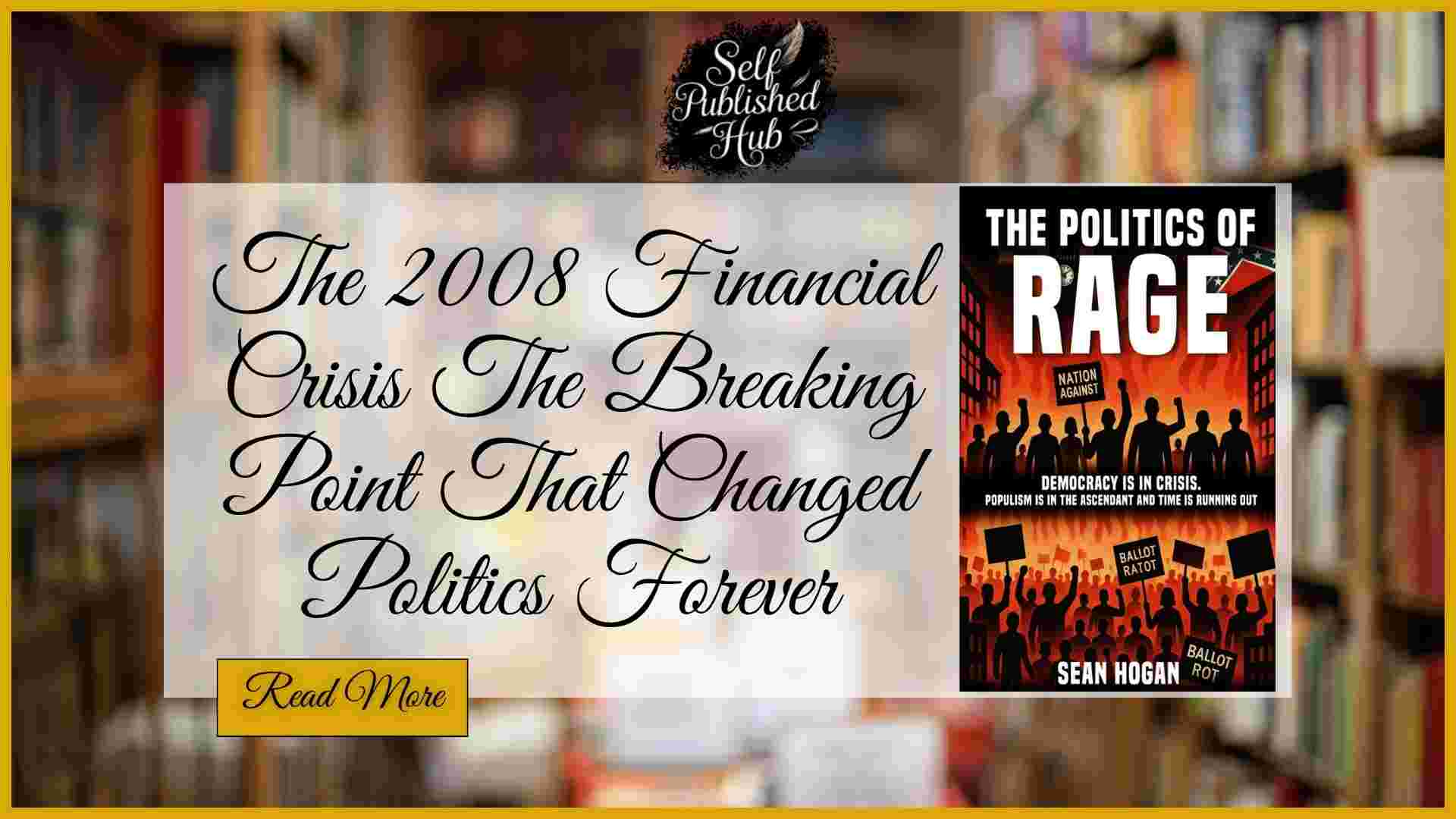
If you are interested in knowing more, Sean Hogan’s The Politics of Rage explores how this moment reshaped politics across the West. His book examines how the crash gave rise to populism, disillusionment, and the loss of faith in democracy itself. Read it to understand how a financial meltdown changed the political world and why its effects are still being felt today.
Head to Amazon to purchase your copy: https://www.amazon.com/dp/B0FH5N8FVQ/.