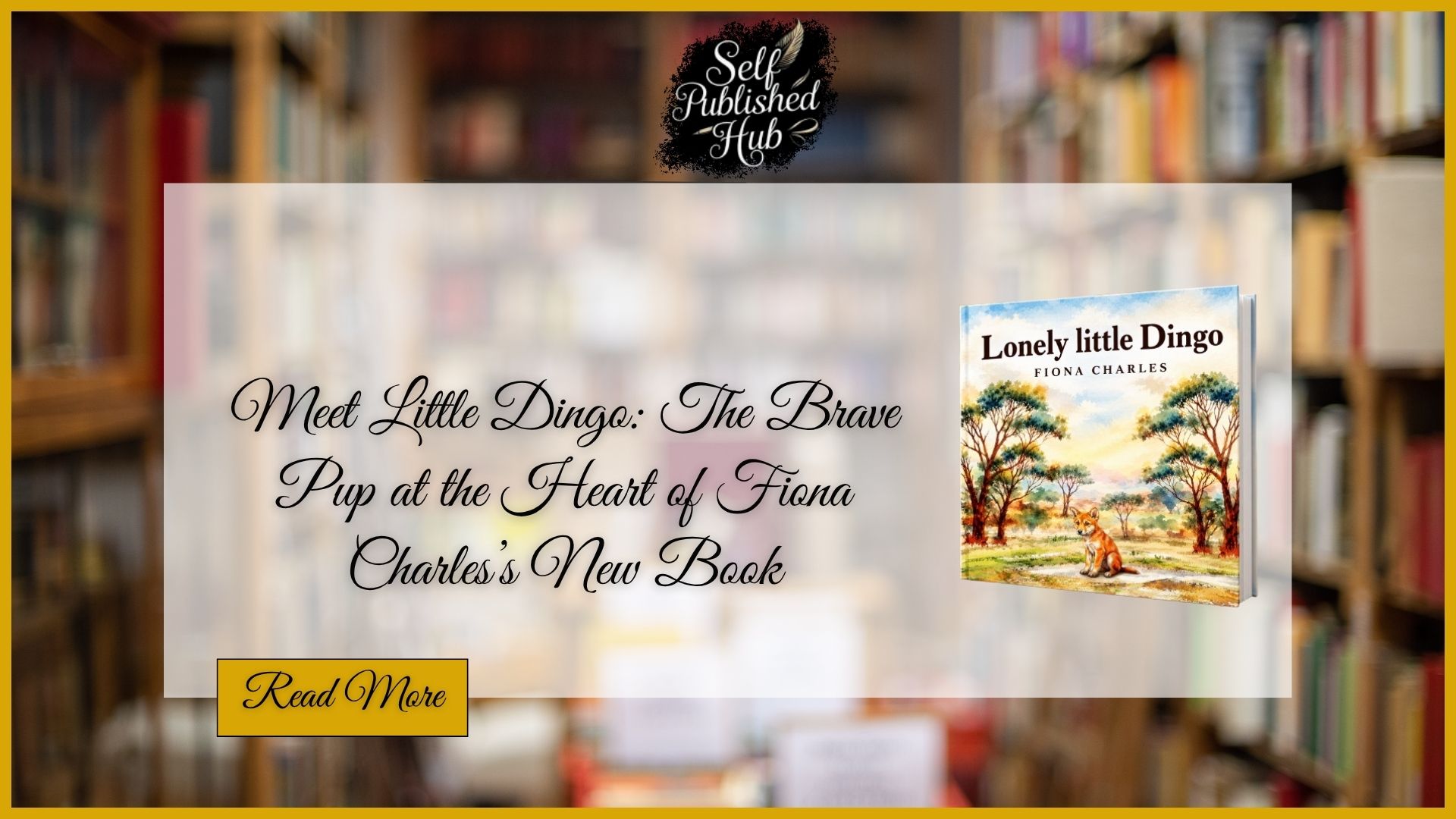
Every memorable children’s story needs a character readers can care about and in Fiona Charles’s Lonely Little Dingo, that character is a small, vulnerable pup trying to make sense of a difficult world.
Little Dingo enters life beneath the Southern Cross, opening his eyes in a crowded den filled with other wild dogs. From the beginning, however, his surroundings feel uncertain rather than comforting. He is unsure who will nurture him and his early days are marked by growling, snapping, biting, hunger and rejection.
Those experiences make Little Dingo an immediately sympathetic character. He is not fearless. He is frightened, confused and vulnerable. But he is also curious and determined and that is where his bravery begins.
As he grows older, Little Dingo starts venturing beyond the den. The world outside feels calmer. The air is fresher, the chaos is farther away and each journey helps him build confidence. He explores farther from home each day, discovering that life can feel different beyond the environment he has always known.
Then his growing independence is suddenly interrupted.
Little Dingo becomes caught in a trap, suffering sharp pain in his hind leg and losing the ability to run or move. Weak, hungry and exhausted, he can do little more than wait for whatever comes next.
Help eventually arrives when unfamiliar hands carry him to a warm, clean place. There, he is fed and cared for and his body begins to heal. But Fiona Charles does not make his recovery unrealistically easy. Little Dingo remains frightened by his new surroundings and suspicious of the people caring for him. He hisses, bares his teeth, tears apart his bed and strikes at his cage.
This is where Little Dingo becomes more than simply the hero of an animal adventure.
His courage is not shown through fearlessness. Instead, it appears in the fact that he keeps going even while fear remains. He carries memories of the biting, growling and disorder of his old den. Those memories bring sadness and anger and yet he still longs to see his fractured family again.
That emotional complexity gives young readers a character who feels real. Little Dingo can be hurt and hopeful at the same time. He can be scared and still move forward.
By the end of the book, his future remains uncertain. Released and left to survive on his own, Little Dingo once again finds himself beneath the Southern Cross. He does not know exactly where he belongs or what lies ahead, but he continues walking. His only companion is hope.
That final image captures the heart of Fiona Charles’s story. Little Dingo’s bravery is not about having all the answers. It is about taking the next step despite everything he has been through.
With its Australian setting, expressive illustrations and themes of loneliness, resilience, trust and hope, Lonely Little Dingo gives children a touching character to root for while offering parents and caregivers meaningful opportunities for conversation.
Meet Little Dingo. He may be small, but his journey carries a powerful reminder: sometimes courage begins simply by continuing forward.
Lonely Little Dingo by Fiona Charles is available now on Amazon: https://www.amazon.com/dp/B0HLYCX8X3