Readers who love historical fiction often look for more than period detail. They want characters who feel alive women who face real limitations, make difficult choices, endure loss and gradually discover what they are capable of.
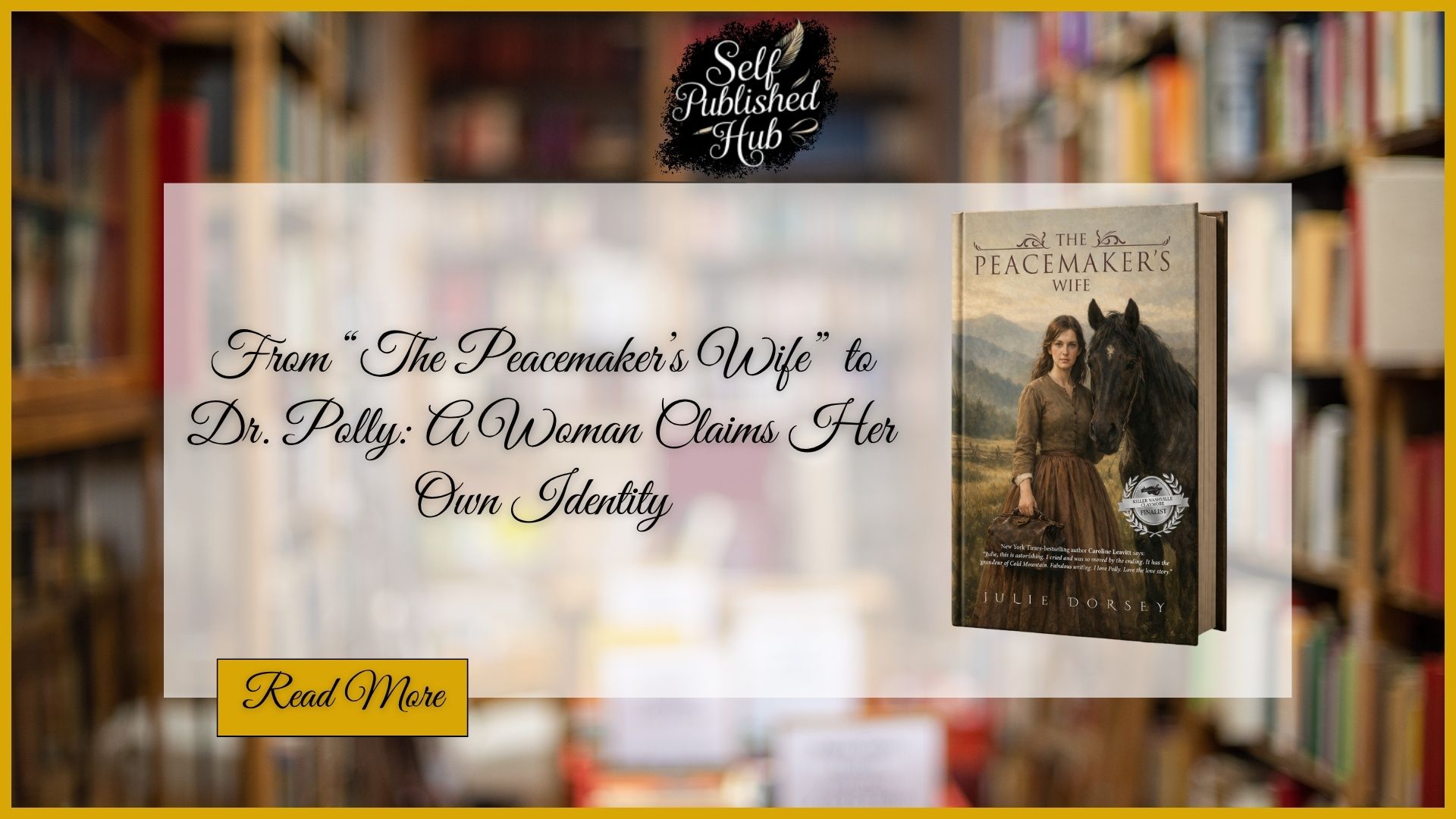
Julie Dorsey’s The Peacemaker’s Wife delivers exactly that kind of heroine in Polly Justice.
Set in the Blue Ridge Mountains of North Carolina beginning in the 1850s, the novel follows Polly as she navigates marriage, motherhood, medicine, mystery and the social expectations placed on women of her time. What makes her especially compelling is that her strength does not appear all at once. It develops through experience.
That makes her journey feel earned.
Polly Is Strong Because She Keeps Becoming Stronger
At the beginning of the story, Polly is young and still learning who she is.
She has married John Justice, a man admired in the community for settling disputes and earning the nickname “The Peacemaker.” Yet Polly’s private experience of marriage is far more complicated. John can be controlling, drunken and violent, forcing her to live with a painful divide between the man everyone respects and the man she knows at home.
Polly does not instantly become fearless. Instead, she grows stronger each time she refuses to give up her sense of purpose.
That gradual transformation is one of the novel’s greatest strengths.
Her Calling Gives Her an Identity of Her Own
Polly’s determination to become a healer is central to her story.
Haunted by the death of her baby sister Lucindy, she becomes obsessed with learning enough to prevent another tragedy. She studies medical books, improves her reading and writing and trains under Nan Clark, the experienced “granny woman” of Blue Ridge.
Through Nan, Polly learns about childbirth, medicinal plants, salves, tinctures and traditional remedies. Eventually, she must step into the role herself.
That is when Polly becomes more than someone’s wife.
She becomes Dr. Polly, a woman other people depend on in moments of pain, illness, fear and birth.
Her Strength Is Complicated, Not Perfect
Polly is also interesting because she is not written as an idealized heroine.
She can be jealous, impulsive, judgmental, frightened, angry and conflicted. She carries guilt. She makes morally difficult decisions. She loves deeply, sometimes unwisely and struggles with questions of loyalty, faith, justice and survival.
Those flaws make her more believable.
Readers are not simply watching a “strong woman.” They are watching a woman become stronger while still remaining recognizably human.
A Story Bigger Than One Woman
Polly’s journey unfolds against a richly layered historical backdrop that includes Appalachian folk medicine, family conflict, murder, romance, faith and the upheaval of the Civil War era.
The women around her matter too. Nan becomes a mentor. Candy offers friendship and emotional support. Other women in the community reveal different versions of survival, dependence, hardship and resilience.
Together, they create a world where women often have limited formal power but still shape families, medicine, community life and one another’s futures.
A Heroine Worth Following
Fans of strong female historical fiction should read The Peacemaker’s Wife because Polly Justice is not remarkable simply because she defies expectations.
She is remarkable because she learns.
She learns to heal. She learns to read people. She learns to trust her own judgment. And, most importantly, she learns that her identity does not have to end with the words “The Peacemaker’s Wife.”
Julie Dorsey’s novel gives readers a heroine who earns the right to be known by a name of her own: Dr. Polly.
Read the book on Amazon: https://a.co/d/0j0TaE7e