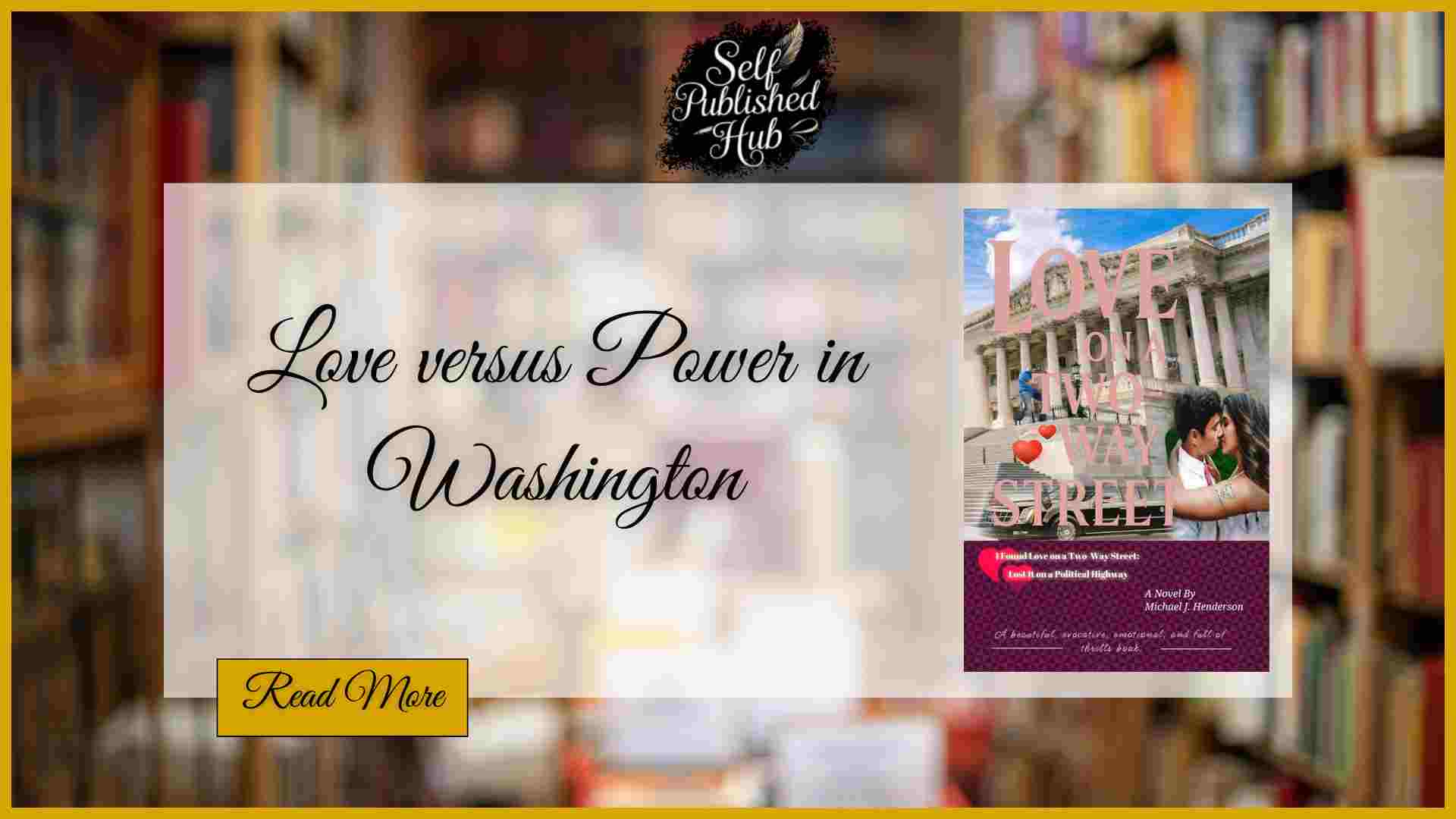
Love in Washington often enters the stage with hope, yet it rarely leaves without a cost. In the fast-paced world of political ambition, personal relationships face pressures that most couples will never encounter. This tension between private loyalty and public power sits at the heart of many real and fictional stories about the capital. It also shapes the central conflict in Michael J. Henderson’s book, I Found Love on a Two-Way Street: Lost It on a Political Highway. The book utilizes its characters and their choices to illustrate the challenges of maintaining love when political power becomes the primary objective.
In most political spaces, power demands attention. Leaders spend long hours shaping images, managing secrets, and protecting careers. The pursuit of influence can overshadow personal values. As a result, relationships often bend under the weight of constant scrutiny. In the book, this pressure is reflected through characters who must decide whether to honor personal bonds or protect political futures. The story does not rely on dramatic twists. Instead, it focuses on how small compromises and quiet moments of doubt can change the direction of a relationship.
One example comes from the way politics often forces people to hide parts of themselves. Public figures and those close to them learn to speak carefully and thoughtfully. They measure every move and usually keep emotions at a distance to avoid risk. The book mirrors this reality. Characters involved in political work find themselves making choices that blur the line between personal truth and strategic action. It mirrors common patterns in Washington, where people sometimes prioritize ambition over honesty, even with those they love.
Another example can be seen in the way power can create unequal relationships. When one person in a couple holds influence or seeks to rise in a political system, the other may feel pushed aside. Their needs become secondary. I Found Love on a Two-Way Street captures this dynamic by showing how ambition can isolate partners. It illustrates that emotional distance is not always caused by conflict. It can grow slowly as political duties expand and private time becomes increasingly scarce.
The book also reveals how secrets become a regular part of political life. Washington runs on hidden deals and guarded information. When this secrecy enters romantic relationships, trust becomes fragile. The story uses this tension to show how even a strong connection can weaken when the truth must be filtered or delayed. These moments resonate with the real world, where couples tied to political work often struggle to distinguish between public duty and private loyalty.
What I Found Love on a Two-Way Street reveals about romance in dirty politics is simple. Love can survive pressure, but only when honesty and care prevail over ambition. When power becomes the primary focus, relationships often face cracks that are difficult to repair. The book provides a precise examination of these challenges without exaggeration. It keeps the characters grounded and shows how everyday struggles can be a reality. Readers interested in the balance between personal commitment and political ambition will find this story both engaging and thought-provoking.
To explore these themes further, consider reading I Found Love on a Two-Way Street: Lost It on a Political Highway by Michael J. Henderson, available on Amazon: https://www.amazon.com/dp/B0FGL1R32P?.