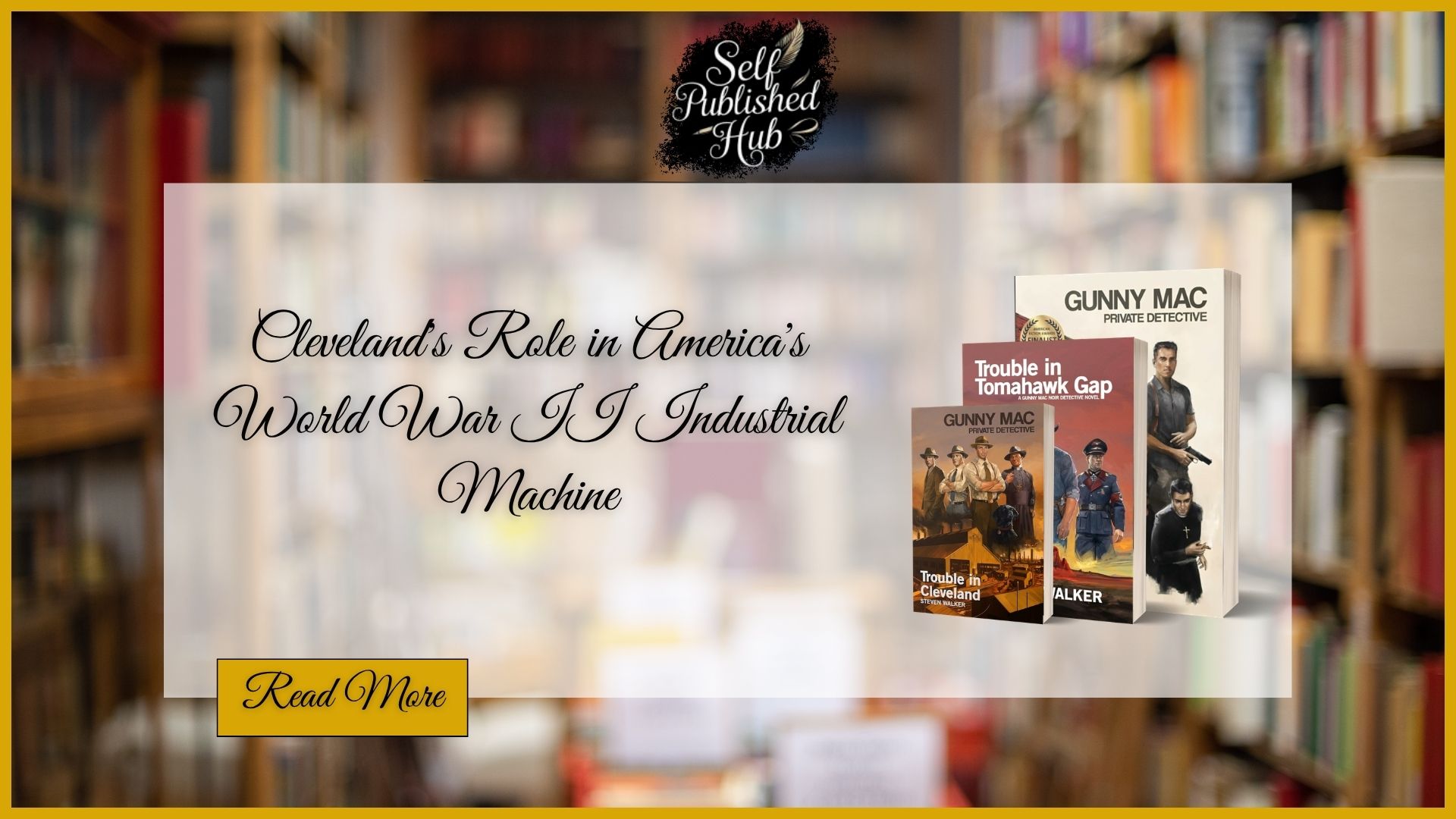
During World War II, American cities did more than send soldiers overseas. They built the equipment, materials, and infrastructure needed to keep those soldiers fighting. In Steven G. Walker’s Trouble in Cleveland, the city becomes more than a setting for a detective story. It becomes part of the war itself.
The novel places Gunny Mac and his fellow detectives in Cleveland in 1943, at a time when factories are working under the pressure of wartime production. Industrial plants are not simply businesses. Their output supports military operations, which means an attack on a factory can have consequences far beyond the city limits.
That danger appears immediately when Burke Enterprises suffers a devastating explosion. Ten people are killed, the factory is badly damaged, and production is disrupted. The plant produces lumber and runway matting needed by the military, giving the destruction a possible connection to the larger war.
Was it an accident, revenge, organized crime, or sabotage?
That question brings Gunny Mac and his men to Cleveland.
The investigation fits naturally into the world these characters already know. Mac, Gunny Wojohowitz, Lieutenant Alan Burke, Padre McCaffery, and the other members of the detective agency are wounded veterans. Guadalcanal taught them to watch carefully, trust one another, and recognize danger before it becomes obvious. In Cleveland, those instincts become valuable again.
The enemy, however, is no longer standing across a battlefield.
Cleveland presents a more complicated landscape. Factories, churches, neighborhoods, warehouses, businessmen, police officers, criminals, and families all become part of the investigation. Gunny Mac and his detectives must determine who can be trusted while moving through a city where personal grudges and criminal interests can hide behind respectable appearances.
Walker also gives readers a sense of a city shaped by industry. Smoke rises from factory stacks. Businesses contribute to the national war effort. Workers depend on plants for their livelihoods, while the military depends on what those plants produce. Damage to one factory can affect workers, families, military supply chains, and the people fighting thousands of miles away.
That connection gives Trouble in Cleveland much of its tension.
The war may be overseas, but Cleveland is helping supply it. That makes the city valuable, and anything valuable can become a target.
For readers who enjoy World War II fiction, private detective stories, organized crime, military characters, and historical settings, Trouble in Cleveland brings those elements together through Gunny Mac and the men who followed him from combat into civilian investigation.
They survived Guadalcanal.
Now they have to find out who brought the war home.
Read the book on Amazon: https://www.amazon.com/dp/B0B6QQVVT6