Have you ever found yourself behaving differently depending on who you are with? Perhaps you appear confident at work, reserved around strangers, or unusually agreeable with family members. These changes may seem insignificant, yet they raise an important question: How much of our personality reflects who we truly are, and how much is shaped by what others expect from us?
From childhood onward, we learn to adjust our behaviour to fit different environments. Social expectations influence how we communicate, express emotions, and present ourselves. While these adjustments help us navigate relationships, they can sometimes create distance between our public identity and private feelings.
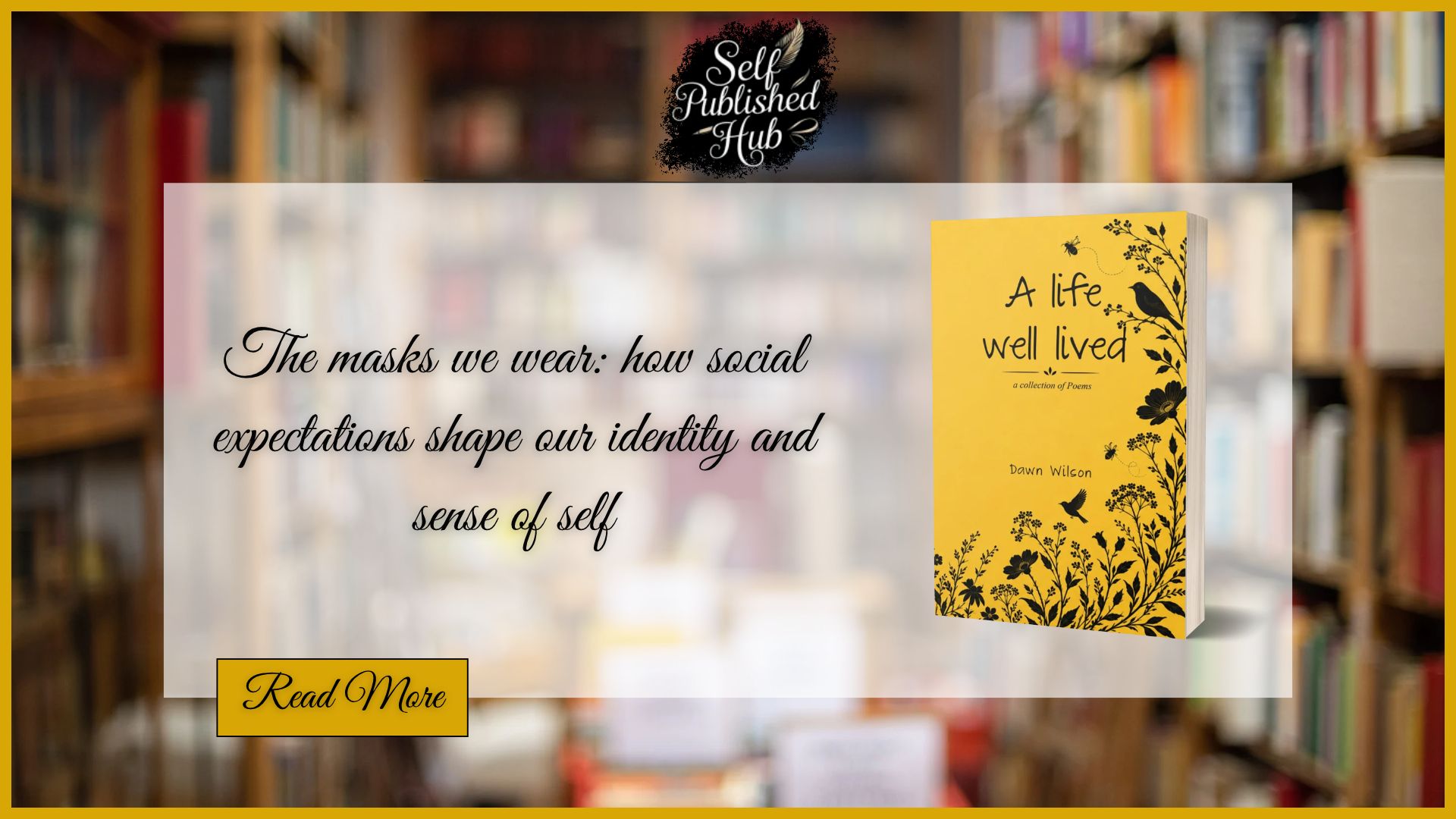
In A Life Well Lived, Dawn Wilson explores this complexity through her poem “Who am I?” The poem reflects on the different masks people develop throughout life, particularly as innocence gradually gives way to experience, responsibility, and social pressure.
These masks are not necessarily dishonest. They may protect vulnerable emotions, maintain relationships, or help us fulfil responsibilities. However, when we become too accustomed to meeting expectations, recognising our authentic selves can become difficult.
Adolescence often brings this tension into sharper focus. The desire to belong can influence personal choices, while fear of rejection may discourage honest self-expression. As adulthood approaches, responsibilities multiply, and people begin presenting different versions of themselves as friends, partners, family members, and workers.
The challenge is not having different roles. It is allowing those roles to determine everything about us.
Dawn Wilson also examines the influence of fear in “The Ages of Fear,” tracing how concerns about failure, acceptance, and uncertainty can shape decisions across different stages of life. The reflection suggests that growing older may bring greater freedom from anxieties that once seemed overwhelming.
This perspective connects closely with the question of identity. When we constantly worry about being judged, we may gradually prioritise approval over personal satisfaction. Decisions about appearance, relationships, ambitions, and everyday preferences can become influenced by expectations we have rarely questioned.
Yet personal identity is not fixed. Experiences, changing priorities, and growing self-awareness can encourage us to reconsider the assumptions that once shaped our behaviour.
In A Life Well Lived, the poem “Ode to 50” captures this sense of liberation through a growing indifference to unnecessary judgments about appearance and personal choices. Rather than treating middle age solely as a period of limitation, it presents an opportunity for greater independence.
Authenticity, however, does not require rejecting social responsibilities or disregarding other people’s feelings. It involves recognising the difference between thoughtful compromise and continually suppressing personal preferences.
We can begin by considering where we feel most comfortable expressing ourselves. Are there opinions we avoid sharing simply to prevent disagreement? Are there expectations we continue meeting despite no longer believing in them?
Such questions may reveal where our choices genuinely reflect our values and where fear continues to influence us.
Ultimately, understanding ourselves is an ongoing process. We may never completely remove the masks that accompany different relationships and responsibilities, nor must we.
What matters is remembering that beneath every social role exists an individual whose thoughts, feelings, and values deserve recognition. Living authentically begins when we stop allowing the expectations of others to become the only measure of who we are.