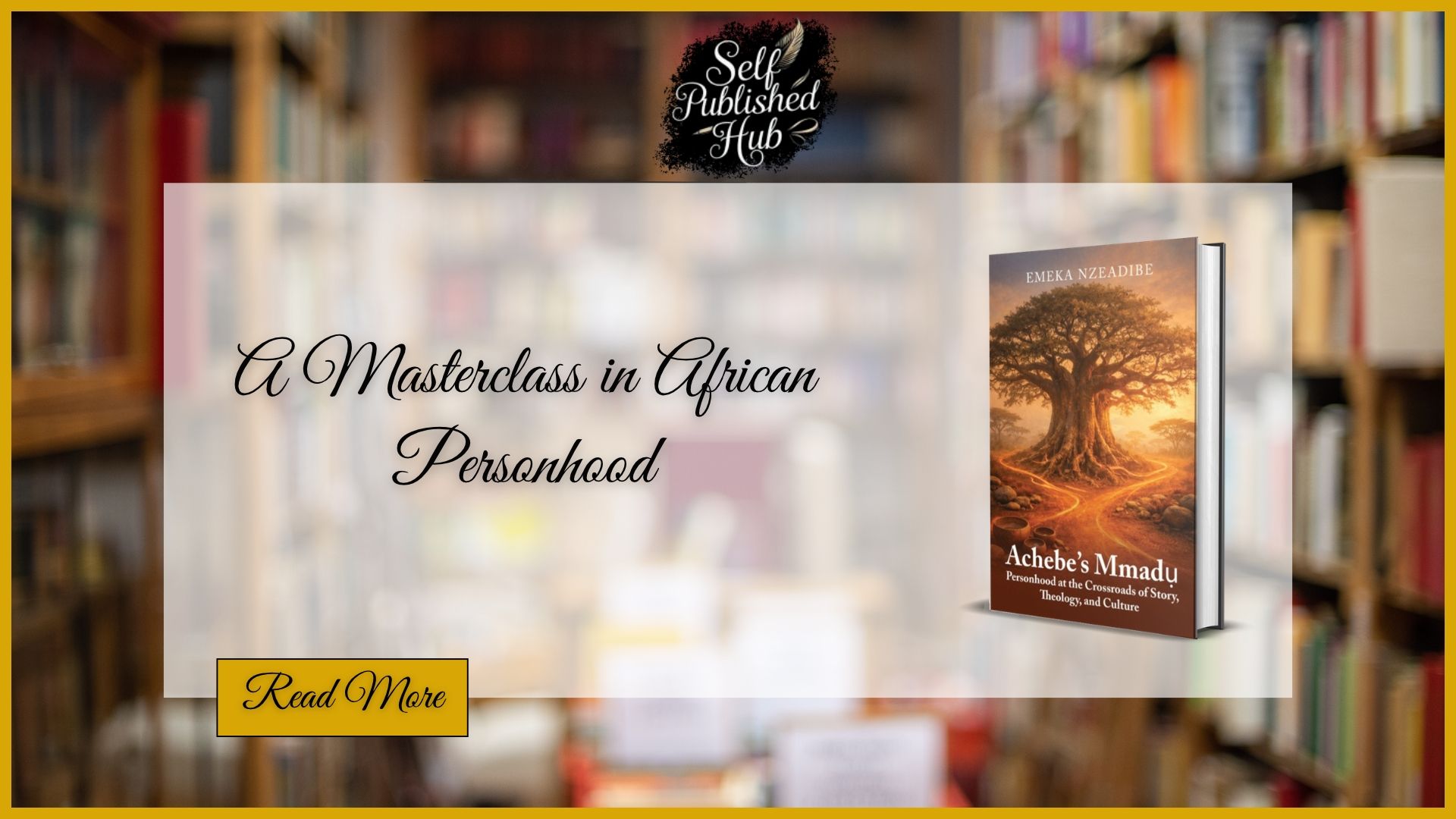
For decades, literary criticism surrounding Chinua Achebe’s classic novels has favored sociological and ethnological readings, as many scholars have long analyzed Things Fall Apart and Arrow of God as good historical fiction or Aristotelian tragedy. They often sideline the deep-seated philosophical and metaphysical currents running beneath the surface, such as Emeka Nzeadibe’s Achebe’s Mmadụ: Personhood at the Crossroads of Story, Theology, and Culture, which shatters this critical limitation. By shifting the lens toward theological anthropology, Nzeadibe elevates Achebe’s literary universe into a rich, rigorous framework for understanding what it means to be human.
The book offers an exhaustive and illuminating exploration of Mmadụ. Rather than viewing personhood through the isolated, hyper-individualistic prisms common to modern Western philosophy, this book describes how Igbo cosmology constructs an ontology of embodied relationality.
The book traces how a human being is fundamentally tied to a dynamic web of kinship, community, and transcendent reality, and through careful textual analysis of characters like Okonkwo, Unoka, and Ezeulu, Nzeadibe reveals how individual agency and identity cannot exist apart from the communal and spiritual forces that anchor them. Furthermore, the monograph handles the concept of Chi (the personal spiritual double) brilliantly, unpacking how freedom, destiny, and choice operate in tandem within African thought.
What makes this monograph an indispensable read is that it is a resourceful read for theologians and philosophers. It also crosses traditional academic boundaries: the author not only analyzes Igbo culture but also places it in active, respectful dialogue with Western systematic theology and trinitarian ontology, engaging thinkers such as Catherine LaCugna and John Zizioulas.
By drawing striking resonances between the Christian doctrine of the imago Dei and the Igbo understanding of humanity, Nzeadibe constructs an interculturally responsible theology. He shows that indigenous African intellectual traditions are not relics of a precolonial past but living, breathing resources that can enrich global theological discourse and address the fragmentation of the modern world.
Achebe’s Mmadụ is a monumental achievement in intercultural scholarship because it challenges academics, theologians, and literature enthusiasts to expand their horizons and take non-Western intellectual systems seriously. Nzeadibe has written a book that honors Achebe’s artistic vision while carving out an entirely new pathway for theological anthropology in the twenty-first century.
In a world constantly negotiating the tension between local particularity and global connection, Nzeadibe proposes a capacious vision of humanity that honors both difference and a shared destiny. It challenges readers to step past Eurocentric blind spots and embrace an integrated, relational understanding of personhood that values the body, the community, and the transcendent.
Emeka Nzeadibe has written a transformative book that bridges worlds. Achebe’s Mmadụ: Personhood at the Crossroads of Story, Theology, and Culture challenges us to look anew at the stories we tell and the philosophical foundations upon which we build our societies. Whether you are deeply passionate about African literature, eager to explore intercultural theology, or simply searching for a more relational understanding of what it means to be human, this book is an absolute must-read that will teach you the meaning behind being human and kind, with others and yourself as well.
Through proverbs, myths, and narratives, a culture continues to speak. Emeka Nzeadibe’s book shows that when those voices are heard carefully, they can enrich not only one community’s understanding of humanity but also the wider human conversation.
Read the book on Amazon: https://a.co/d/0363OG8A
Visit the Author’s Official Website: https://achebesmmadu.com/