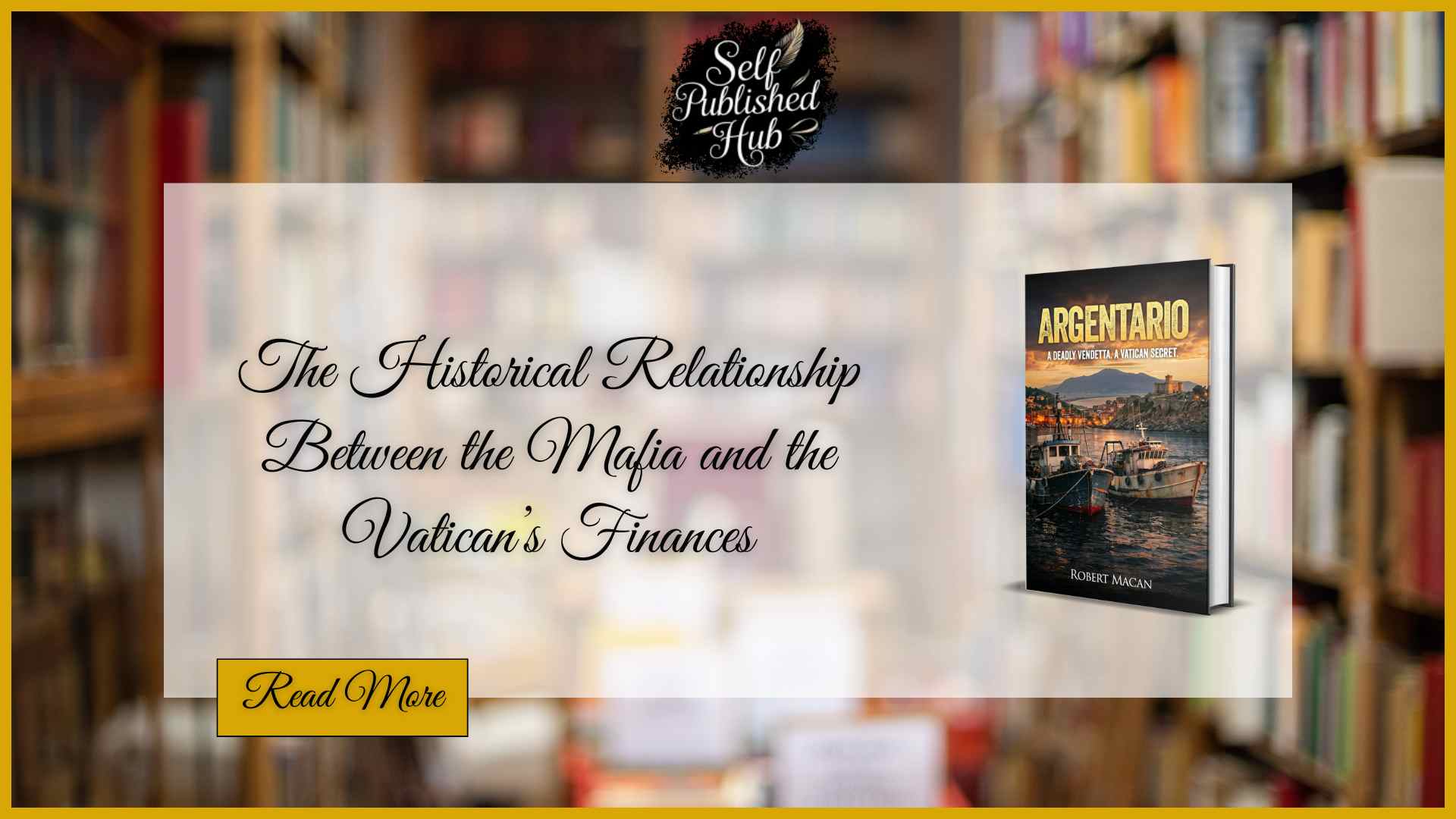
The relationship between organised crime and powerful financial institutions is rarely straightforward. It develops through private meetings, trusted intermediaries, political influence, and arrangements that benefit both sides. In Robert Macan’s historical crime novel, Argentario, this uneasy connection becomes part of a much larger story involving corruption, secrecy, murder, and the movement of money across international borders.
The novel introduces Michele Sindona, a financier whose rise begins in Sicily. Trained as a tax lawyer, he becomes involved in the buying and selling of stolen goods during the Second World War. Through contacts within the Catholic Church, he is introduced to Vito Genovese, a powerful Mafia figure. This relationship gives Sindona protection and allows him to build a profitable business without interference from rival criminal groups.
After moving to Milan, Sindona develops a reputation as a skilled financial adviser. He helps wealthy clients navigate Italy’s complicated tax system and gradually becomes connected to bankers, businessmen, Church officials, and organised crime figures. His knowledge of finance makes him valuable to criminal organisations that need to move and conceal large sums of money.
The Mafia requires more than protection and violence to expand its influence. It needs banks, holding companies, investments, and respectable businesses. Sindona provides access to these tools. Through companies and financial institutions in different countries, money can be transferred, invested, and hidden behind legitimate transactions. Criminal profits can then appear to come from lawful commercial activity.
In Argentario, the Vatican also faces serious financial pressure. Changes to Italy’s tax laws threaten the Church’s privileged financial position. Pope Paul VI seeks Sindona’s assistance because he believes the financier can protect Vatican assets and move them into safer international markets.
Sindona proposes transferring Vatican resources into the tax free Eurodollar market through offshore corporations. Such an arrangement would protect the Church from taxation while also concealing the location and ownership of its investments. The proposal offers financial security, but it also places enormous control in the hands of a man connected to organised crime.
This arrangement creates a dangerous overlap between religious authority, criminal finance, and international banking. The Vatican seeks protection for its wealth, while Sindona gains influence, credibility, and access to powerful institutions. The Mafia benefits because a respected financial system can help disguise the movement of illegal money.
Argentario uses this historical background to support a wider crime story centred on the Zampa family. A stolen document, a disappearance, and a hidden financial network connect events from the early 1970s to an investigation in 1999. Scipio Zampa must uncover how local crimes are tied to powerful people who have spent decades protecting their interests.
Through its mixture of history and fiction, Argentario explores how money can create alliances between institutions that appear completely different. Readers interested in Mafia history, Vatican finance, political corruption, and international crime will find a tense and thought provoking story in Robert Macan’s novel.
Discover this book now, available on Amazon: https://www.amazon.com/dp/B0H8MHBQV9