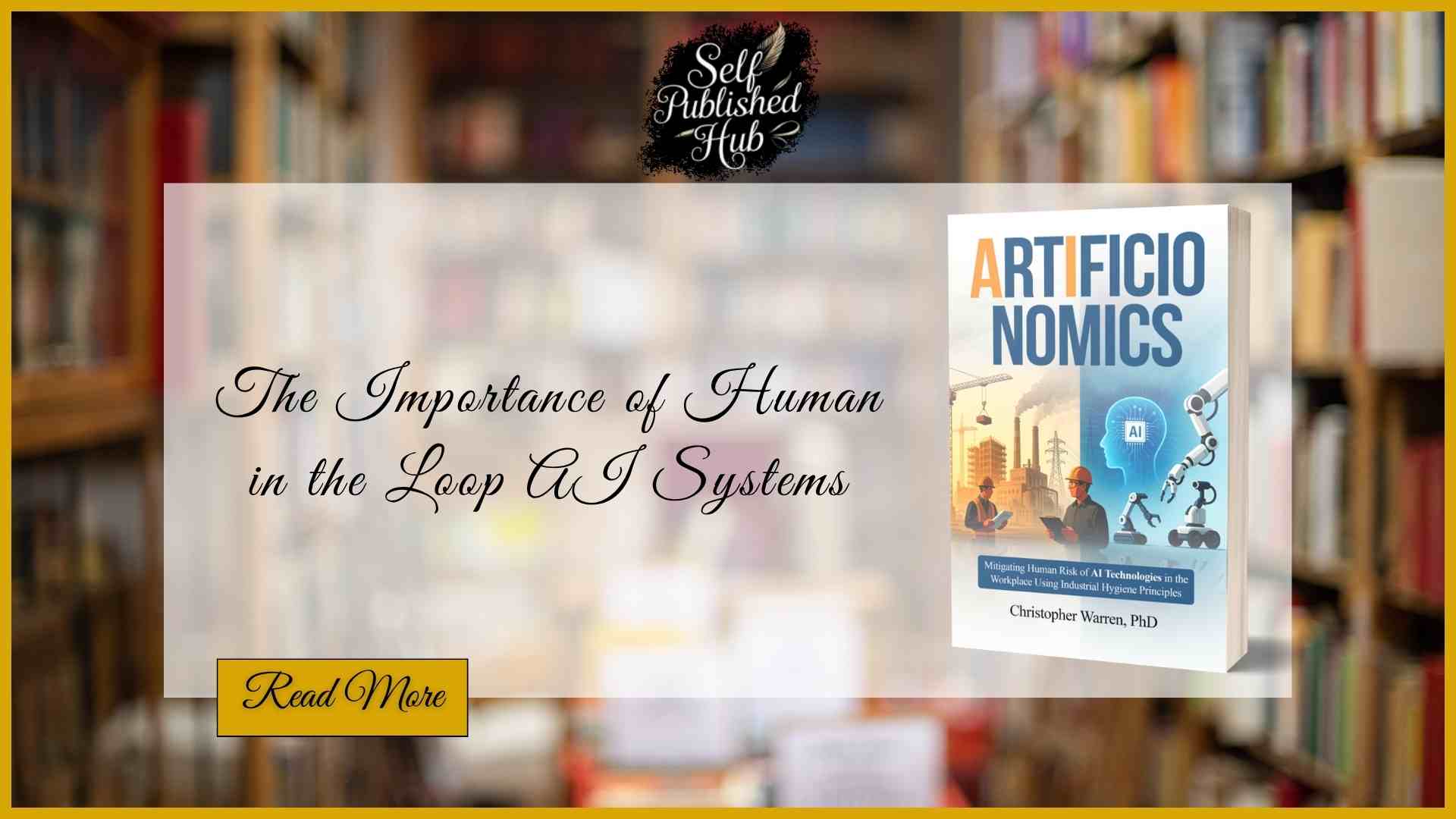
Technology should support human judgement, not replace it. That is the heart of Artificionomics: Mitigating Human Risk of AI Technologies in the Workplace by Christopher Warren, PhD.
As intelligent systems become part of hiring, scheduling, safety monitoring, healthcare, logistics, and performance review, one truth becomes clear: people must remain central. When decisions are left entirely to automated processes, workers can feel powerless, unseen, and unfairly judged. This creates stress, distrust, and serious ethical concerns.
Human in the loop systems keep people involved at critical decision points. They allow workers, managers, and safety professionals to review, question, override, or refine system outputs. This protects not only accuracy, but also dignity. A machine may detect patterns, but it cannot fully understand context, emotion, fairness, or lived experience.
Christopher Warren’s Artificionomics explains why this matters for modern workplace safety. The book shows that today’s risks are not always visible. They may appear as anxiety from constant monitoring, fatigue from automated workflows, reduced autonomy, or confusion over decisions no one can explain. Human oversight helps prevent these hidden harms from becoming part of everyday work. Oversight
For organizations, keeping people in the loop builds trust. Employees are more likely to accept new tools when they know a human voice still matters. It also reduces legal, ethical, and cultural risks by ensuring that decisions affecting people are not handled blindly.
For safety professionals, this approach expands the meaning of occupational protection. Safety is no longer only about preventing physical injury. It is also about protecting judgement, confidence, mental wellbeing, and human value.
Artificionomics offers leaders a practical framework for responsible innovation. It does not reject technology. It shows how to use it wisely, with safeguards that keep people respected and protected.
Christopher Warren’s book is essential for executives, safety teams, policymakers, and professionals who want progress without losing the human centre of work. In the future, the safest systems will not be the ones that remove people from decisions. They will be the ones that strengthen human judgement, preserve accountability, and make technology serve humanity.
Get your Copy Now on Amazon: https://www.amazon.com/dp/B0GFY4RL6B.