Storytelling
When most readers imagine Victorian literature, they picture London fog, elegant drawing rooms, and the complex social codes that governed nineteenth-century Britain. However, the Victorian era was not limited to England. It was shaped by global movements, empires, and the exchange of ideas and cultures, with the Caribbean playing a central role in this narrative.
The Caribbean in Transition
Throughout the nineteenth century, the Caribbean experienced profound changes. In the aftermath of slavery, new identities emerged, and cultures blended in ways that shaped families, political life, and everyday experience. These important histories rarely feature in classic Victorian novels, except as distant references or as sources of inherited wealth. Yet the Caribbean was not marginal; it was integral to the lived reality of the era.
Bringing the Caribbean into Focus
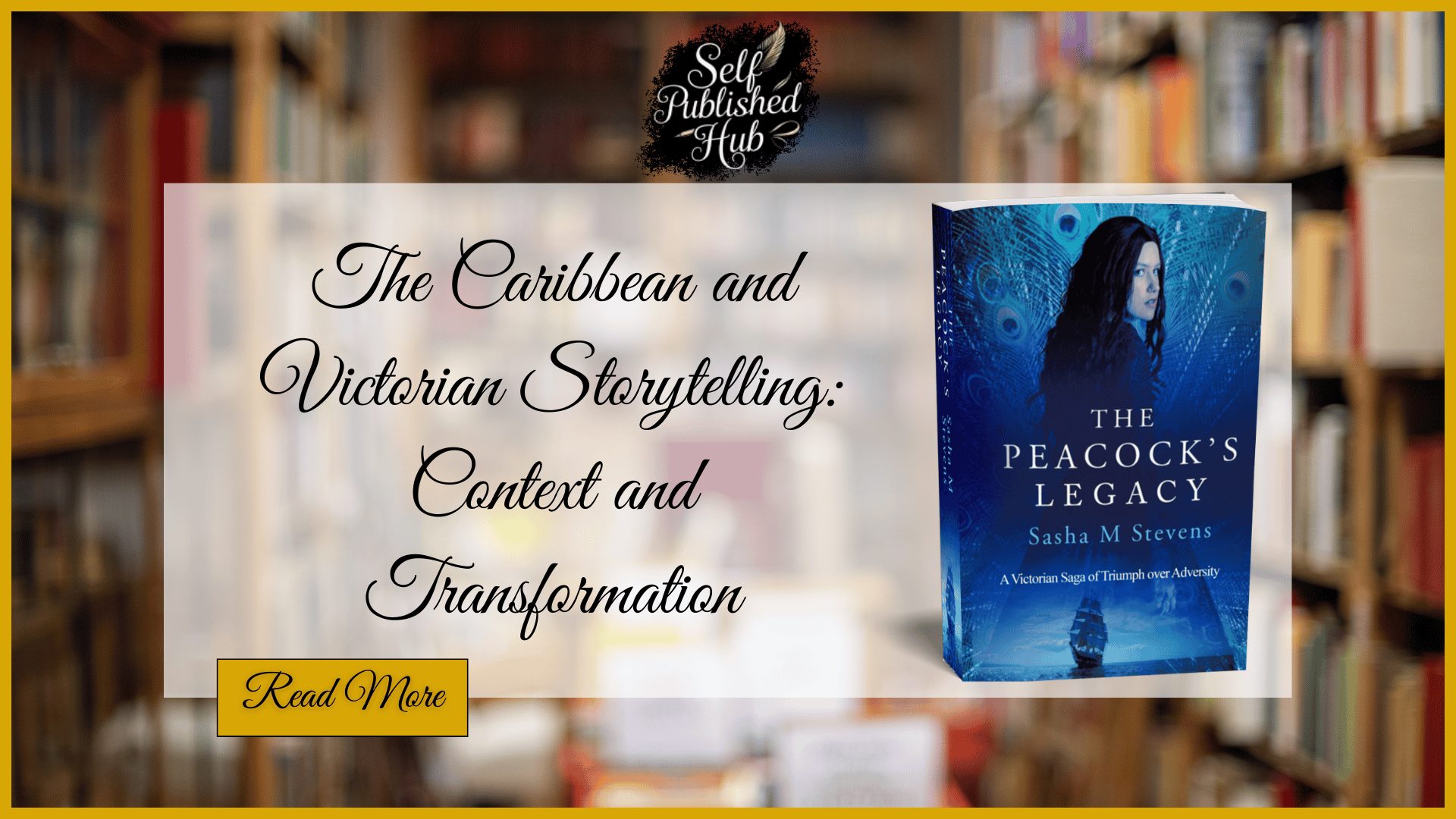
The Peacock’s Legacy by Sasha M. Stevens brings this frequently overlooked world into sharp relief. When Brigid Power marries John, a sea captain from Barbados, her life broadens far beyond the familiar landscapes of Europe and America. Her experiences in the Caribbean are not merely a backdrop; they constitute a transformative period that reveals the true interconnectedness of the nineteenth century.
Complexity and Identity
The novel explores the complexity of Caribbean society during this period, highlighting layered identities, shifting social structures, and the emotional and cultural negotiations required of those who moved between different worlds. For Brigid, Barbados becomes a place where she must navigate new customs, forge new relationships, and confront new truths about herself. The Caribbean shapes her as profoundly as any character she meets.
Challenging Traditional Narratives
By placing the Caribbean at the centre of a Victorian-era story, The Peacock’s Legacy challenges the notion that the period belongs only to Britain’s domestic life. It reminds us that Victorian lives were influenced by global forces such as migration, trade, cross-cultural families, and the traumatic legacies of pre- and post-colonialism. Literature that acknowledges this world could provide a fuller understanding of the era. Currently, there is a dearth of such literature. Information survives in newspaper reports, church records, or in Creole and Patois oral testimony. The voices of generations are lost to circumstance.
Expanding Perspectives
For readers, this setting provides access to histories and viewpoints that add depth to both the story’s emotional and narrative fabric. It shows how personal journeys were shaped not only by emotion but also by geography, illustrating that the nineteenth century was more broadly interconnected than traditional Victorian fiction suggests.
A Broader Lens
Brigid Power’s time in Barbados is more than a change of scenery; it becomes a crucial part of her legacy. Through her experiences, The Peacock’s Legacy encourages readers to view the Victorian world through a wider lens, which recognises the Caribbean as an essential chapter in its history.