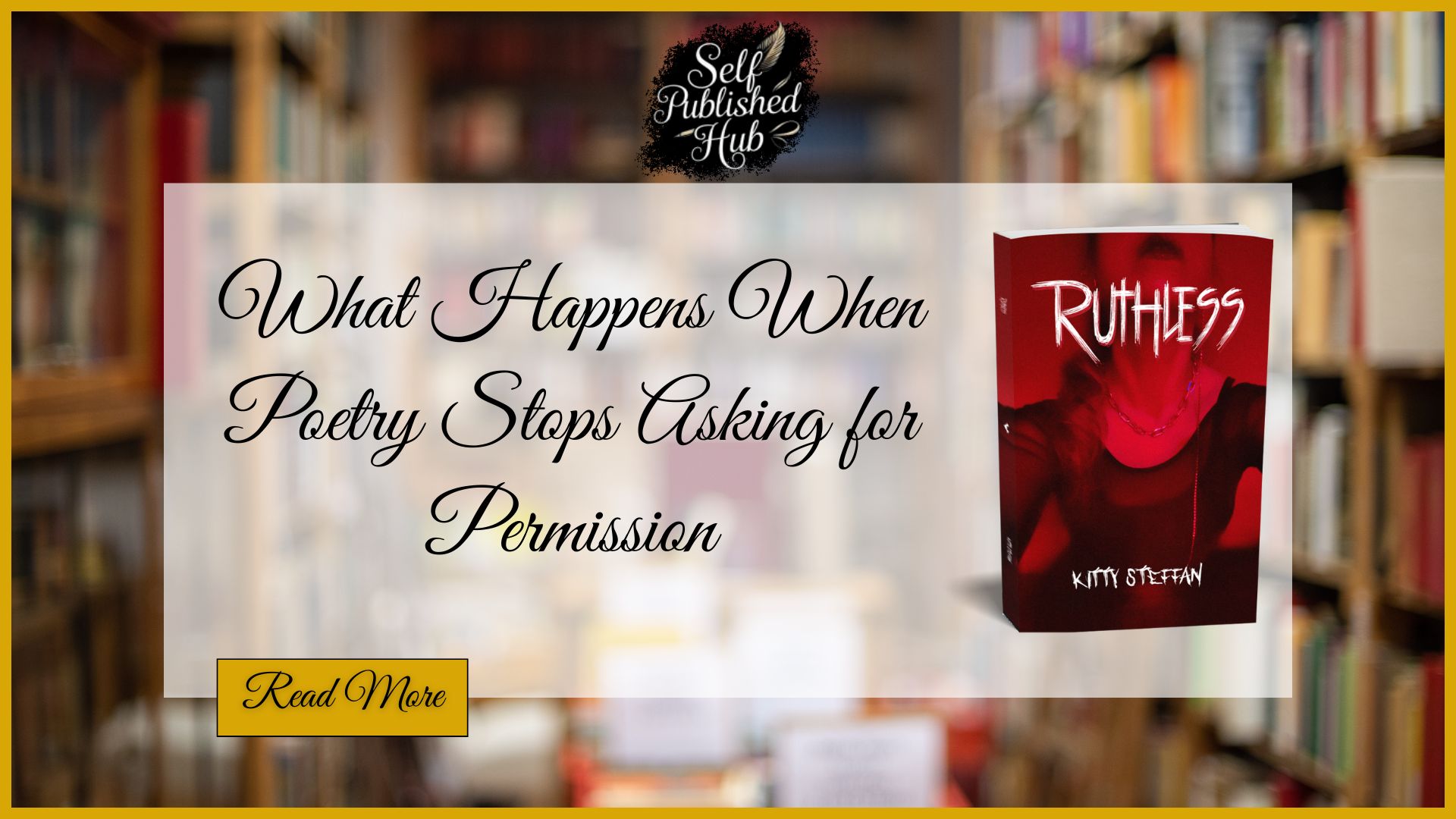
Poetry changes the moment it stops trying to be acceptable. When it no longer waits for approval, it becomes sharper, clearer, and more honest. It stops explaining itself and starts telling the truth as it is lived. This shift is at the heart of Ruthless by Kitty Steffan, a poetry collection that speaks without hesitation and refuses to soften its voice.
The Weight of Permission in Poetry
For a long time, poetry has carried unspoken rules. Be subtle. Be beautiful. Be careful. Many poets learn early to edit themselves before anyone else does. They remove anger, desire, and doubt to avoid discomfort. Permission becomes a silent gatekeeper that decides what is allowed on the page.
When poetry asks for permission, it often trades honesty for safety. The result may be polished, but it is also distant. Readers sense when a poem is holding back. It feels incomplete, even if the language is technically strong.
What Changes When Permission Is Removed
When poetry stops asking for permission, it becomes direct. It names things without apology. It allows contradiction and discomfort to coexist. In Ruthless, this approach is clear. The poems speak openly about love, violence, faith, grief, and survival without pausing to reassure the reader.
That does not mean the work is careless. It means it is intentional. The voice is controlled, yet not restrained. The poems do not explain why they exist. They simply exist, grounded in lived experience rather than expectation.
Examples of Unfiltered Voice
In Ruthless, women are allowed to be angry, desiring, exhausted, and uncertain. Faith is present, but it is not tidy. Love is intense, but it is not always safe. These examples are significant because they reflect genuine emotional states that are often overlooked in polite literature.
Instead of guiding the reader toward comfort, the poems remain with tension. They allow silence, rage, and longing to speak for themselves. This refusal to smooth the edges gives the work its power. Readers do not feel instructed. They feel confronted and recognized.
Why Readers Respond to This Kind of Poetry
When poetry stops asking for permission, readers often feel a sense of relief. They recognize emotions they have been taught to hide. The work becomes something they want to share because it feels true rather than impressive.
That is why Ruthless resonates across literary and cultural spaces. It does not rely on trend or performance. It relies on honesty. That honesty invites connection, especially from readers who are tired of being told how they should feel.
Poetry that no longer asks for permission creates space for voices that have been ignored or softened for too long. Ruthless by Kitty Steffan is a clear example of what happens when a poet chooses truth over approval.
For readers interested in poetry that speaks plainly, holds its ground, and trusts its own voice, this is a book worth reading.
Read Ruthless by Kitty Steffan, available on Amazon: https://www.amazon.com/dp/B0FY957WMW/.