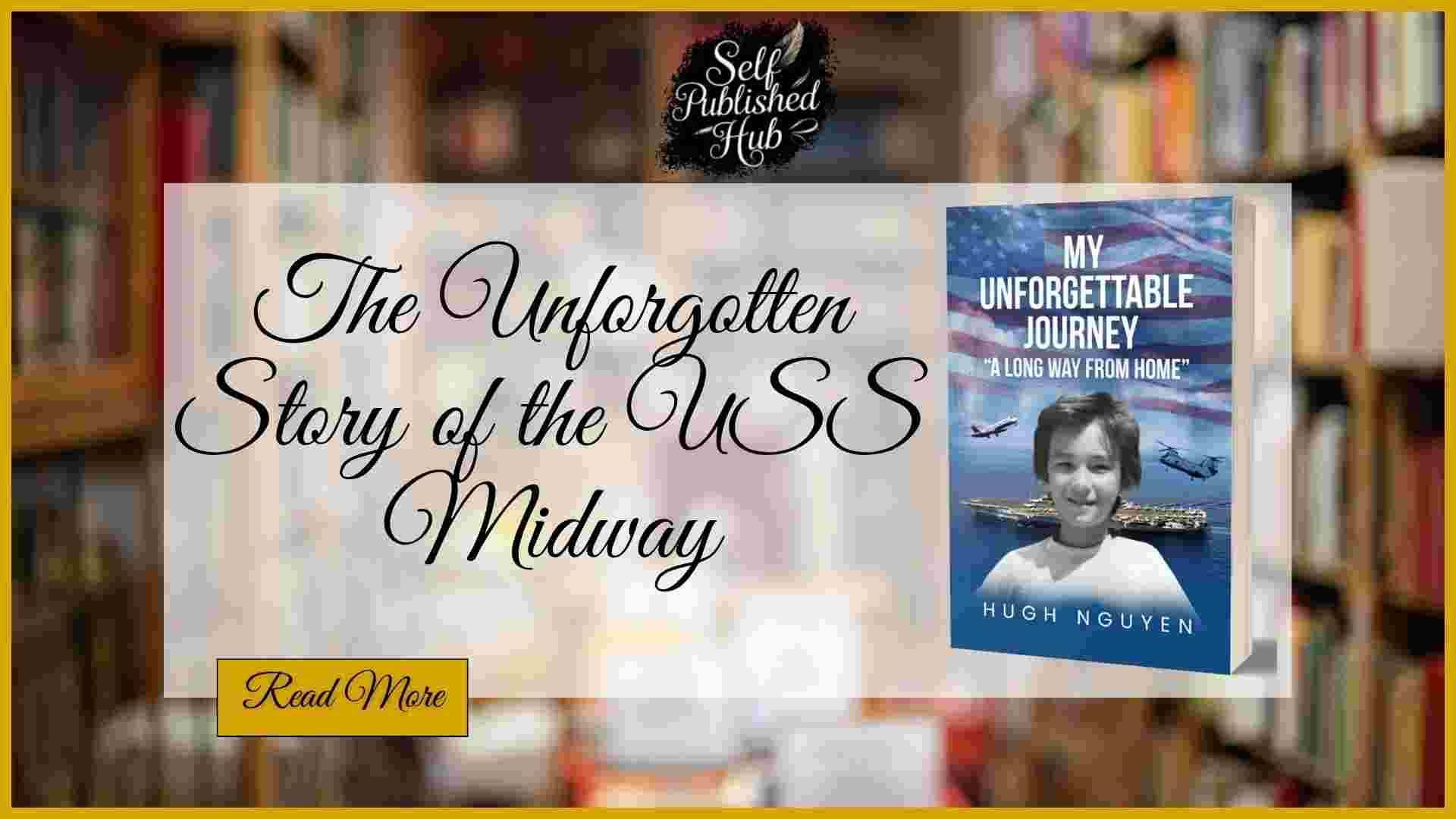
Some moments in history transcend the passage of time. They do not fade into silence but remain alive in the memories of those who lived them. The USS Midway carries one of those moments. It was not just a carrier of steel and firepower, but a vessel of salvation, a lifeline for thousands of Vietnamese families who faced certain death in the final days of the Vietnam War. Among those rescued was a young boy named Hugh Nguyen, whose unforgettable journey from war-torn Saigon to the promise of America is told in his memoir My Unforgettable Journey: A Long Way from Home.
For many, the USS Midway is now a museum in San Diego, a place of education and reflection. But for Hugh Nguyen and more than three thousand refugees rescued in April 1975, it is something sacred. It was the beginning of life anew, the moment when despair turned into a fragile but real hope. When Saigon fell, the city was drowning in chaos. Families scrambled to escape, children cried in fear, and every sound of artillery brought a reminder that the end was near. Operation Frequent Wind, the largest helicopter evacuation in history, was launched to save as many as possible. It was this operation that brought Hugh and his family to the deck of the USS Midway.
The journey was anything but certain. In his memoir, Nguyen recalls the desperation of that day. He was only seven years old, clutching the hands of his aunt and grandparents as helicopters thundered in the sky. The airport had been bombed, the runways destroyed, and the only way out was through the air. Families were separated in the crush of bodies. Some made it onto the helicopters. Others were left behind with cries that still echo through the memories of survivors. Hugh himself boarded a helicopter with part of his family while his two aunts were forced to stay behind. The sight of their faces fading away as the helicopter lifted is one of the most haunting images he carries.
When the helicopter finally landed on the USS Midway, Nguyen and his family were safe, but not whole. The massive ship, which had once been a symbol of war, was transformed into a sanctuary. Sailors and officers who had seen years of combat now extended their hands to frightened children, carrying them off helicopters and offering food and shelter. In Nguyen’s words, the Midway was more than a ship. It was a bridge between despair and possibility.
The story did not end with that first night. Nguyen recalls sleeping on the cold floor with his sister and grandparents, using bubble wrap as bedding. He describes the smell of the ship, the sight of thousands of displaced families, and the long hours of waiting. His aunt Nham, who had led them through every obstacle, refused to rest until she searched every corner of the vessel. Her determination paid off. Against all odds, she found the two missing aunts, reuniting the family. That reunion, on the steel deck of the Midway, was a moment of grace that Nguyen never forgot.
For Hugh Nguyen, the Midway was not just the beginning of safety. It was the start of a lifelong journey that took him from refugee camps to American classrooms, from the pain of being Amerasian to the pride of becoming the first Vietnamese American Clerk-Recorder in the United States. His book reminds readers that history is not only shaped by battles and treaties but also by ordinary families who endured extraordinary trials. The Midway gave him and thousands of others the chance to live those trials and transform them into triumphs.
Today, when visitors walk the decks of the USS Midway Museum, they often pause at the exhibits about Operation Frequent Wind. Many see photographs of helicopters landing, families rushing, and sailors extending their arms. What those photographs cannot capture is the heartbeat of the people who lived those moments. That is where books like Nguyen’s become vital. His story brings humanity to the steel, voices to the silence, and hope to a history often told in statistics.
The USS Midway is a monument to courage and sacrifice. It is a reminder that even in the darkest hours, there can be light. For Hugh Nguyen, it was the vessel that carried him from fear into freedom. For the world, it remains one of the unforgotten symbols of compassion in the midst of war.
Read the memoir to know the complete story. https://www.amazon.com/dp/1970440341