Many of the things we use every day exist because of the work done during the Industrial era. Buildings, tools, railways, and even simple objects like nails came from a time when people worked long hours with their hands to produce what society needed. Yet this period is often reduced to a few inventions and factory names in history lessons. Children rarely hear about the workers and families who made that change possible. When we teach our children about industrial heritage, it helps them understand where modern life came from and why that history still matters.
When children learn about industrial heritage, they begin to see how daily life looked in the past. Work was often done close to home, and entire families took part in trades that supported their household. A father, mother, and children might all contribute in different ways.
This knowledge helps children see how society functioned before machines and mass production. It also shows that the world they live in today did not appear overnight. It grew from generations of work, skill, and effort.
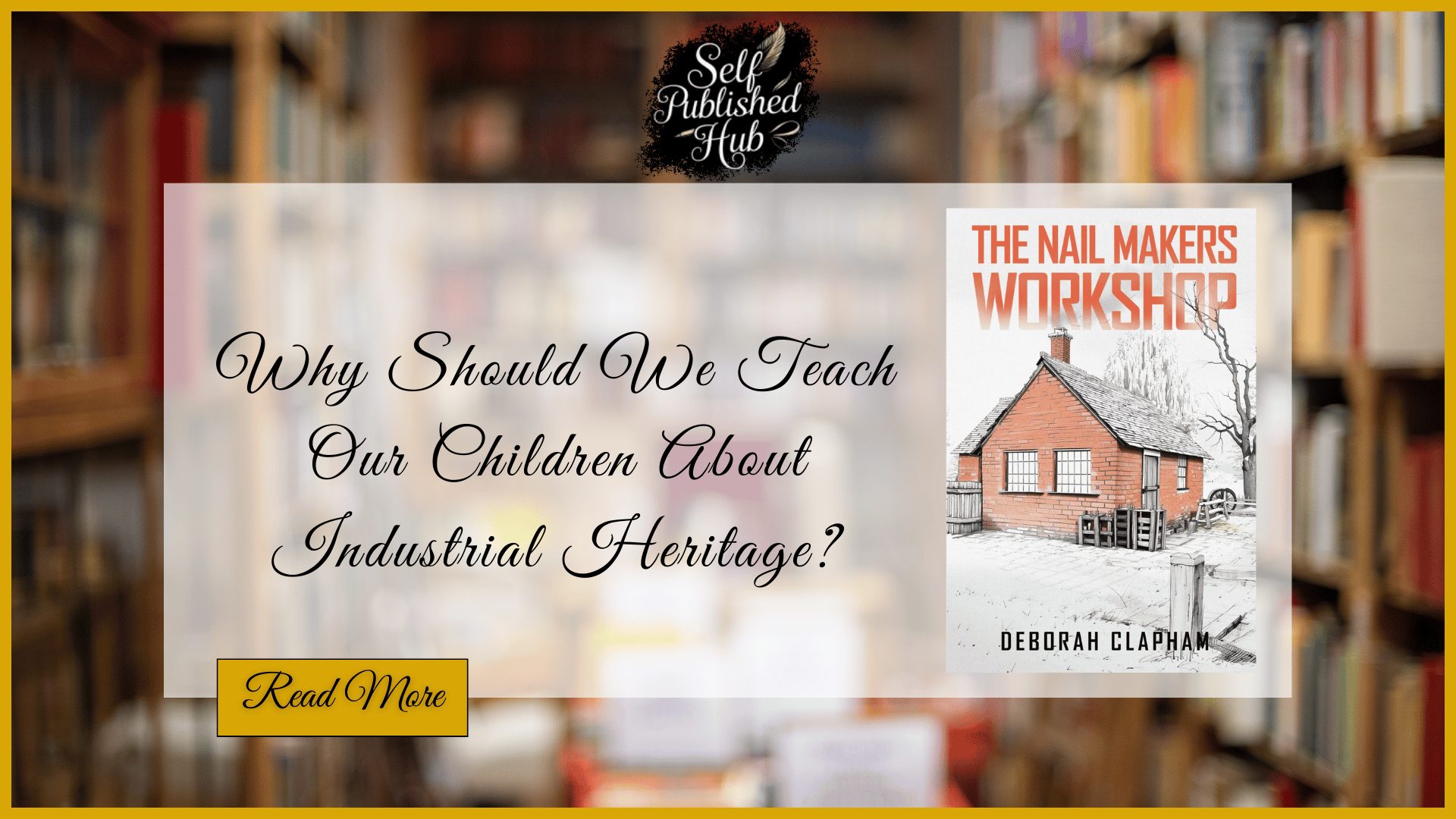
Stories set in this period can make these ideas easier to understand. A book like Emily’s Adventures: The Nail Makers’ Workshop by Deborah Clapham introduces readers to a nail-making family and shows how work shaped their daily life. Through Emily’s observations, children see how trades were carried out and how families depended on them.
Learning to Value Work and Skill
Another reason to teach industrial heritage is to help children respect skilled work. Today, many objects are produced quickly by machines. It is easy to forget that these items once required patience and careful craftsmanship.
Trades like nail-making, blacksmithing, weaving, and carpentry required knowledge passed down through generations. Workers had to understand their tools, their materials, and their customers’ needs. When children learn about these trades, they start to appreciate the skill behind everyday objects. A nail may look small and simple, but it once required time, heat, iron, and steady hands to create.
Encouraging Empathy and Awareness
Industrial heritage also helps children understand the challenges people faced in the past. Working families often struggled with low pay, long hours, and difficult conditions. Learning about these realities encourages empathy.
Children begin to see that progress did not come easily. Improvements in working conditions, education, and fairness developed slowly over time. This understanding helps young readers think more carefully about fairness and opportunity today. It also reminds them that many social improvements happened because people recognized problems and worked to change them.
Connecting History With Real People
One of the most effective ways to teach industrial heritage is through stories. Facts alone can feel distant, but stories place history into the lives of real people.
When children follow a character their own age, history becomes easier to imagine. They see what a workshop looked like, what work sounded like, and how families spent their days. This connection turns history into something personal rather than abstract. It allows children to picture the past in a way that textbooks often cannot achieve.
Preserving Important Cultural Memory
Industrial heritage is also part of cultural identity. Many communities grew around trades such as mining, metalwork, weaving, or farming. These industries shaped towns, traditions, and family histories.
Teaching children about this heritage helps keep those stories alive. It ensures that the work of past generations is not forgotten. It also helps children see how their own communities developed over time.
A Meaningful Way to Explore the Past
Helping children learn about industrial heritage is not only about history. It is about understanding effort, resilience, and the role of ordinary people in shaping society.
Stories can make this learning both engaging and thoughtful. For young readers interested in seeing what working life looked like during the Industrial era, Emily’s Adventures: The Nail Makers’ Workshop by Deborah Clapham offers a clear and gentle introduction. It brings industrial heritage into focus through the experiences of one family and helps children understand how the past continues to influence the present.
The book is now available on https://www.amazon.co.uk/dp/1971610682/