We live in a culture obsessed with outcomes. Conversations are often treated like problems to solve, positions to correct, or debates to win. If a discussion ends without agreement or closure, it is considered a failure. But this assumption quietly erodes relationships, trust, and emotional health.
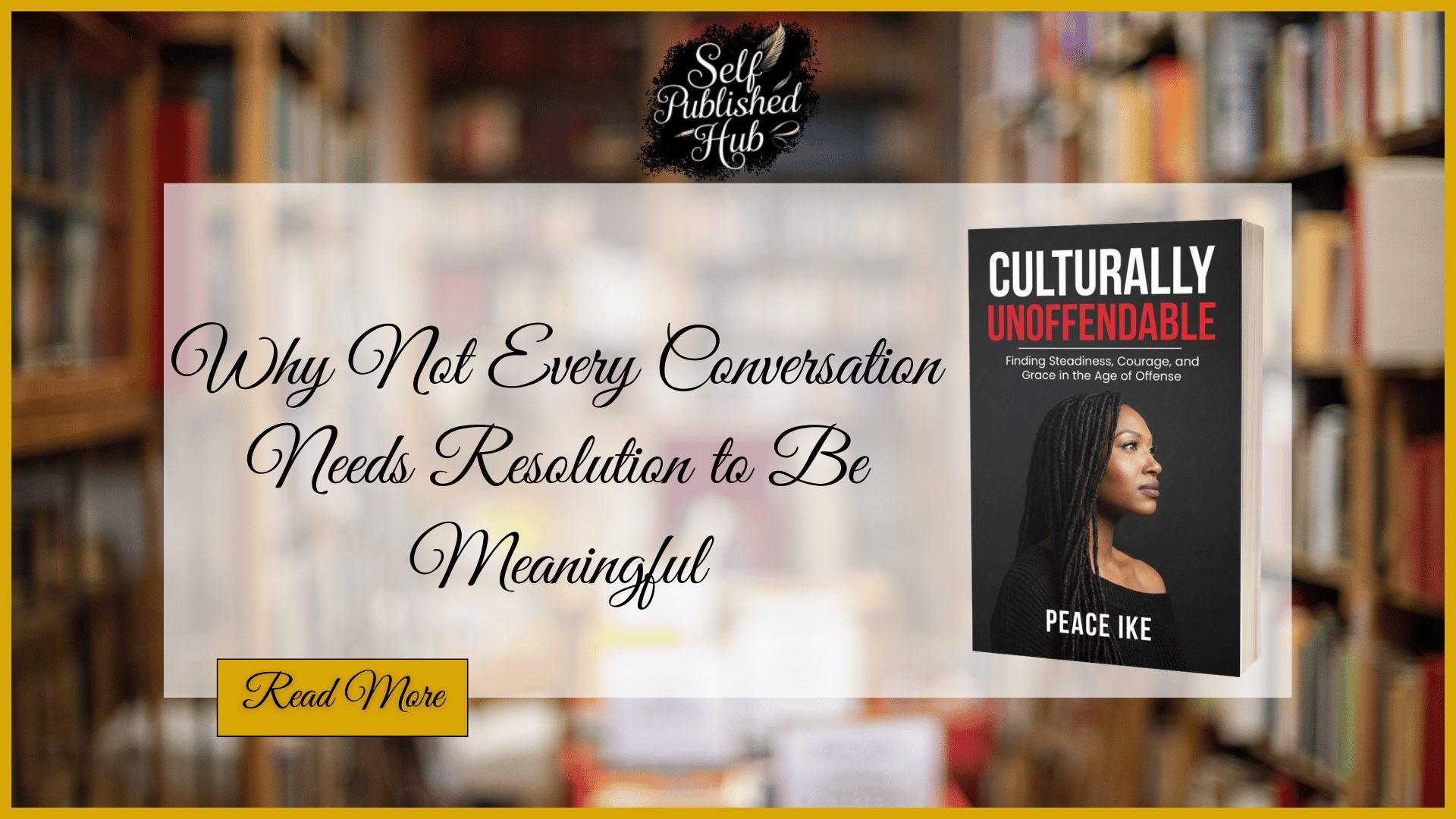
Culturally Unoffendable by Peace Ike offers a different perspective. It invites readers to release the pressure to resolve every disagreement and instead consider what conversations are meant to cultivate rather than conclude.
When Resolution Becomes the Wrong Goal
Not every conversation is designed to reach consensus. Some are meant to build understanding. Others are intended to foster deeper respect or clarify differences. When resolution becomes the primary goal, listening often disappears.
Consider a family discussion around values or beliefs that differ across generations. When the goal is to convince, voices rise, and defensiveness follows. When the goal shifts to understanding, the tone changes. People feel heard even if they remain unconvinced.
Resolution focused conversations often end with someone feeling defeated. Presence focused conversations end with both parties feeling humanized.
The Power of Staying Present Without Agreement
Presence is a discipline. It requires the ability to remain engaged without grasping for control. In professional settings, this might manifest as a leader allowing differing viewpoints to be expressed without forcing alignment. In friendships, it may mean acknowledging a difference and choosing connection over consensus.
Peace Ike emphasizes that meaningful engagement does not require overlap. It requires respect. You can sit across from someone who sees the world entirely differently and still offer dignity, curiosity, and care.
For example, a workplace discussion about strategy may expose big differences in approach. A leader who insists on immediate agreement may shut down valuable insight. A leader who listens fully and reflects what they hear creates space for trust and long term collaboration.
Why Listening Is More Transformative Than Convincing
Listening without an agenda changes people. It lowers defenses and invites openness. When people feel heard, they are more likely to reflect on their own positions over time.
Convincing aims for control. Listening aims for understanding. One hardens lines. The other softens hearts.
In Culturally Unoffendable, listening is framed not as a passive act, but as a strength. It is the willingness to be present without the need to dominate the outcome. This kind of restraint communicates confidence and emotional maturity.
Letting Conversations Be What They Are
Some conversations plant seeds. Others simply reveal where people stand. Both have value.
A meaningful exchange might end with a simple acknowledgment, like, ‘I see how you arrived there,’ even though I do not agree. That sentence alone can preserve a relationship and dignity.
When people stop forcing resolution, they often discover a deeper connection. They learn that understanding does not require agreement and respect does not require sameness.
A More Sustainable Way to Engage
Releasing the need to fix, win, or resolve every conversation is freeing. It allows relationships to breathe and conversations to unfold naturally.
Culturally Unoffendable by Peace Ike offers wisdom for those weary of endless arguments and emotional exhaustion. It provides a framework for engaging others with steadiness, clarity, and grace.
For anyone seeking richer conversations without the pressure of resolution, this book is a valuable and timely read.