Yes, there are some men who prefer not to change, but they will keep expecting the woman they are dating to forget their wrongdoings and false commitments.
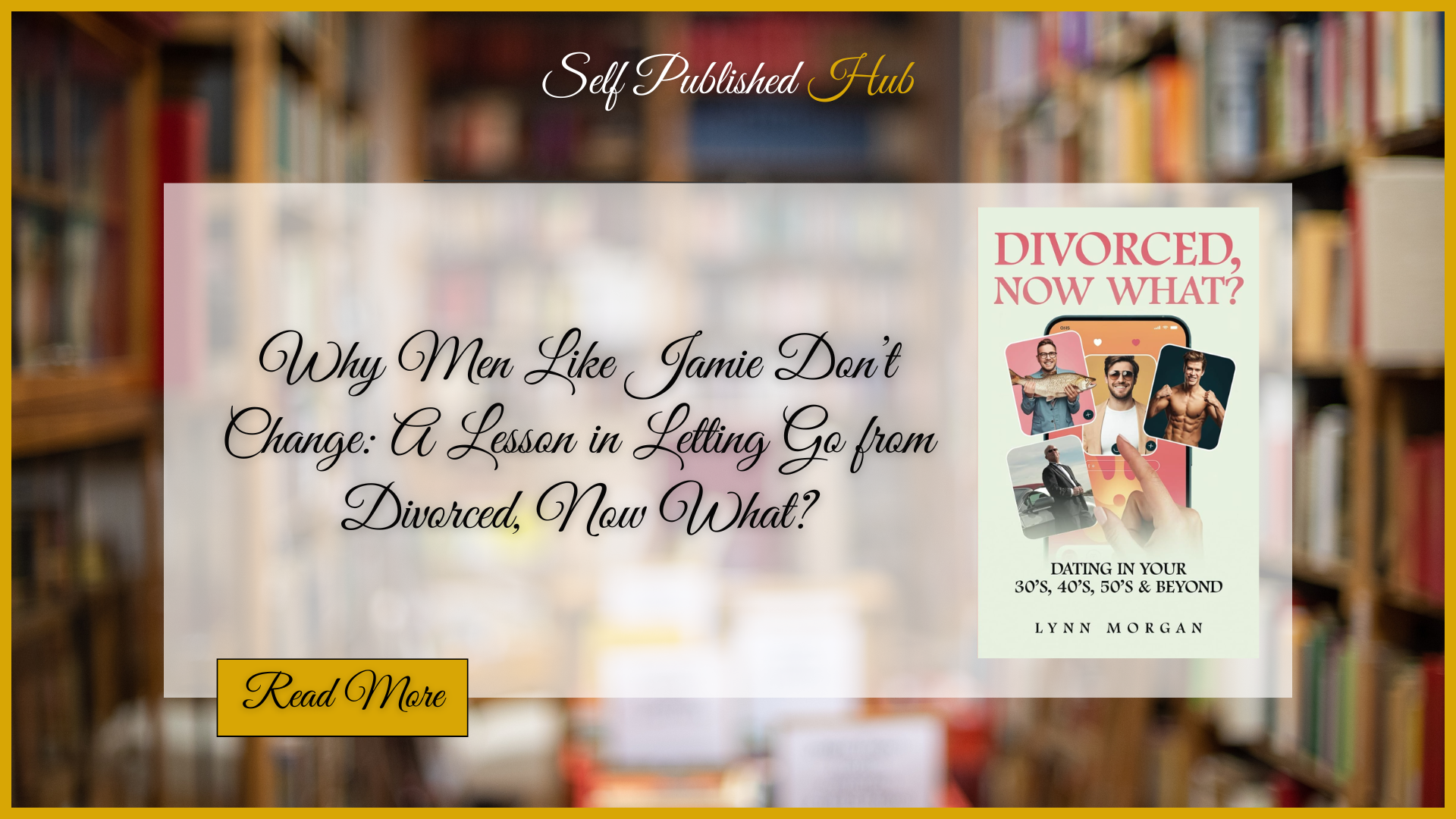
In Lynn Morgan’s emotionally honest and unflinchingly brave memoir Divorced, Now What?, readers witness a journey familiar to far too many women: the tug-of-war between hope and heartbreak, desire and reality, promises and disappointment. One of the most defining—and haunting—chapters of Morgan’s post-divorce dating experience revolves around Jamie, a man who said all the right things but never once followed through with action.
What makes Jamie’s story so jarring isn’t just the broken promises. It’s the fact that even after years of emotional inconsistency, he continued to appear—uninvited and unannounced—like a ghost from a chapter Lynn had long since closed. The culmination of this drama arrived on a quiet Wednesday night, after Lynn returned home from a long workday. As she prepared to roll out the trash bins, Jamie stepped out from the shadows like a scene out of a psychological thriller. He had been parked nearby, waiting.
This wasn’t romance. This was manipulation disguised as love.
He approached her car, asking why she hadn’t called, if she had received the flowers. There was no card, no context, no conversation to indicate she even welcomed the gesture. He professed his love. He begged for another chance. And Lynn, in her calm but resolute way, reminded him: “Do you not remember we are done?”
She asked him the same question she had asked again and again over the years: “Are you divorced yet?”
And, predictably, his answer was still no.
At this point, it had been over four and a half years since they began dating. Four and a half years of empty promises, passive apologies, false starts, and delayed endings. Four and a half years where Lynn had given time, compassion, and opportunity to someone who clearly wanted the perks of a relationship, without the accountability.
Why Don’t Men Like Jamie Change?
Morgan’s story isn’t just about Jamie. It’s about a pattern. Men like Jamie don’t change—not because they can’t, but because they don’t have to. They count on your empathy, your belief in their potential, and your unwillingness to walk away from history. They tell you what you want to hear, time it just right, and rely on nostalgia to cloud your clarity.
These men exist in a liminal space, where they keep one foot in your life while the other remains comfortably planted in the world they refuse to leave. In Jamie’s case, he was still married. Still unavailable. Still clinging to a version of himself he never had the courage to become.
What Lynn learned—and what she generously shares through Divorced, Now What?—is that words without action are manipulation. Love without commitment is a trap. And intentions without follow-through are nothing more than emotionally dangerous illusions.
The Power in Saying “No More”
Jamie stayed in her driveway for 45 minutes that night. He wanted to come inside. She didn’t let him. That moment wasn’t just about boundaries—it was about reclaiming power. Jamie had taken up enough of her time, energy, and emotional bandwidth. No more.
Men like Jamie don’t change because they benefit from the status quo. They blur the lines between affection and control. But Divorced, Now What? serves as both a cautionary tale and a triumphant anthem: you don’t have to wait for someone to become the person they keep promising to be.
Get Your Book: https://www.amazon.com/dp/1967441553