Traditional learning is built on structure. Fixed schedules, standardized curriculum, and predefined outcomes create a system designed for consistency not creativity. It works for delivering information at scale, but it often limits how deeply students engage with what they are learning.
Independent learning operates differently. It is driven by curiosity, shaped by personal interest, and guided by self-direction rather than external instruction. This difference changes not only what students learn, but how they think.
In a traditional setting, learning is often reactive. Students follow instructions, complete assignments, and prepare for evaluations. The goal becomes performance. Success is measured through grades, scores, and rankings. While this system can build discipline, it rarely encourages exploration beyond what is required.
When students take ownership of their learning, they begin asking better questions. Instead of focusing on what will be tested, they focus on what they want to understand. This creates a deeper level of engagement. Concepts are not memorized for short term recall. They are explored, applied, and connected to real world contexts.
Problem solving improves because students are not given step by step instructions. They learn how to navigate uncertainty, test ideas, and refine their approach. Critical thinking develops because they are constantly evaluating information rather than accepting it at face value.
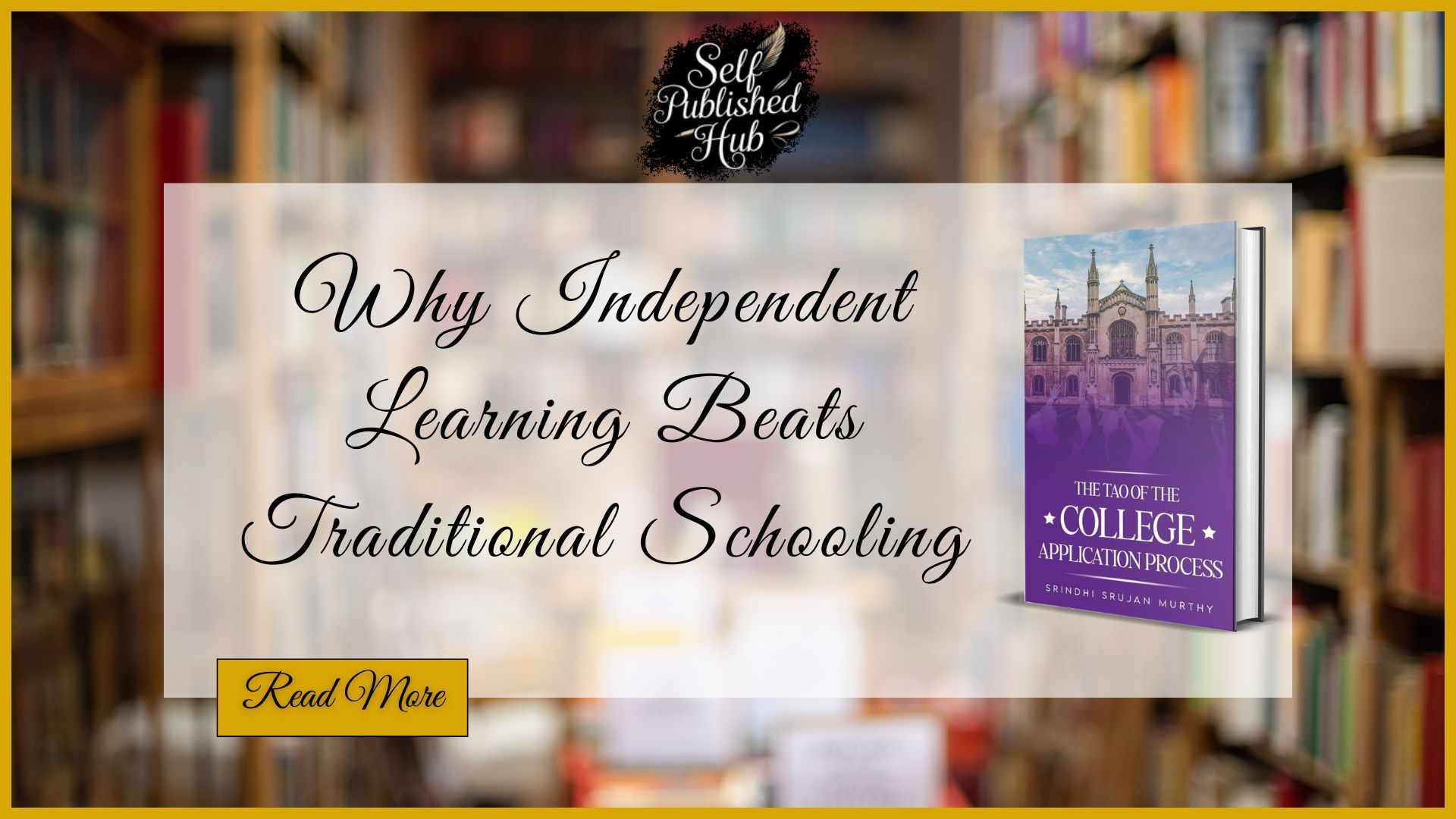
The Tao of the College Application Process by Srinidhi Srujan Murthy reflects this approach by emphasizing learning through creation. It highlights how meaningful growth comes from pursuing ideas beyond the classroom, where structure is limited and initiative becomes essential.
Traditional schooling moves at a fixed pace. Students either keep up or fall behind. Independent learning allows individuals to move at a pace that matches their understanding. They can spend more time on complex topics and move quickly through familiar ones. This adaptability leads to more efficient learning.
When students choose what they learn, they are more likely to stay engaged, even when challenges arise. The motivation is internal rather than imposed. This makes it easier to continue working through difficulties, because the work holds personal meaning.
Independent learning also fosters creativity. Without strict boundaries, students are free to explore ideas in unconventional ways. They can combine disciplines, experiment with different approaches, and develop original solutions. This kind of thinking is difficult to cultivate within rigid systems.
There is also a shift in how success is perceived. In traditional schooling, success is often tied to external validation. In independent learning, success is tied to progress and capability. Students begin to measure growth through what they can do, not just what they can demonstrate on a test.
However, independent learning does not eliminate the value of structure. It redefines how structure is used. Instead of being imposed, it is created. Students learn to organize their time, set goals, and maintain consistency without relying on external enforcement. This develops self discipline in a more sustainable way.
The book reinforces this idea by showing that real development happens when students align their actions with their interests. When learning is connected to purpose, effort becomes more focused and results become more meaningful.
Ultimately, independent learning prepares students for environments where answers are not predefined. It trains them to think independently, adapt to change, and approach problems with confidence.
Traditional schooling provides a foundation. Independent learning builds on it. When students move beyond passive instruction and take control of their learning, they do not just gain knowledge. They develop the ability to apply it, question it, and expand it.
Get Your Copy On Amazon https://www.amazon.com/dp/1971950998/.