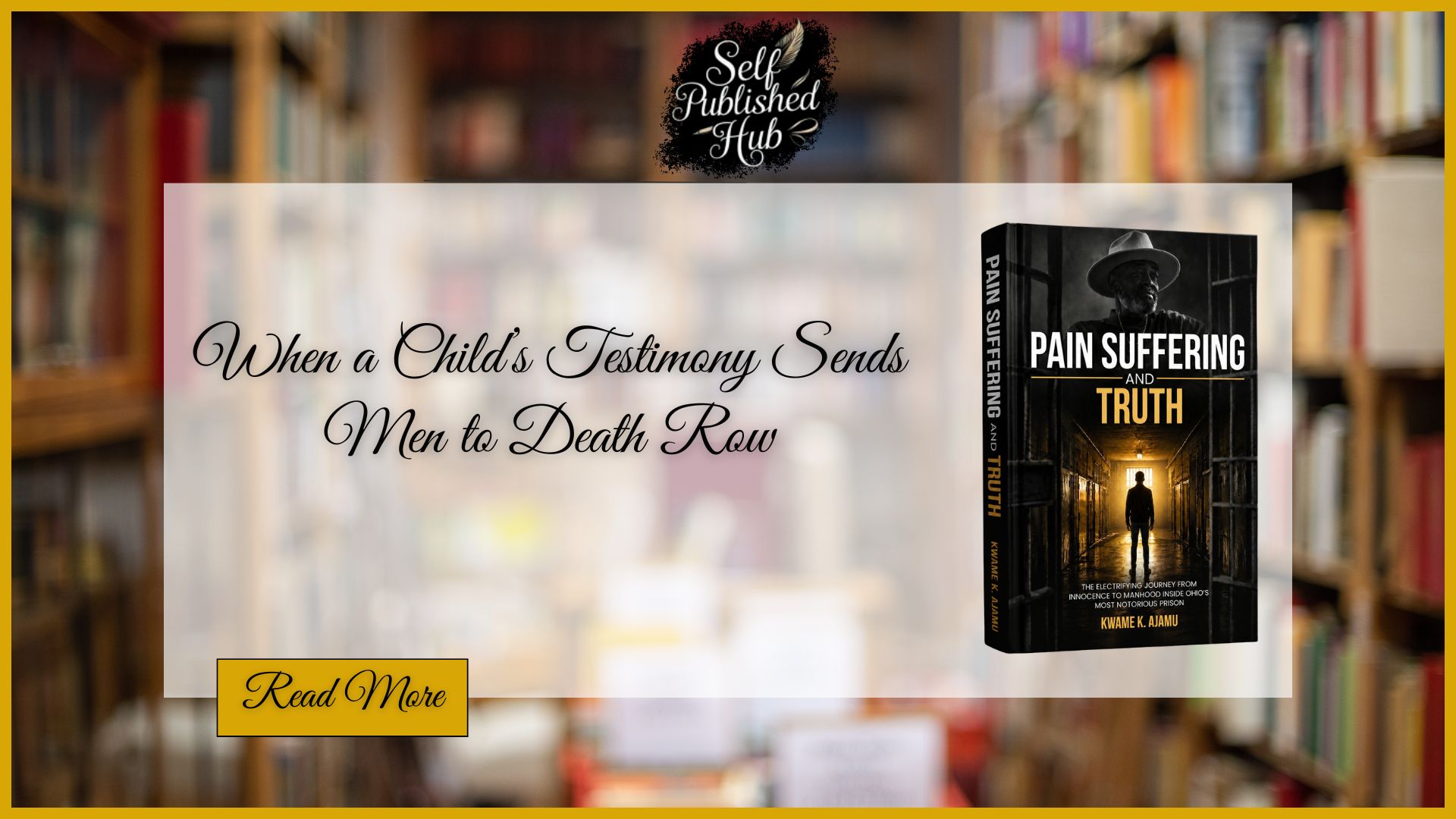
A boy said he saw it happen. That was enough to help send three young Black men to death row.
Pain, Suffering and Truth tells the story of Kwame K. Ajamu, born Ronnie Bridgeman, who was only seventeen when he was pulled into a murder case that would steal nearly three decades of his life. He was accused, tried, convicted, and sentenced to die for a crime he says he did not commit. At the center of the case was the testimony of a child, Edward Vernon, whose words became the foundation for a conviction that changed the lives of Kwame, his brother Wiley Bridgeman, and Ricky Jackson forever.
This book does not read like a distant legal case. It reads like a man reaching back into the fear, anger, confusion, and heartbreak of his youth. Kwame writes from inside the moment, from the shock of arrest to the cold reality of death row, from the sound of guards and keys to the emotional weight of waiting for the state to take his life. The reader is not simply told what happened. The reader is placed inside the damage.
What makes this story so gripping is not only the injustice, but the human cost. A teenager loses his freedom. A mother carries shame that was never hers. Brothers are separated, broken, and forced to survive a system built without mercy. Years pass. Hope rises and falls. The truth remains buried beneath fear, pressure, and silence.
Then, decades later, the child witness recants. He admits that his testimony was shaped by pressure and intimidation. By then, the men have already lost years that can never be returned.
Pain, Suffering and Truth is more than a prison memoir. It is a record of survival, memory, brotherhood, faith, and the long fight to be seen as human after the world has already decided otherwise. Kwame’s voice is raw, direct, and unfiltered. He does not soften the pain, and he does not decorate the truth. He tells it as he lived it.
For readers interested in wrongful convictions, criminal justice, death row, race, prison life, and the strength it takes to keep fighting after nearly everything has been taken, this book demands attention.
When a child’s testimony can send men to death row, every reader should ask one question.
How many lives can be destroyed before the truth is finally heard?