Poetry has always used the natural world as a mirror for the human soul. When poets write of rivers, mountains, or storms, they are rarely just describing scenery. They are describing us, our struggles, our desires, our fears, and our triumphs. Animals, in particular, become powerful symbols in poetry. Their instincts, survival tactics, and bonds reflect truths about what it means to be human.
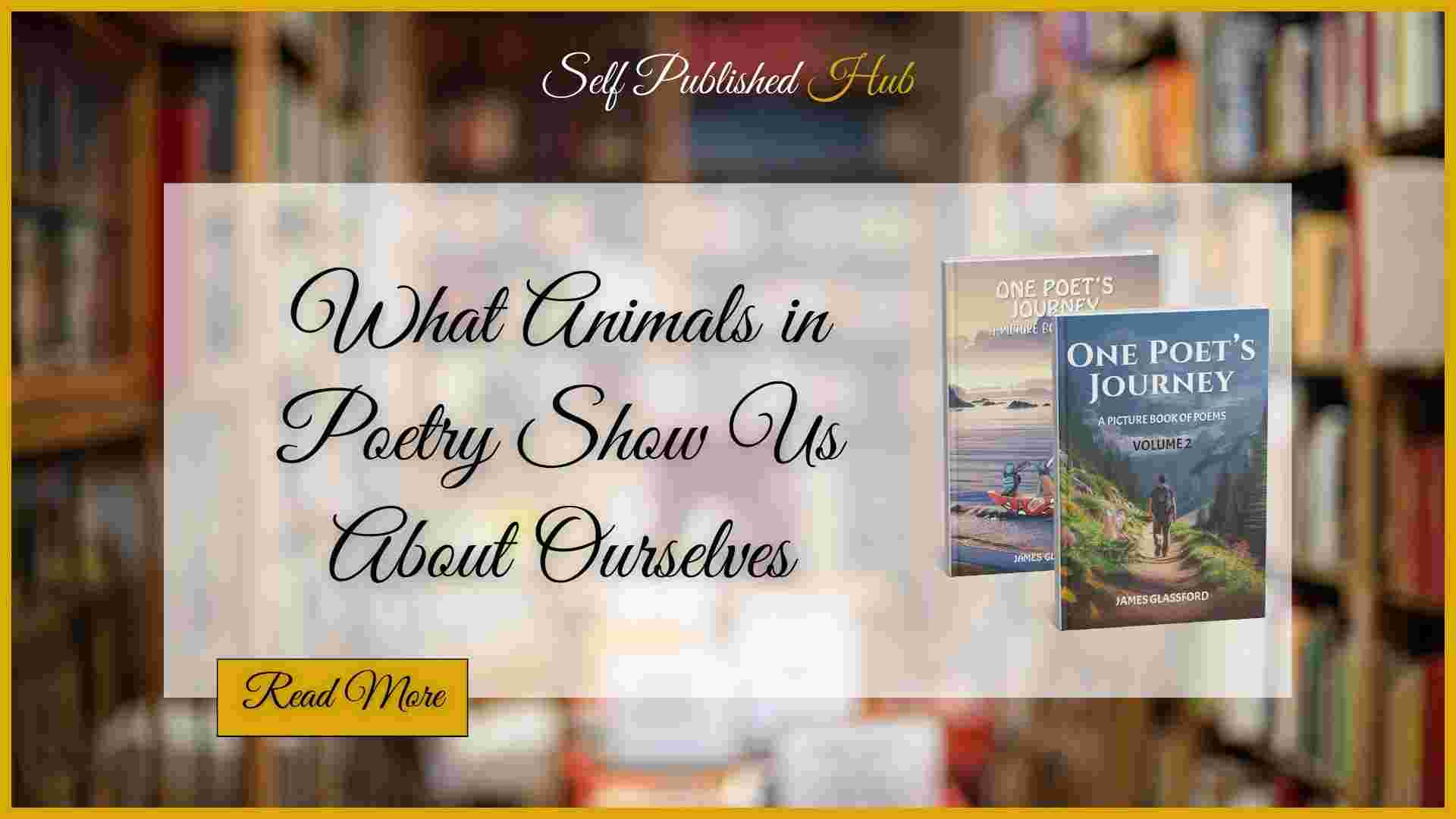
In James Glassford’s collection One Poet’s Journey Volume 2, animals are more than background figures. They are teachers, companions, and reflections of the choices we make in our own lives. Each poem featuring an animal nudges us toward self-recognition, offering wisdom in unexpected places.
Take the poem Bear. The lumbering bruin awakens from its long winter slumber, hungry and restless. Glassford describes its relentless search for food and its omnivorous appetite. At first glance, it is simply a portrait of nature. But beneath the fur and claws is an allegory about human hunger, not only for sustenance but also for meaning. Just as the bear roams tirelessly, we too find ourselves endlessly searching for something to fill our days. The bear reminds us that hunger is not shameful. It is what keeps us moving forward.
In Wolf Pack, the lesson shifts from individual survival to collective strength. Glassford portrays wolves coordinating with precision to bring down a mighty elk. Alone, each wolf would fail, but together they succeed. It is a vivid image of cooperation, strategy, and loyalty. For readers, it becomes a metaphor for community and teamwork. No matter how strong we believe ourselves to be, there are challenges too great for one person to tackle alone. The wolves show us that unity is not weakness. It is power.
The poem Mother Mountain Lion takes us into the intimate world of parenthood and sacrifice. The lioness is tender with her cubs during the day but transforms into a fierce hunter at night, driven by the need to protect and provide. This duality, the nurturing and the fierce, is deeply human. Many of us live in that same tension, balancing tenderness for those we love with the strength required to face a world that is often harsh. The mountain lion is a reminder that love can be both soft and strong.
Finally, in Otters at Play, the tone changes entirely. Glassford captures the delight of otters tumbling, splashing, and reveling in simple joy. Their play is not frivolous. It is essential. The otters become a symbol of the joy we too often overlook. Their carefree games teach us that play, laughter, and wonder are not distractions from life but part of its very essence.
Together, these poems form a chorus of animal voices that ultimately sing about us. We are hungry like the bear, cooperative like the wolves, protective like the lioness, and joyful like the otters. Poetry brings these qualities to the surface, reminding us of what is possible when we see ourselves reflected in the natural world.
Readers who want to experience these lessons firsthand will find them woven beautifully throughout James Glassford’s One Poet’s Journey Volume 2. It is more than a book of poems.
From bears to otters, each poem holds a mirror to your soul. Read One Poet’s Journey Volume 2 today, available on Amazon: https://www.amazon.com/dp/1917306369.