Nostalgia is a powerful emotion. It evokes comfort, familiarity, and belonging. In uncertain times, it becomes especially attractive. When economic change accelerates, cultural norms shift, and institutions feel distant, the past can appear stable and coherent by comparison. Political leaders understand this instinct. When nostalgia is weaponised, it becomes more than memory. It becomes strategy.
Weaponised nostalgia does not simply celebrate history. It reconstructs it. Complex decades are reduced to simplified golden ages. Social conflicts, inequalities, and exclusions are minimized or erased. The past is presented as unified, prosperous, and morally clear. In this telling, decline is recent, and responsibility lies with identifiable enemies such as elites, outsiders, or cultural change.
The appeal is psychological as much as political. Nostalgia offers relief from ambiguity. It suggests that solutions are not unknown, merely forgotten. If the nation was once great, it can be great again. The narrative transforms anxiety into resolve. It replaces confusion with direction.
Slogans that promise restoration often carry emotional resonance precisely because they are vague. They do not specify which year or which policies are to be revived. They invite supporters to project their own idealized memories onto the message. For some, the mythical past represents economic stability. For others, cultural homogeneity or social order. The elasticity of nostalgia allows broad coalitions to gather around a shared but undefined longing.
This strategy becomes particularly potent in periods of rapid globalization. As industries relocate, demographics shift, and digital technology alters communication, many citizens experience dislocation. Nostalgia provides a counter narrative. It frames globalization as deviation from a more authentic national path. It recasts contemporary complexity as loss rather than evolution.
Weaponised nostalgia also reframes political opponents. Those who advocate diversity, integration, or reform are portrayed not simply as holding different views, but as eroding tradition. The past becomes a moral benchmark. To disagree with the nostalgic vision is to betray heritage.
The danger lies in selective memory. Historical periods often romanticized as golden ages were also marked by significant inequalities and exclusions. Economic growth coexisted with discrimination. Stability coexisted with suppressed dissent. By presenting the past as uniformly positive, leaders obscure the tradeoffs and struggles that shaped it.
Moreover, nostalgia can limit forward looking solutions. When political energy is directed toward restoration rather than adaptation, structural challenges such as automation, climate change, or demographic transition may receive insufficient attention. The mythical past becomes a shield against confronting complex present realities.
Yet nostalgia is not inherently manipulative. Collective memory can foster cohesion and shared identity. The issue arises when memory is simplified and mobilized primarily to channel resentment. When longing is paired with grievance, nostalgia becomes divisive.
In modern democracies, the contest over the past is often a proxy for debates about the future. Competing narratives vie to define national identity. Is the nation strongest when it is homogeneous or when it is pluralistic? Was prosperity the result of isolation or openness? Each answer draws from different interpretations of history.
Weaponised nostalgia succeeds when it aligns with lived dissatisfaction. Citizens who feel economically insecure or culturally disoriented are more receptive to narratives of restoration. The promise of returning to a simpler, more prosperous era provides emotional reassurance.
The challenge for democratic societies is balancing respect for heritage with honest reckoning. History can inspire without being mythologized. It can guide without being sanitized. Political maturity requires acknowledging both achievements and failures of the past.
When leaders sell a mythical past, they are not merely invoking memory. They are shaping identity and directing political energy. Whether that energy leads to renewal or regression depends on how critically citizens examine the stories they are being asked to believe.
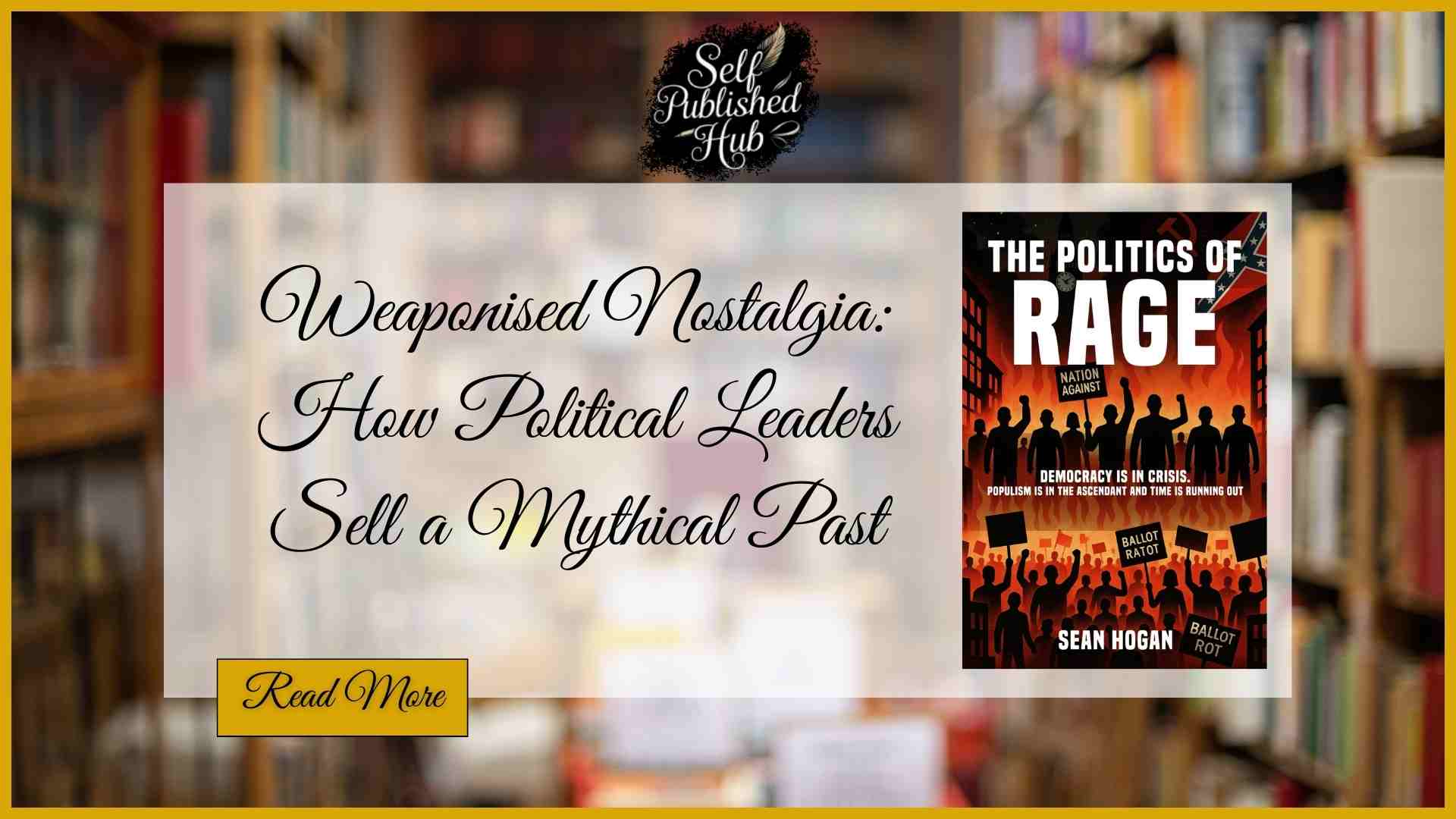
Find out in this essential read, available on Amazon https://www.amazon.com/dp/B0FHBDWJD4/.