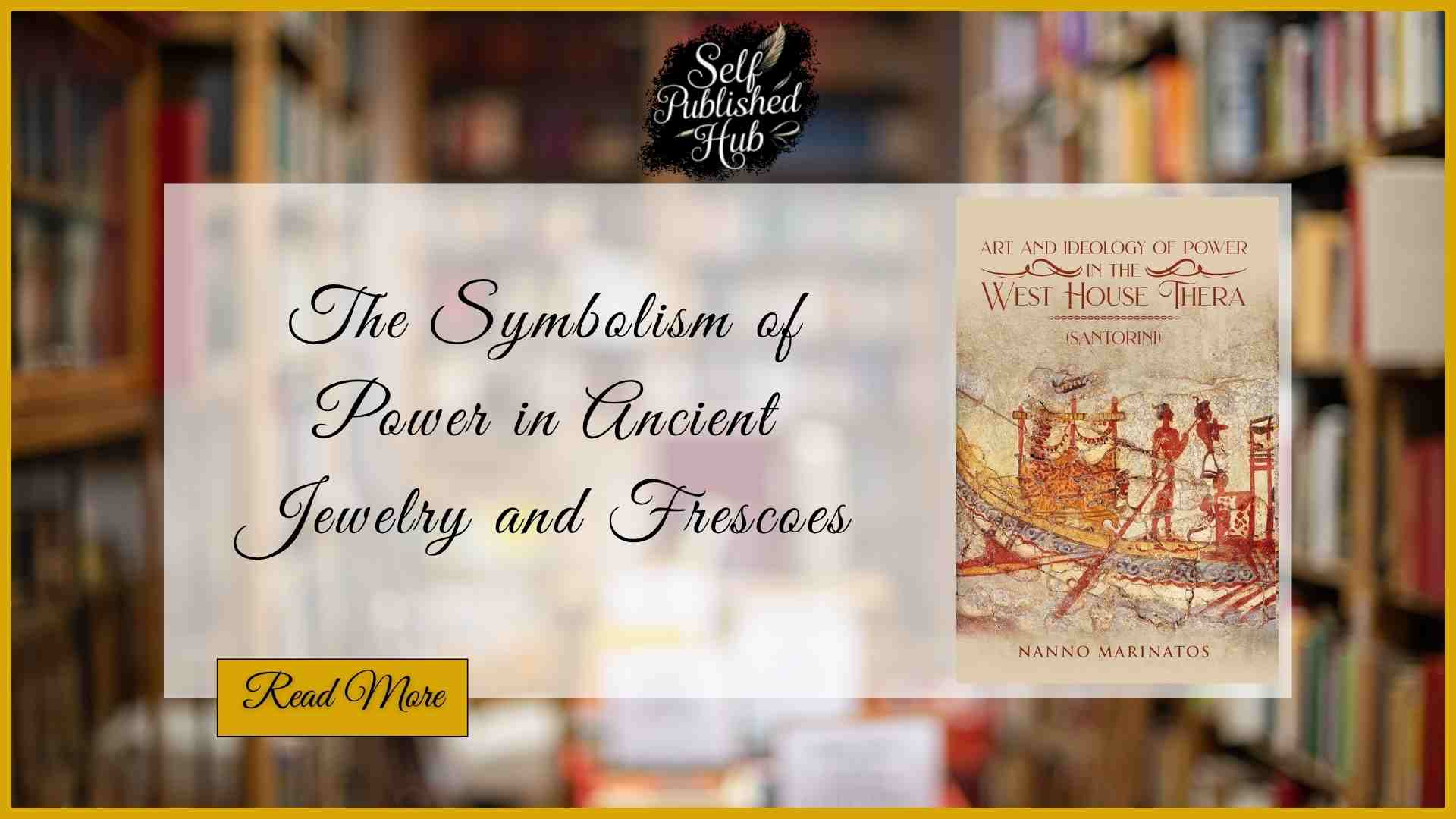
Power in the ancient world was rarely expressed just verbally. It was worn, painted, displayed, and repeated in visual language that spoke across cultures and generations. In the world of Thera, as explored in Art, Religion, and Ideology in the West House Paintings of Thera (Santorini) by Nanno Marinatos, jewelry and frescoes reveal a sophisticated system of symbolic communication where authority, belief, and identity were entangled with each other.
Jewelry in Minoan culture was far more than ornament. Necklaces adorned with pendants shaped like crocus flowers, papyrus lilies, and rosettes carried meaning that extended beyond beauty. These motifs were not random decorative choices. They were calculated symbols tied to fertility, renewal, and divine association. When such factors appear repeatedly in both physical artifacts and painted scenes, they form a visual code that signals status and connection to a broader ideological system.
In the West House frescoes, these same motifs are painted onto the interiors of ships and elite spaces. The repetition is significant. It suggests that the imagery seen in personal adornment was intentionally transferred into public and ceremonial contexts. A necklace was not just worn. It was displayed, replicated, and embedded into architecture and narrative scenes. This continuity reinforces the idea that power was not confined to individuals but was part of a shared cultural language.
The presence of these symbols in maritime settings is particularly striking. Ships, often interpreted simply as vehicles of travel or trade, are presented with elaborate decorative programs that mirror elite adornment. Garlands resembling necklaces drape across cabins, and pendants appear as part of the visual composition. This transforms the ship into a floating emblem of authority. It becomes a statement of control, identity, and alignment with a dominant cultural force.
The incorporation of jewelry motifs into frescoes also reflects a deeper ideological structure. Power was not only political or military. It was spiritual and symbolic. The use of floral elements such as crocus and lilies connects authority to cycles of nature and regeneration. These are not passive decorations. They position power within a cosmic framework, linking rulers and elites to divine forces and natural order.
This connection becomes even more compelling when viewed through the lens offered by Marinatos. Her work reveals how these visual elements are part of a broader system tied to Knossian influence. The repetition of specific motifs across regions suggests a deliberate spread of symbolic language. Jewelry and frescoes become tools of integration, reinforcing unity across different communities while subtly asserting dominance.
The craftsmanship itself also plays a role in conveying power. Gold necklaces, intricate pendants, and carefully executed frescoes demonstrate access to resources, skilled artisans, and organized production. These are markers of wealth and control. When displayed in both personal and communal spaces, they reinforce hierarchy and social structure.
What makes this study especially engaging is the way it invites the reader to look beyond surface beauty. Every detail becomes meaningful. A pendant is not just a decorative piece. A painted garland is not merely aesthetic. Each element contributes to a narrative of authority, belief, and cultural identity.
Art, Religion, and Ideology in the West House Paintings of Thera (Santorini) brings these connections into sharp focus. It offers a compelling exploration of how visual culture operates as a form of communication, shaping how power is perceived and understood. For readers interested in ancient art, symbolism, and the hidden language of images, this work provides both depth and clarity.
By examining jewelry and frescoes together, the book opens a window into a world where power was not declared but displayed, not spoken but seen.
Available now on Amazon: https://www.amazon.com/dp/B0GGKK64DM/