Role playing games hold a unique place in young adult fiction because they mirror a stage of life defined by uncertainty, identity exploration, and emotional intensity. These stories are not just about quests or fights. They are about transformation. Through the structure of a game, characters are given a structure to understand themselves in ways the real world often doesn’t accept them.
At the psychological level, role playing games offer something deeply appealing to young protagonists: control. Adolescence is marked by limited autonomy, shifting expectations, and internal conflict. In contrast, a game world provides clear rules, defined goals, and measurable progress. Characters know what succeeding looks like. They understand the path forward. This clarity becomes a stabilizing force when their real lives feel unpredictable or overwhelming.
Another key aspect is identity experimentation. In role playing environments, characters are not limited to who they are perceived to be. They can choose roles, abilities, and paths that reflect their inner desires rather than external limitations. A quiet, overlooked teenager can become a strategist, a leader, or a powerful protector. This is not simply wish fulfillment. It is a process of discovering latent traits that may exist beneath the surface.
Young adult fiction often uses this dynamic to explore the gap between self-perception and potential. The character may begin by treating the game as a space to escape, but over time, the qualities they develop within it begin to influence their real world behavior. Confidence, resilience, and decision making skills carry over. The game becomes less of a mask and more of a mirror.
Emotional processing is another analytical function. Role playing games allow characters to engage with difficult feelings within a controlled environment. Loss, anger, fear, and isolation can be translated into challenges that can be exposed directly. Instead of being overwhelmed by emotion, the character is given tools to act. This shift from passive experience to active engagement is psychologically significant. It transforms vulnerability into urgency.
Social connection also plays a big role. Many young adult narratives highlight the formation of teams, organizations, or alliances within the game. These relationships often feel more authentic than those in the character’s real life because they are built on same goals and shared reliance. Trust is earned through action rather than assumed through circumstance. For characters who feel disconnected or misunderstood, these bonds provide a sense of belonging that is both immediate and meaningful.
At the same time, these stories often expose the risks of involvement. The line between engagement and dependency can become blurred. When a character begins to prefer the game world entirely, it raises questions about avoidance and balance. This tension adds depth, forcing the character to confront whether the game is helping them grow or preventing them from facing reality.
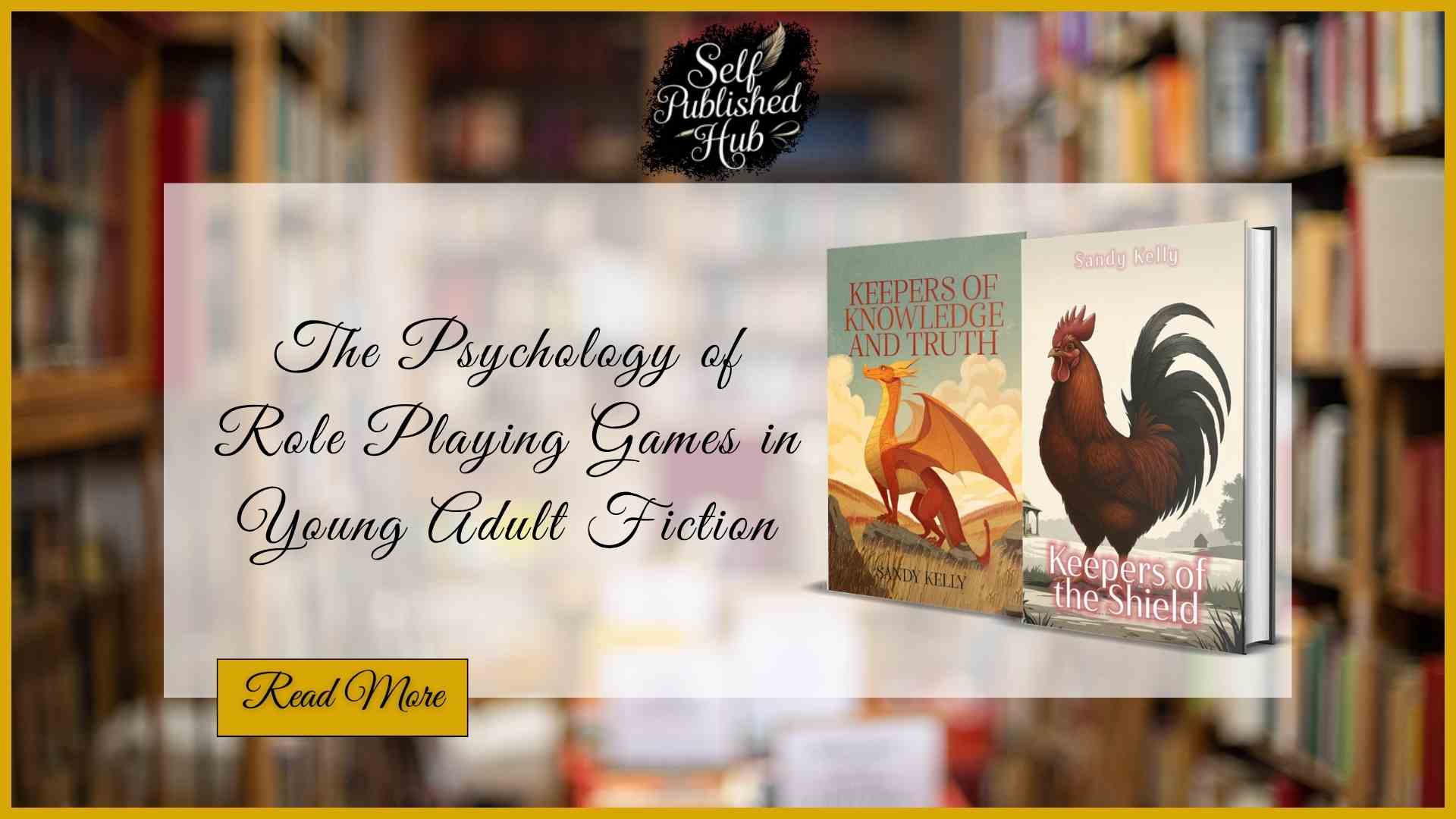
In Keepers of the Shield and Keeper of the knowledge and truth by Sandy Kelly, these psychological elements are woven seamlessly into the narrative. Jesse Finch turns to gaming as a refuge from personal turmoil, seeking structure and escape from a life that feels bounded and unresolved. What begins as a coping mechanism evolves into something far more significant. The game becomes a space where his abilities are tested, his confidence is built, and his identity begins to shift.
What makes this journey unique is that Jesse cannot remain apart from the person he becomes within the game. The skills he develops, the relationships he forms, and the challenges he faces begin to reshape his understanding of himself. The psychological journey is not about losing yourself in a role. It is about discovering who one is capable of becoming.
Young adult fiction continues to return to role playing games because they offer a powerful narrative lens for growth. They provide structure without limitation, challenge without chaos, and transformation without detachment. In this space, characters do not just play roles. They learn to define themselves.
Keepers of the Shield: https://www.amazon.com/dp/B0FJZPGKDJ
Keepers of Knowledge and Truth: https://www.amazon.com/dp/B0FWLC7BN9