The planet Earth can sometimes feel like the last place you’d want to be, especially when a number of explorers and scientists have come up with ways to move civilization off this planet.
It’s no surprise that the universe may have been hiding the promise of a better life. Chances are that this possibility can be seductive. But we cannot ignore the fact that the more we learn about the planetary systems outside Earth, our solar system, and beyond, out, we eventually realize how special and lucky we are to call Earth our home.
That is why, according to scientist Carl Sagan, the first astronauts who saw Earth from space described it as a “pale blue dot, the only home we have ever known.”To him, the Earth is a beautiful, delicate world that is perfectly suited to the bounty of life it supports.
When we consider life beyond our planet, we frequently consider three factors: size, water, and location (habitable zone). But Earth is unique because it contains far more than these essential elements for life.
First, we have the perfect atmosphere to breathe. Think about Mars or Venus for a second. Both of the closest planets to us might seem perfect for photography, but when it comes to supporting life, they fail by a very high margin. Mars has a thin atmosphere (100 times thinner than Earth). It lacks a magnetic field that would leave us vulnerable to harmful radiation that damages cells and DNA.
On the other hand, because it is too close to the sun, the surface temperature of Venus can reach up to 464°C (867°F). This makes it the hottest planet in our solar system. Living on one of these planets would require some major adjustments. We would no longer be able to take long, deep breaths of nitrogen- and oxygen-rich air. We would no longer be able to walk directly on the planet and would probably vaporize because of the hot atmosphere. Even if we were able to design a spacesuit providing essential life support, we could not inhabit these planets because they do not have conditions to support life.
Secondly, the Earth has solid ground. While you may ask that other planets in our solar system and beyond have solid ground, what about the intense wind pressure and other harmful gases that make such planets hell? We have grassy fields, rugged mountains, and icy glaciers. We have soil and other essentials to support life.
Because of the perfect alignment and precise location, Earth spins at a perfect rate (completing a day in 24 hours, with a slight deviation of some minutes). It also completes its year around the sun within 365 days. Thaan there is a tilt on its axis (23.5 degrees), which tips each hemisphere either toward or away from the heat of the Sun throughout the year. This precision makes it possible to have different seasons. From summers and winters to autumn and spring, Earth has different seasons that make life beautiful and in a perfect manner to sustain life. Venus barely tilted on its axis. It has no seasons, no atmosphere, no breathable air, and no chance of survival.
While the possibility of exoplanets and super-Earths might pique our interest in discovering more planets and potentially colonizing them, it would take us an estimated 75,000 years with current technology to reach the closest exoplanet, Proxima Centauri b, which is about 4.2 light-years away, according to NASA.
So, how is Earth the only planet to have these precise conditions? Is this fine-tuning a mere coincidence? Probably not!
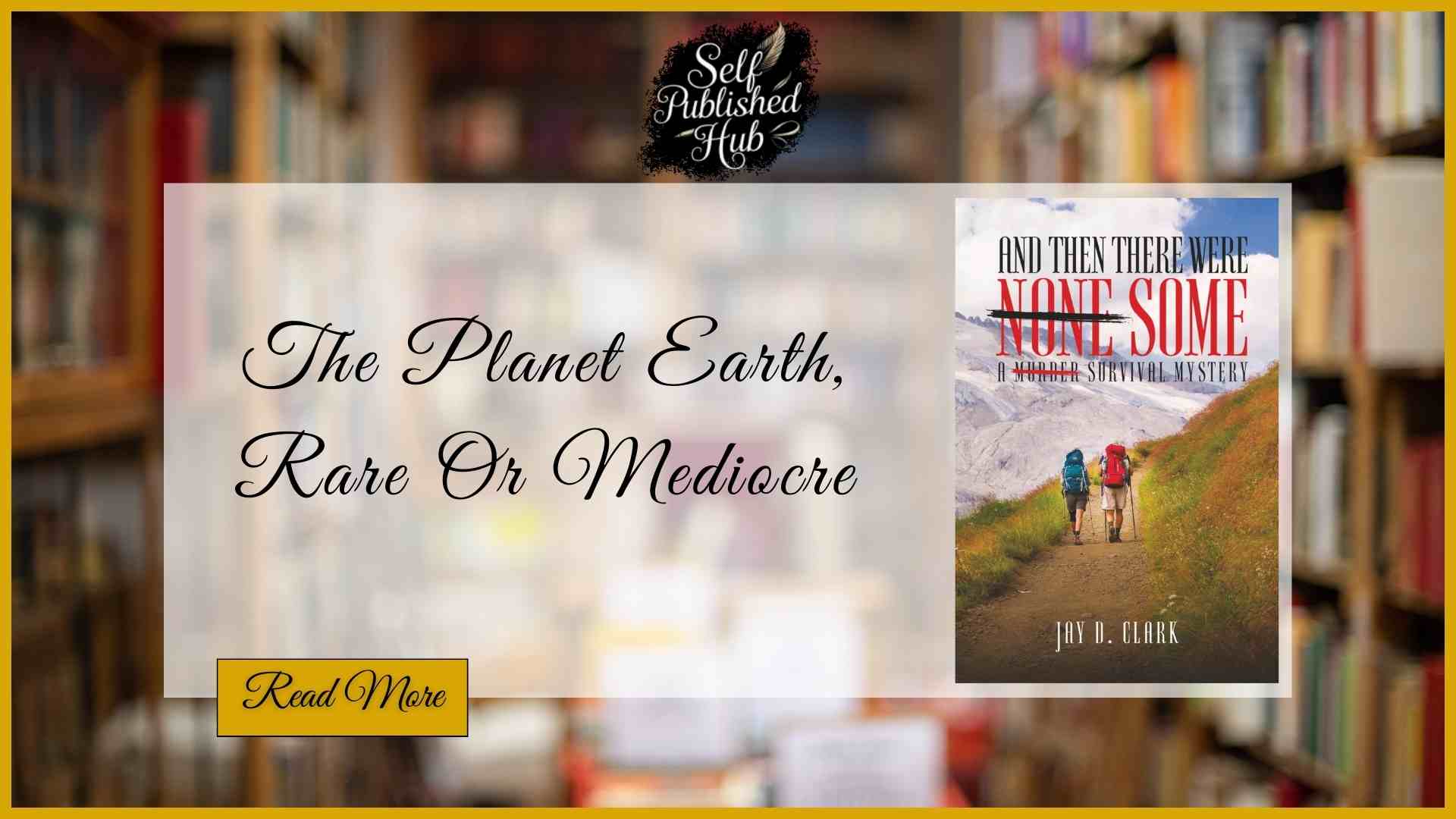
And Then There Were Some: A Survival Mystery encourages us to see these perfect conditions of life and other aspects as a profound clue. It allows us to form a faith-based view of the universe that is rational and grounded in scientific observation, ultimately resolving the question: Is there God?
Whether you are looking for a rational basis for faith, finding God, or strengthening your faith and understanding of God, His creation, this book will help you to seek the truth and urges you to approach the existence of God not just through direct observation but through evidence that, while circumstantial, leads to compelling conclusions.
Get your copy on Amazon: www.amazon.com/dp/1917505191/.