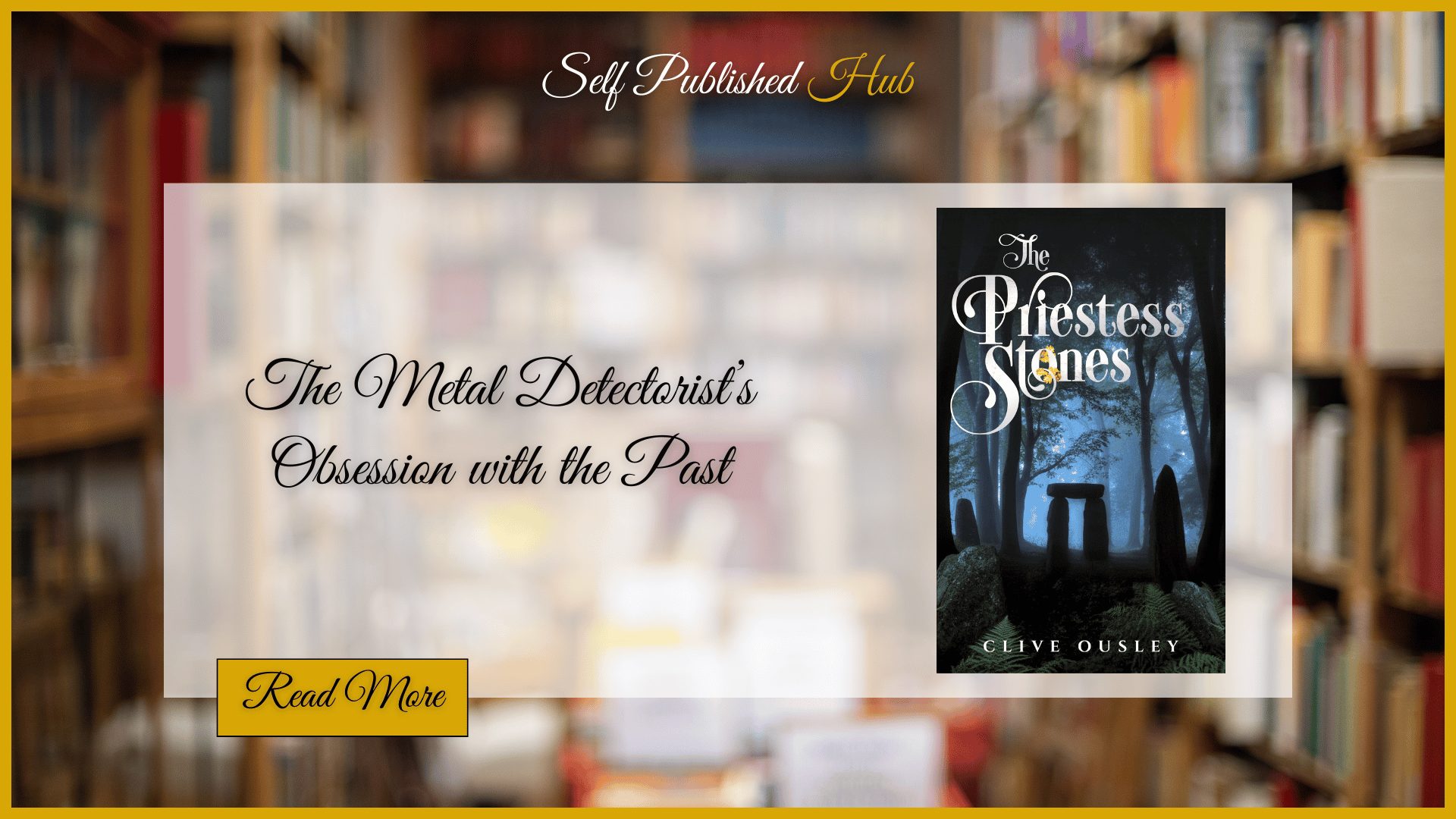
There’s something quietly thrilling about standing in an open field, headphones on, waiting for the faint beep of discovery. For metal detectorists, that sound is more than a signal; it’s a heartbeat. It marks the possibility of uncovering something lost, something that connects them to people and stories long gone. This fascination, part curiosity and part obsession, lies at the heart of Clive Ousley’s The Priestess Stones, where the search for buried history becomes both a passion and a peril.

Across Britain and beyond, thousands of hobbyists take to fields and forests every weekend, sweeping their detectors in slow, patient arcs. To outsiders, it might seem like a simple pastime. But to those who do it, metal detecting is a way of communing with the past. Each piece of metal unearthed, a coin, a button, a fragment of weaponry, carries a story. It’s not about treasure in the traditional sense. It’s about touching time, about knowing that the ground beneath your feet remembers everything, even when people forget.
In The Priestess Stones, Matt Bradley embodies this very obsession. A man driven by the hope of discovery, he spends his days exploring the British countryside with his metal detector, drawn by a sense of purpose he can’t quite explain. Focus on Matt Bradley’s storyline and the human desire to uncover what’s buried. When he stumbles upon an ancient artefact hidden deep in the woodland, it feels like a dream come true. But what he finds isn’t just history, it’s danger. His discovery links him to an 18th-century cult, forgotten rituals, and a deadly secret that refuses to stay buried.
Through Matt’s journey, the novel explores how passion can easily become fixation. For many enthusiasts, that same fine line exists in real life. The thrill of finding something rare can grow into an all-consuming need to keep searching, no matter the cost. This theme captures a universal truth: the past has a pull that’s hard to resist. We all want to feel connected to something older and larger than ourselves, whether through objects, stories, or landscapes.
There’s also a moral layer to this obsession. Modern archaeologists and detectorists often struggle with questions of ownership and preservation. Who should keep what’s found? What happens when personal discovery clashes with cultural heritage? Ousley’s story weaves these real-world concerns into its plot, grounding the suspense in ethical as well as emotional tension.
The settings in The Priestess Stones heighten that connection to the past, the quiet forests, the damp earth, the hidden clearings where secrets lie just below the surface. The novel captures both the beauty and the unease of searching for the unknown. Every swing of the detector, every faint signal, carries the promise of revelation, and the threat of what happens when revelation goes too far.
For anyone fascinated by the thrill of discovery, The Priestess Stones offers more than a mystery; it reflects. It reminds us why people dig, search, and chase after traces of history in the first place. Sometimes, it’s about finding a piece of the past. But often, it’s really about finding a piece of ourselves.
Read The Priestess Stones by Clive Ousley and step into the world where curiosity meets consequence, and where the ground beneath us still whispers its forgotten truths.
Stay Tuned! This book is now live: https://www.amazon.com/dp/1970749180/