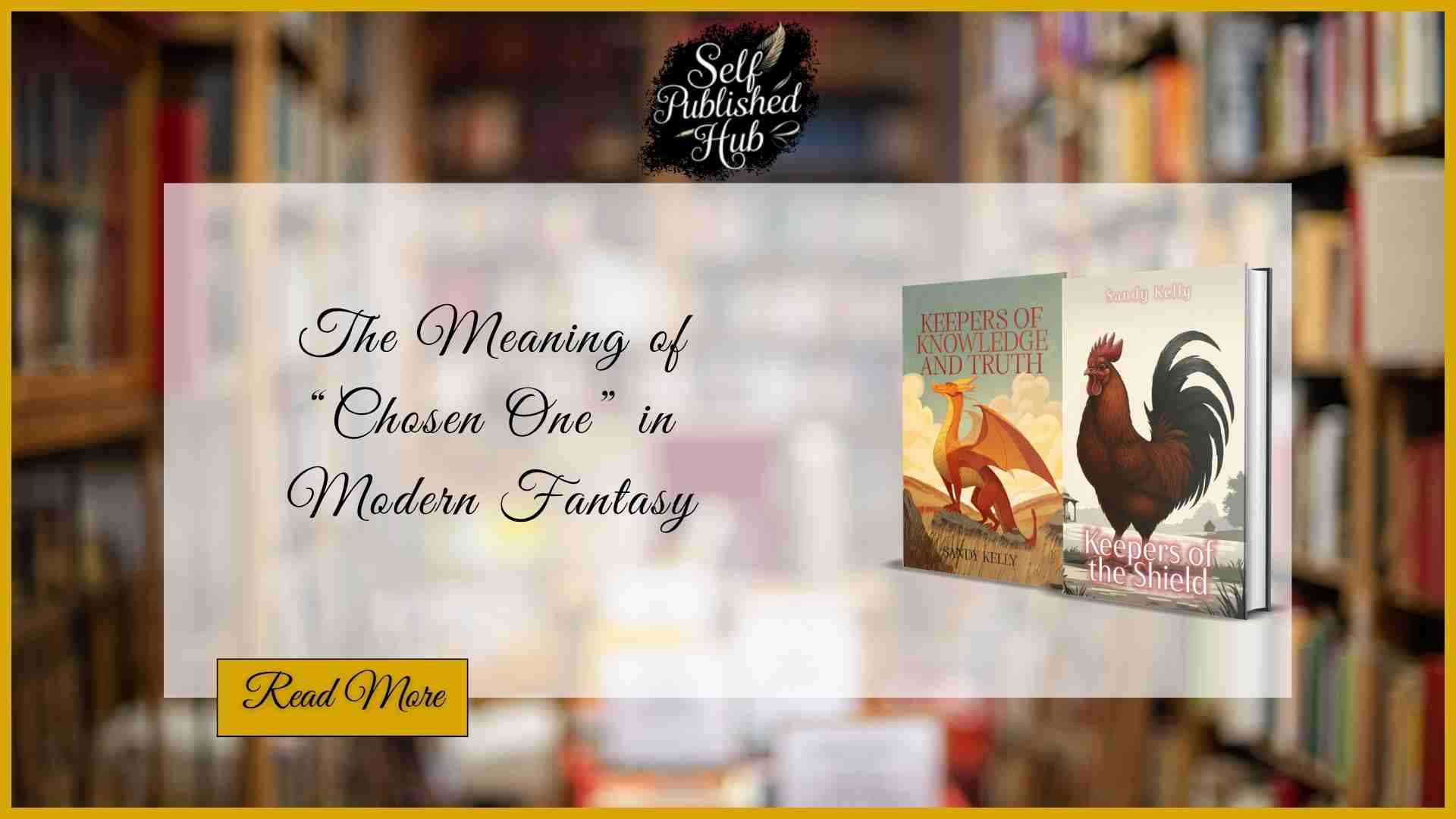
The idea of the “chosen one” has long been a cornerstone of fantasy storytelling, often tied to prophecy, destiny, and an inevitable rise to power. Yet in modern fantasy, this concept has shifted. It is no longer about perfection or predetermined greatness. It is about struggle, growth, and the weight of responsibility. This evolution is brought to life with striking clarity in Keepers of the Shield and Keepers of Knowledge and Truth by Sandy Kelly.
In earlier works of fantasy, the chosen one was often marked from the beginning as extraordinary. Their path, while difficult, felt guided and certain. Modern audiences, however, expect something deeper. They look for characters who question their role, who resist it, and who must earn their place through hardship. Jesse Finch embodies this transformation.
Jesse is not introduced as a confident hero ready to embrace destiny. He is uncertain, frustrated, and at times overwhelmed by the expectations placed upon him. His abilities do not define him at the start. In fact, there are moments when he loses access to them entirely. This redefines what it means to be chosen. It is not about having power. It is about learning how to reclaim it, understand it, and use it with purpose.
The modern chosen one is also shaped by internal conflict. Jesse’s greatest battles are not always against external enemies. They occur within his own mind. Doubt, fear, and emotional scars become obstacles just as dangerous as any villain. This adds depth to the narrative, turning the journey into something personal rather than purely heroic. Readers are drawn into a story where victory depends as much on self-discovery as it does on strength.
Another defining shift is the role of choice itself. Being chosen does not remove free will. Instead, it amplifies it. Jesse is faced with decisions that carry real consequences, not just for himself but for others around him. He must decide whether to rise, whether to lead, and whether to believe in his own worth. This transforms the idea of destiny into something active rather than passive. The chosen one is not simply chosen. They must choose to become who they are meant to be.
Sandy Kelly also expands the concept by placing Jesse within a larger system. He is not alone in his importance. He is part of a team, a world, and a conflict that requires collective effort. This moves away from the isolated hero model and toward a more balanced perspective. The chosen one may carry significance, but success still depends on unity, trust, and shared strength.
There is also a powerful connection between the chosen one and knowledge. In these books, understanding the world, its rules, and its hidden truths becomes essential. Jesse’s role is tied not only to power but to awareness. He must see clearly, think strategically, and adapt constantly. This adds another layer to the modern interpretation, where intelligence and perception are just as critical as ability.
Keepers of the Shield introduces the foundation of this idea, presenting a character who is only beginning to understand his place. Keepers of Knowledge and Truth deepens it, showing what happens when that responsibility fully unfolds. Together, they offer a portrayal of the chosen one that feels grounded, complex, and relevant.
In today’s fantasy, the chosen one is not defined by destiny alone. They are defined by how they respond to it. Jesse Finch stands as an obvious example of this evolution, proving that being chosen is not about being destined for greatness. It is about becoming worthy of it.
Keepers of the Shield: https://www.amazon.com/dp/B0FJZPGKDJ.
Keepers of Knowledge and Truth: https://www.amazon.com/dp/B0FWLC7BN9