
There was a time when flying demanded more than following a screen. It required a pilot’s full attention, sharp instincts, and an unshakable sense of feel for the aircraft. This practice, known among aviators as “raw data flying,” involved manually handling an airplane, relying on instruments, muscle memory, and judgment rather than automation. Today, with advanced autopilot systems guiding most flights from takeoff to landing, that skill is quietly fading. In his book Vagabond Chronicles: Legacy of the Blue, Captain Eddie Gantner reflects on this shift and reminds us why those early flying skills remain the heart of true aviation.
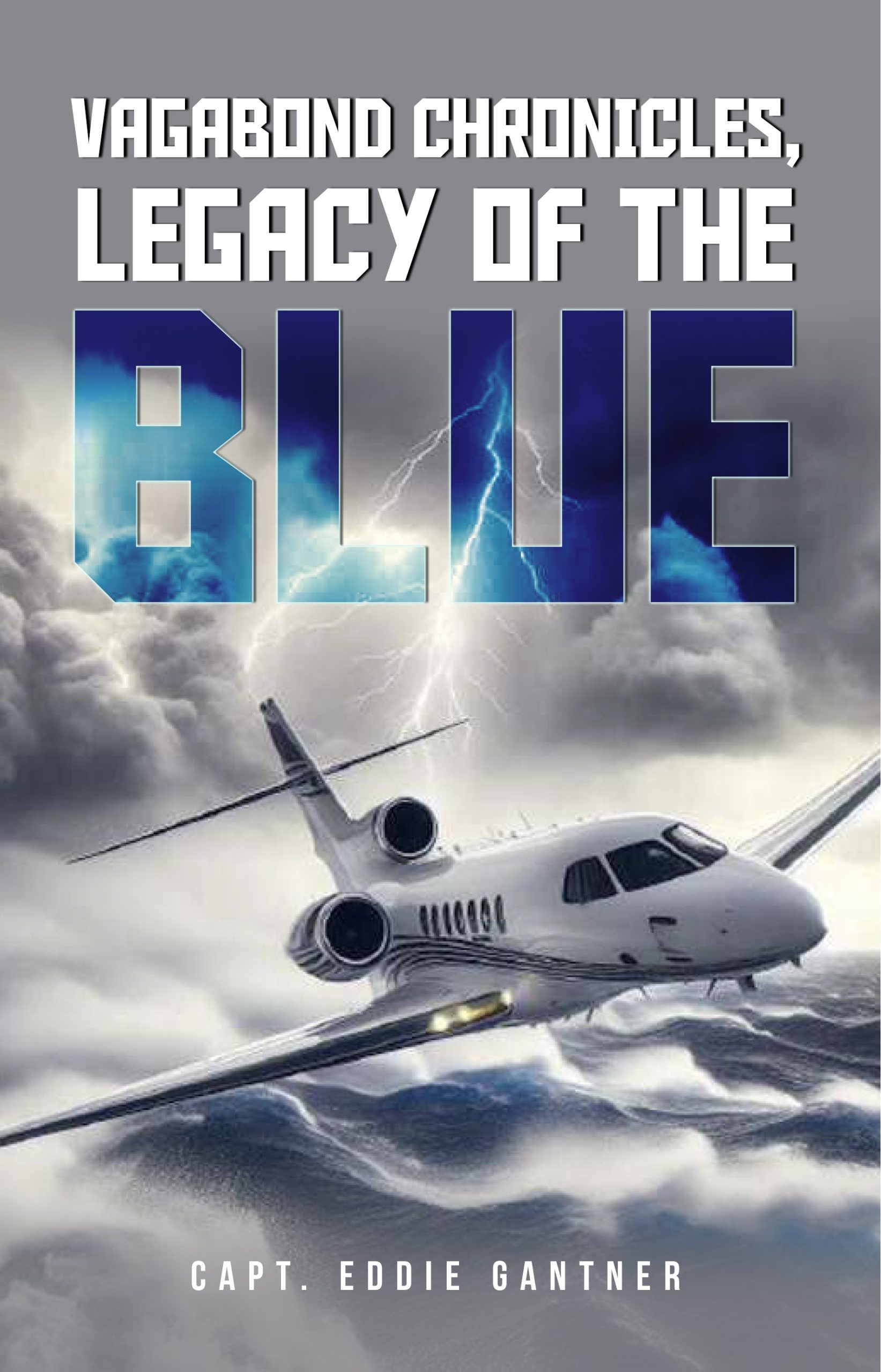
Raw data flying was never about recklessness. It was about trust, trust in the plane, in the instruments, and in oneself. Pilots learned to read the world through the vibrations of the aircraft, the pitch of the engine, and the horizon ahead of them. Before digital screens and automated flight management systems, they made hundreds of small decisions every minute, guided by instinct and training. Captain Gantner, who spent decades flying through some of the most unpredictable skies, recalls moments when there was no technology to lean on, only knowledge, reflexes, and calm under pressure.
In the Foreword of Vagabond Chronicles: Legacy of the Blue, Gantner discusses the importance of manual flying and how it shaped an entire generation of aviators. He describes a time when understanding every gauge and movement was essential for survival. When the weather turned bad or instruments failed, pilots had to “fly the airplane first” using raw data, airspeed, altitude, attitude, and their own sense of control. It was a constant dance between precision and intuition.
One story that captures this spirit is found in the chapter “A Dark and Stormy Night,” where Gantner recounts flying through severe turbulence that forced him to rely completely on manual control. There was no system to smooth the ride or guide the descent. Every move depended on his experience and confidence. In another account, “Aspen, Testing the Limits,” he faced a challenging mountain approach where automation was useless against wind shifts and sudden visibility loss. These situations highlight what flying used to be: a test of skill, composure, and deep understanding of the aircraft.
Modern aviation is safer than ever, and much of that progress is due to automation. However, as technology takes over more of the workload, many veteran pilots worry that the new generation may never experience what it truly means to “fly the airplane.” Raw data flying built character and discipline. It taught aviators to think ahead, to feel connected to the aircraft, and to trust themselves even when everything else failed.
Captain Gantner’s reflections remind readers that while progress has made flying easier, it has also made it more distant. The romance of flight, the feeling of hand-flying through clouds and turbulence, is part of what made aviation so compelling in the first place. Vagabond Chronicles: Legacy of the Blue honours that legacy. It celebrates those who learned to master the skies not through automation, but through courage, intuition, and skill.
Explore Vagabond Chronicles: Legacy of the Blue by Captain Eddie Gantner to rediscover the timeless lessons of aviation’s golden age and the enduring art of flying by feel, not by computer.
This book is available on Amazon: https://www.amazon.com/dp/B0FRXXRC7D.
Available now on Amazon! https://www.amazon.com/dp/B0FRXXRC7D.
For a personally signed copy, visit Vagabond Chronicles – Flying Vagabond & Vagabond Chronicles, Legacy of the Blue
→ Enter your name for the autographed version
→ Select “Buy Now!”