Modern societies often appear highly advanced, driven by technology, global communication, and complex political systems. Yet many of the structures that organize the modern world did not emerge suddenly. They evolved over thousands of years, shaped by the ideas, institutions, and innovations of ancient civilizations. The foundations of law, governance, economics, and culture can often be traced back to societies that existed long before the modern era.
Ancient civilizations such as Greece, Egypt, Rome, and Mesopotamia developed systems that helped organize large populations and manage expanding territories. These societies created early forms of government, legal codes, financial practices, and social structures that influenced the direction of human civilization. Even today, many modern institutions still reflect ideas that first appeared in the ancient world.
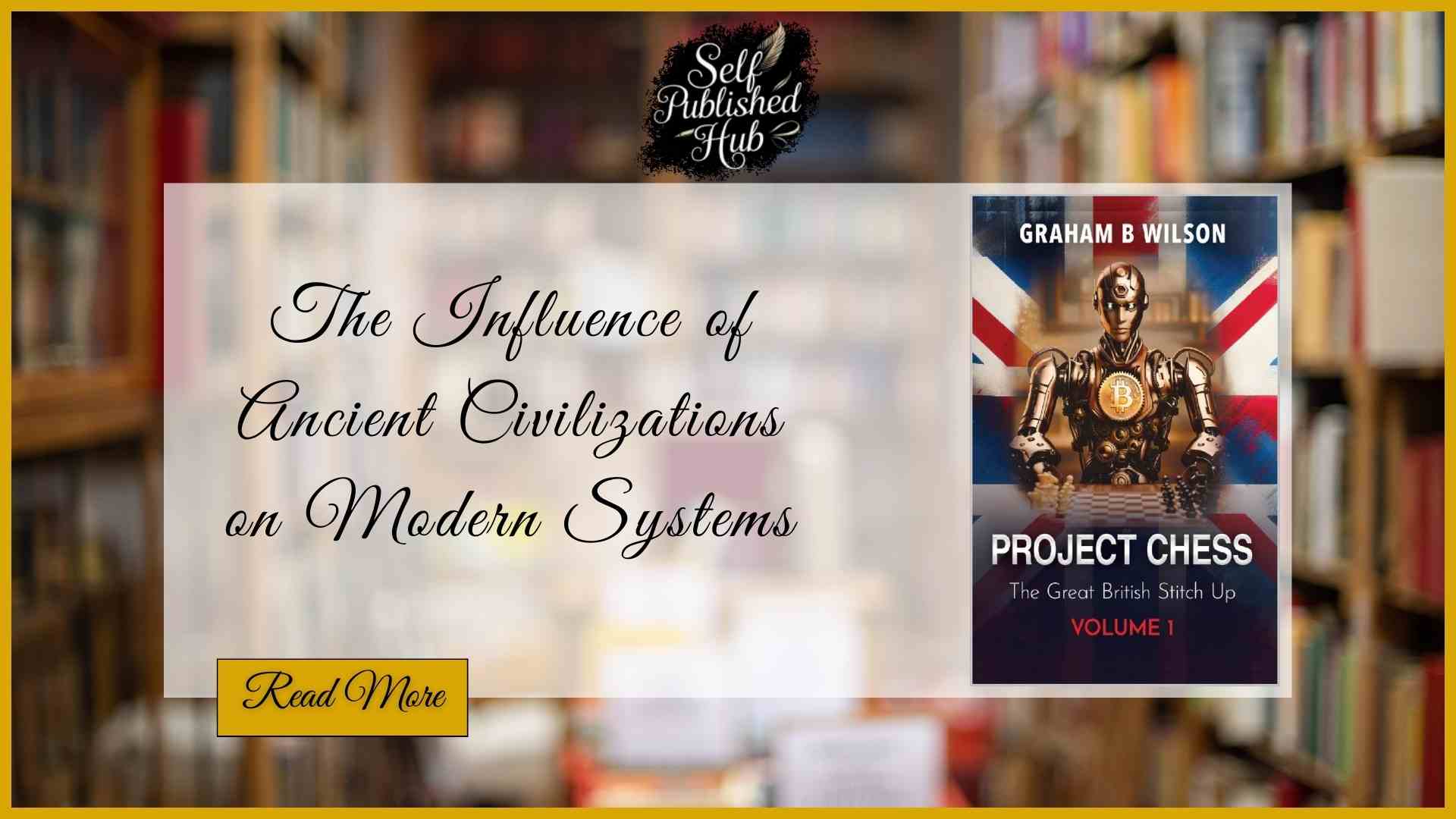
In Project Chess: The Great British Stitch Up Volume One, Graham B. Wilson explores how the legacy of ancient civilizations may continue to shape modern systems of power and influence. The book examines historical patterns and cultural traditions to suggest that many structures in the modern world may have deeper roots than most people realize.
One of the most significant contributions of ancient civilizations was the development of governance systems. Ancient Greece introduced ideas about political participation and civic responsibility that influenced later democratic institutions. The Roman Empire created legal frameworks and administrative systems that helped manage vast territories and diverse populations. Many principles found in modern legal systems still reflect the influence of Roman law.
Economic systems also developed through ancient innovation. Early trade networks connected distant regions, allowing goods, knowledge, and cultural practices to move across continents. Merchants, markets, and currency systems began shaping economic relationships that would later evolve into global commerce. These early financial structures laid the groundwork for modern economic systems.
Ancient societies also created powerful cultural narratives that continue to influence the way people think about authority, leadership, and social order. Myths, religious traditions, and philosophical teachings shaped the values and beliefs of entire civilizations. These ideas were passed down through generations, influencing later political systems, cultural traditions, and social expectations.
Project Chess examines how these ancient influences may still echo within modern institutions. The book explores the possibility that patterns of governance, economic control, and cultural influence may repeat across different historical periods. By examining the relationship between ancient traditions and modern systems, the narrative encourages readers to think about history as a continuous process rather than a series of isolated events.
Another important aspect of ancient civilizations was their approach to knowledge and communication. Early scholars, philosophers, and historians attempted to understand the world through observation and reasoning. Their ideas helped shape fields such as philosophy, mathematics, science, and political theory. Many of these intellectual traditions continue to influence modern education and research.
Project Chess suggests that the influence of ancient civilizations may extend beyond obvious historical connections. Some ideas and systems may have been adapted, reshaped, and integrated into later institutions without people fully recognizing their origins. This perspective invites readers to explore how historical knowledge may travel across centuries in unexpected ways.
By examining the legacy of ancient civilizations, the book encourages readers to look at modern systems from a broader historical perspective. Understanding how early societies developed systems of governance, economy, and culture can provide valuable insight into how modern institutions operate today.
Project Chess: The Great British Stitch Up Volume One presents a thought provoking exploration of how the ideas and systems of ancient civilizations may continue to shape the modern world. Through its examination of history, culture, and power structures, the book invites readers to reflect on the long and complex journey that has shaped human society.
The book is available on https://www.amazon.com/dp/B0G4VFBH6Z.