Airports are built on procedure. Every movement, every announcement, every boarding call follows a system designed to ensure safety, efficiency, and compliance. In aviation, procedure is not optional. It is the backbone of operations. Yet sometimes, in the middle of the structure and strict timelines, a moment arises when compassion must take the lead.
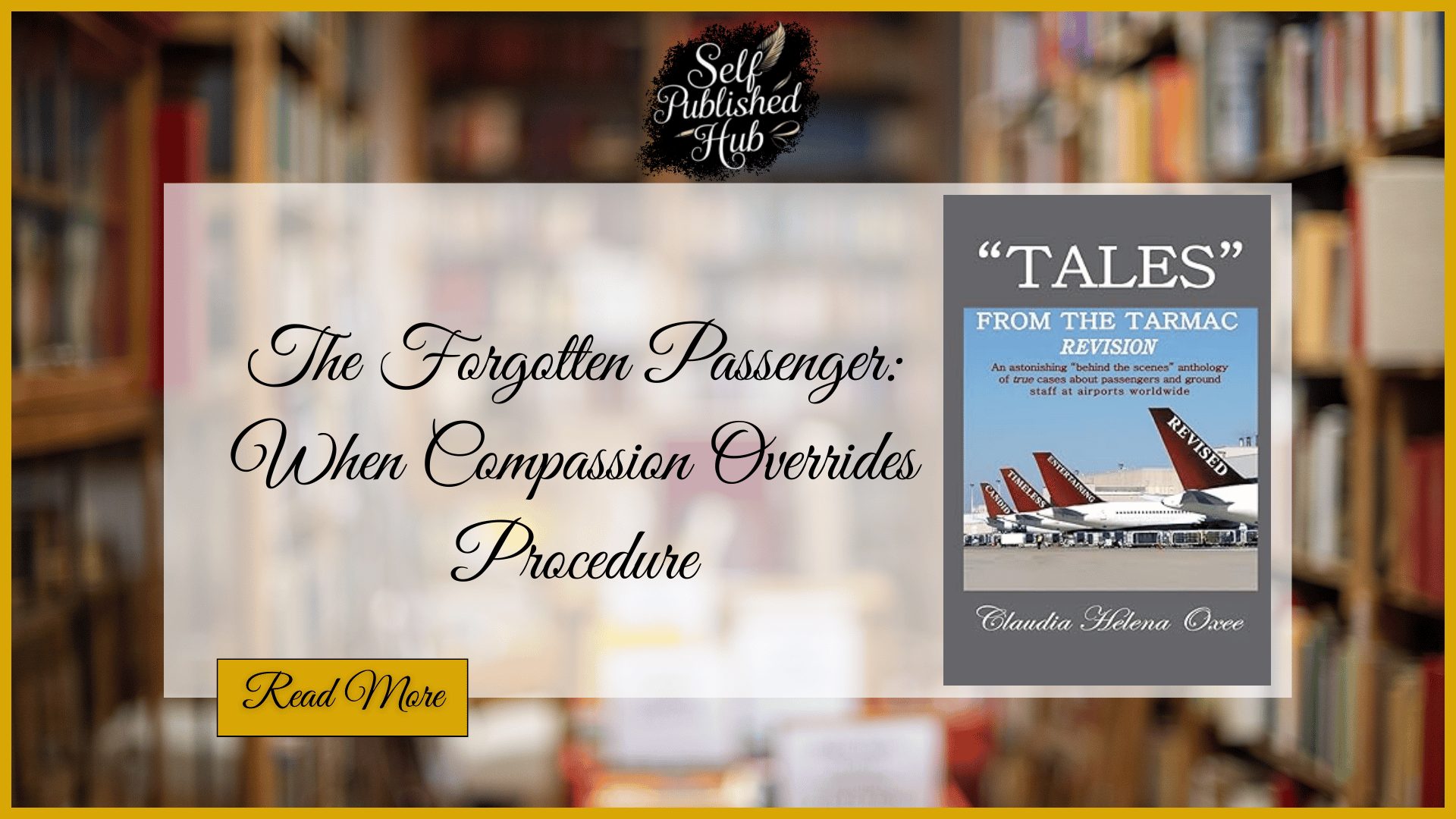
In Tales From the Tarmac: Revision by Claudia Helena Oxee, readers are invited behind the scenes of airline operations, where the real drama is not always mechanical but human. Among the most powerful stories are those involving the forgotten passenger. Not forgotten because they were invisible, but because they were overwhelmed, lost, grieving, confused, or simply unable to navigate the system alone.
Airports can be disorienting even for seasoned travelers. For someone elderly, ill, emotionally distressed, or traveling during a personal crisis, the experience can become paralyzing. Announcements blur. Signs feel cryptic. Crowds move too fast. A boarding gate closes, and suddenly, one individual stands alone in a vast terminal.
From a standpoint, the rules are clear. Boarding closes at a specific time. Documentation must be correct. Security requirements cannot bend. Flights cannot be delayed indefinitely. These standards protect everyone. Yet the human reality unfolding in front of a gate agent or station manager is rarely simple.
What happens when a passenger arrives breathless at the gate after caring for a sick relative? What if someone misses a call because they were translating for a family member who does not speak the language? What if a traveler freezes in fear, overwhelmed by flying or by life itself?
This is where aviation professionals face one of their greatest challenges. The tension between policy and empathy.
Compassion in these moments does not mean recklessness. It does not mean ignoring safety. It means assessing the situation with discernment. It means asking questions before making assumptions. It means recognizing that behind every boarding pass is a story.
The forgotten passenger is often the one who falls through the cracks of efficiency. They are not loud enough to demand attention. They may not understand how to advocate for themselves. They might simply stand still while the world rushes forward.
In stories drawn from real experiences on the tarmac, we see how small acts of humanity can transform outcomes. A gate reopened for a few seconds. A supervisor making a discretionary call. A staff member walking someone personally to their connection instead of pointing down a corridor. These gestures do not dismantle procedure. They humanize it.
There is risk in choosing compassion. Delays can ripple across schedules. Colleagues may question the decision. Management may scrutinize exceptions. Yet leadership in aviation often requires judgment beyond the manual. It demands emotional intelligence alongside operational precision.
The forgotten passenger reminds us that air travel is not merely logistics. It is a convergence of grief, hope, celebration, anxiety, reunions, and farewells. Weddings, funerals, new beginnings, and final goodbyes all pass through the same departure gates.
When compassion overrides procedure in the right moment, something remarkable happens. The airport, often perceived as impersonal, becomes deeply human. The staff member becomes more than a uniform. They become a bridge between structure and empathy.
Tales From the Tarmac: Revision by Claudia Helena Oxee captures these moments with honesty and insight. It reveals the emotional complexity behind airline operations and reminds readers that even in high pressure environments, humanity matters.
The forgotten passenger may board late, reroute, or miss a flight entirely. But when compassion intervenes, they are no longer invisible. And sometimes, that makes all the difference.
Start listening now, available on Amazon: https://www.amazon.com/dp/B0G873KG9D/