Every couple argues.
Even the happiest, most loving partners disagree, sometimes. They misunderstand each other. They get irritated. They say the wrong thing at the wrong time. Conflict is not the sign of a failed relationship; it is part of growing, learning and negotiating.
But there is a major difference between couples who grow through conflict and couples whose relationships are damaged by it.
That difference often comes down to one question: are you trying to solve the problem or are you trying to win the argument?
Winning an argument can feel satisfying in the moment. You prove your point. You defend your side. You expose the flaw in your partner’s thinking. You’ve proven your partner is wrong. You walk away feeling victorious.
But what did you actually win? In truth, when arguing about who is right and who is wrong, the relationship always loses.
If your partner feels dismissed, criticized, embarrassed or emotionally unsafe, the relationship connection is harmed. The problem may remain unresolved, but now it is buried beneath another layer of hurt.
In love, being right is not about loving.
Many couples get trapped in right-versus-wrong debates. One partner says, “That’s not what happened.” The other says, “Yes, it is.” One insists, “You always do this.” The other fires back, “No, I don’t.” Soon, the original issue disappears and the argument becomes a battle over memory, blame and self-protection. Non-effective and hurtful debates include blame, criticism and making each other wrong.
When pain is the motivator, the goal shifts from understanding each other to defeating each other.
Real problem-solving feels different. It begins with the belief that both partners’ feelings matter. It asks, “What caused hurt?” instead of “Who is to blame?” It focuses less on proving a point and more on protecting the connection and good feeling.
This does not mean avoiding difficult conversations. It does not mean pretending everything is fine. In fact, healthy love requires honest communication and the strength to have the difficult conversations. But honesty without care can be hurtful. Truth is weaponized when practiced without sensitivity.
A couple solving a problem might say:
“I want to understand why this hurt you.”
“Here is what I felt in that moment.”
“How can we do it differently next time?”
“How can we handle this without hurting each other?”
A couple trying to win might say:
“You’re too sensitive.”
“That’s ridiculous.”
“You never listen.”
“Why are you so unreasonable?”
The words matter, but the emotional intention behind them matters even more. The best ways to solve a problem do not include hurting your partner.
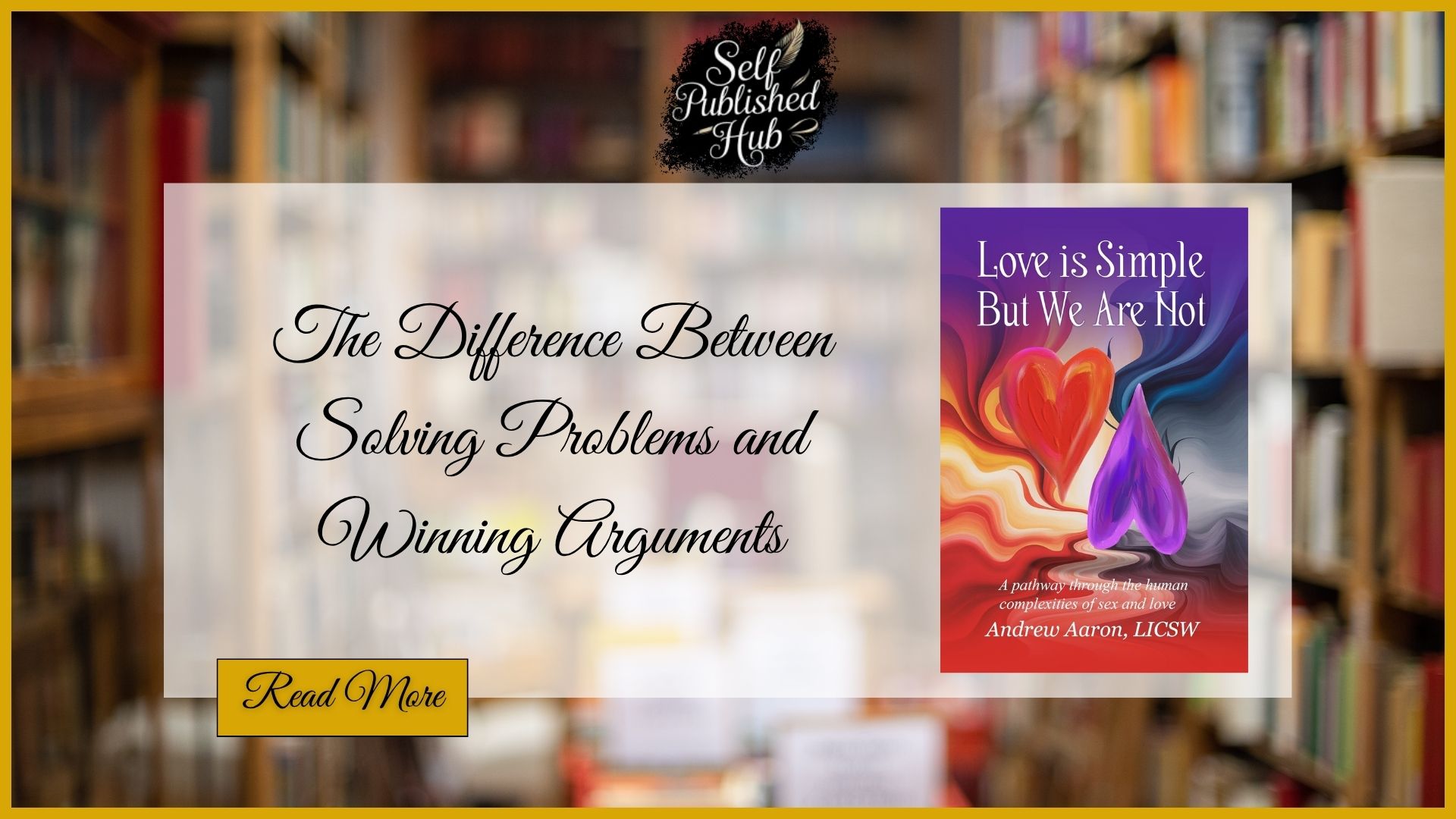
In Love is Simple, But We Are Not: The Pathway Through the Human Complexities of Sex and Love, Andrew Aaron, LICSW explores the deeper emotional patterns that make love so challenging and offer suggestions to do it better. The book reminds readers that love itself may be simple, but human beings bring fear, pride, pain, expectations, old wounds and defensiveness into every relationship.
That is why arguments are rarely just about dishes, money, sex, parenting or schedules. Beneath the surface, they are often about feeling unseen, feeling unimportant, controlled, rejected or lonely.
When couples learn to look beneath the argument, they begin to find the pain of the real problem.
The strongest relationships are not built by partners who never disagree. They are built by partners who refuse to turn disagreement into emotional hurtfulness. They choose understanding over victory. They choose repair over pride. They choose the relationship over the argument. They choose good feeling over being right.
Because in love, the real victory is not proving your partner wrong, but offering compassionate understanding.
The real victory is finding your way back to each other.
For readers seeking deeper insight into love, communication, intimacy and emotional growth, Andrew Aaron’s Love is Simple, But We Are Not offers a thoughtful pathway through the human complexities that shape every relationship.