Crime fiction, thriller, and mystery are often grouped together, yet each carries its own distinct identity. Understanding the differences between them helps readers choose what suits their taste and allows writers to shape their stories with clarity and purpose.
Crime fiction is the broadest category. It acts as an umbrella that includes both mystery and thriller, along with other subgenres such as police procedural and noir. The defining feature of crime fiction is its focus on crime and its impact. This includes the investigation, the criminal act, and often the consequences that follow. The story may centre on law enforcement, criminals, or even victims. What matters is that crime drives the narrative.
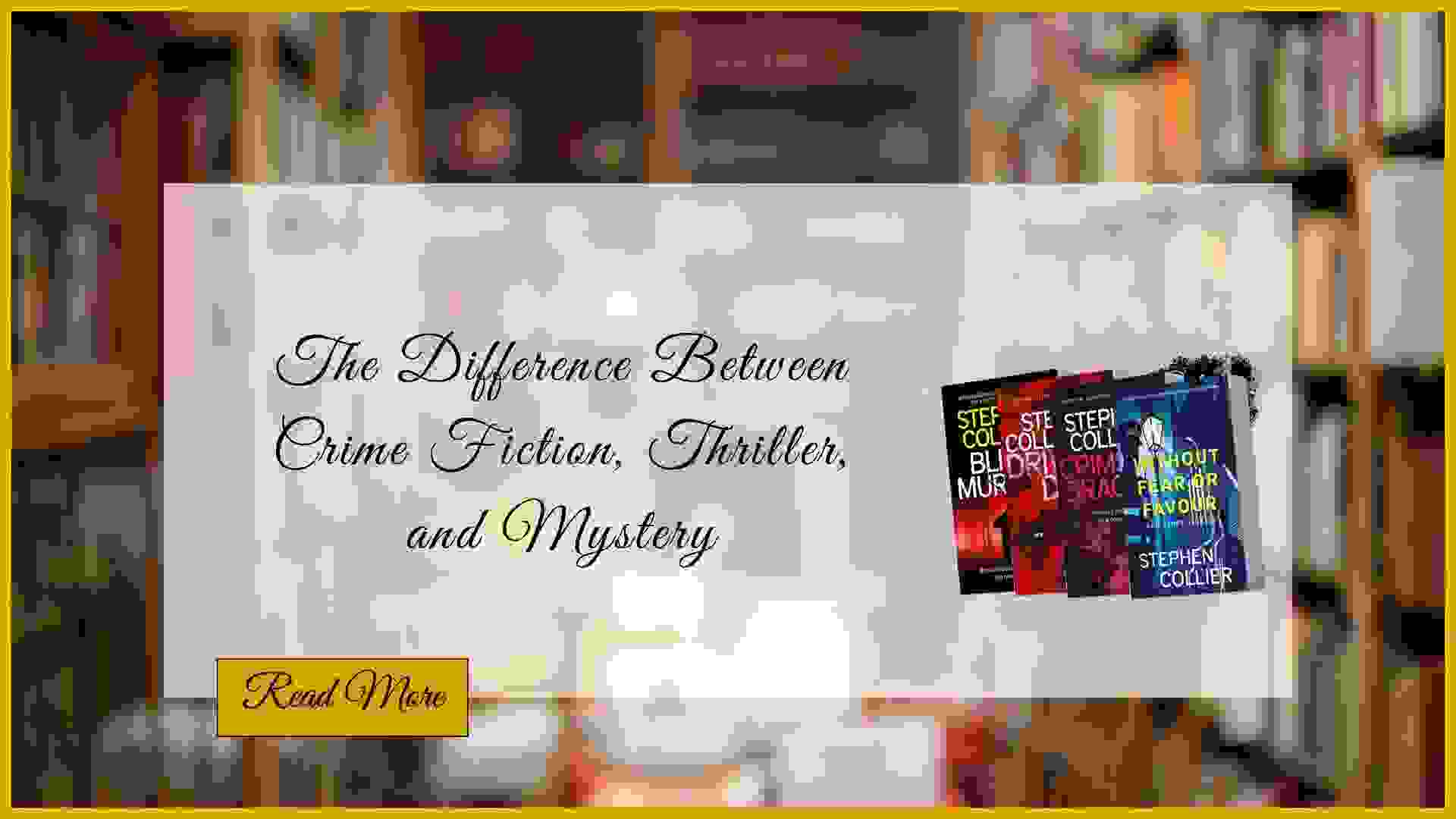
Stephen Collier’s work sits solely within crime fiction, particularly in the police procedural space. His novels explore not just the crime itself, but the process of solving it and the weight it takes on those involved. In Blind Murder, the story sees how a past crime continues to shape lives years later. The focus is not only on solving the case, but on the emotional and professional consequences that follow. This intensity is a defining trait of crime fiction.
Mystery, on the other hand, is more specific in its structure. It revolves around a central question, usually who committed the crime. The narrative is built like a puzzle, with clues, suspects, and red herrings placed throughout the story. The reader is invited to solve the crime alongside the protagonist. The satisfaction comes from unfolding the truth and seeing how all the pieces fit together.
In a mystery, the emphasis is on deduction and reasoning. The pacing is often measured, allowing time for clues to be examined and connections to be made. The tension comes from curiosity rather than urgency. Readers are driven by the desire to understand rather than the need to escape danger.
Thrillers take a different approach. They focus on tension, urgency, and high stakes. While a crime is usually at the centre, the story is less about solving it and more about stopping it or surviving it. The pacing is faster, the stakes are higher, and the danger is often immediate. The protagonist may already know who the antagonist is, but the challenge lies in preventing the outcome.
In Driving Dead, elements of thriller are evident as the investigation into drug related deaths escalates. The sense of urgency grows as more lives are at risk, and the pressure on the characters intensifies. Similarly, Crimson Dragon blends crime fiction with thriller elements by introducing international crime and escalating danger. The narrative moves quickly, with shifting locations and rising tension that keeps the reader engaged.
The key difference lies in the reader’s experience. Mystery invites the reader to think and solve. Thriller pushes the reader to feel tension and urgency. Crime fiction provides the broader framework that can include both approaches while also exploring deeper themes such as morality, justice, and human behaviour.
These genres often overlap, and many modern novels blend elements from each. This combination can create richer and more dynamic stories. Stephen Collier’s books demonstrate this balance, combining the investigative depth of crime fiction, the puzzle like structure of mystery, and the intensity of thriller.
For readers, understanding these distinctions enhances the reading experience. It allows them to recognise what draws them in, whether it is the challenge of solving a case, the excitement of high stakes danger, or the realism of investigative work. For writers, it provides a foundation for crafting stories that meet expectations while still offering something unique.
Read these books now on Amazon: https://www.amazon.co.uk/stores/Stephen-G.-Collier/author/B00L4JZ7P4