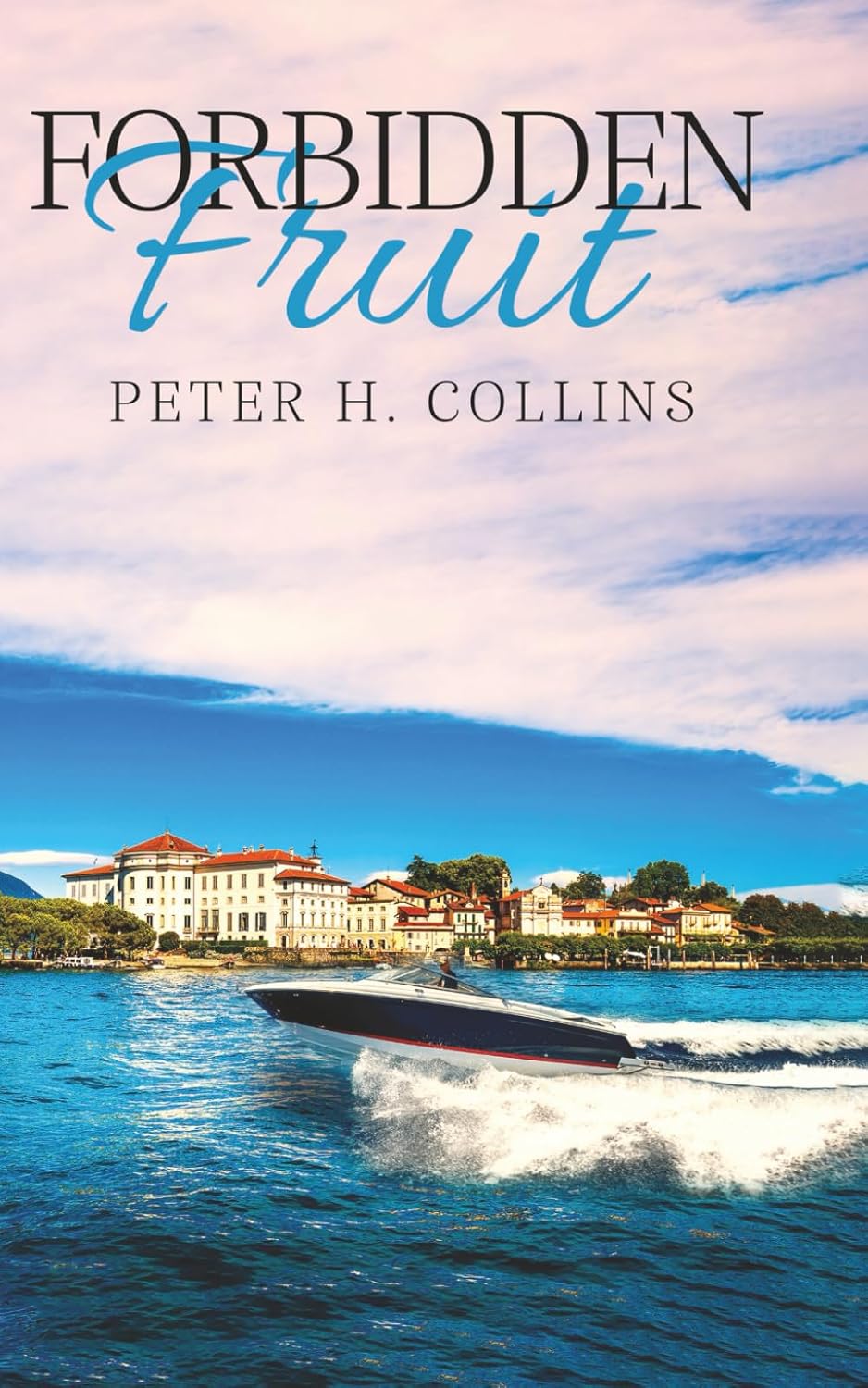
In Forbidden Fruit by Peter H. Collins, a scene unfolds that feels like both a brush with destiny and a trip through the golden age of cinema. The protagonist, lying in a hospital bed in a vulnerable state, finds himself unexpectedly entranced by the introduction of a nurse—Sister Maria. But it’s not just her name that stirs him. It’s what that name unlocks in his imagination that makes this moment resonate far deeper than the gentle touch of a caregiver.
From the very second she introduces herself—”I am Sister Maria, and I am here to look after you and attend to your every need”—the protagonist’s mind unravels like a reel of classic film scenes. He is not merely listening to the nurse’s words; he is watching an internal movie, projecting a theater of memories and romanticized ideals onto her. In an instant, Sister Maria becomes more than just a woman in a uniform—she becomes a muse.
First, his mind leaps to Julie Andrews, the singing governess from The Sound of Music. The character of Maria, with her innocence, strength, and unwavering kindness, is a fitting projection onto the nurse beside him. It’s not hard to imagine why this association surfaces—Julie Andrews’ Maria brought light into a dark household, just as this nurse, with her soothing presence, brings comfort into the sterile quiet of the hospital room.
But then his mind takes a romantic turn, drifting from the Austrian hills to the streets of New York City. Suddenly, the nurse is no longer the innocent governess but the luminous Maria from West Side Story, portrayed by Natalie Wood. And it’s not just the character this time—it’s the music. “The most beautiful sound I ever heard… Maria…” He recalls the iconic lyric with a reverence that suggests his emotions are no longer under rational control. Her name becomes a song. Her presence—a symphony.
What’s compelling about this scene in Forbidden Fruit is not just the humor and charm of these cinematic associations, but what they reveal about the protagonist himself. We are looking into the mind of a man who, despite his physical state, has a vivid imagination and a deeply emotional core. In a space where others might simply see a nurse performing her duties, he sees a heroine, a symbol, a source of comfort wrapped in nostalgia.
When Maria repeats her line—“I shall look after you and attend to your every need”—it’s almost as if time slows down. The repetition allows his mind to double down on the fantasy, and suddenly, what could have been a routine medical interaction takes on a cinematic glow. She takes his pulse, and fittingly, it quickens—not because of illness, but because of enchantment.
There’s a gentle irony at play here, too. As readers, we’re aware that the protagonist’s thoughts may be exaggerated, even delusional. Yet we can’t help but smile at the endearing way he romanticizes the moment.
In a way, Forbidden Fruit uses this moment to remind us of the power of names, the force of memory, and the beauty of associations. The nurse is not Julie Andrews or Natalie Wood, but for a brief moment, she becomes the amalgamation of every warm, loving, nurturing woman the protagonist has ever admired from a distance.
Sister Maria may have been just doing her job, but for the protagonist, she became a momentary goddess, a starlet stitched from celluloid dreams and whispered promises of care.