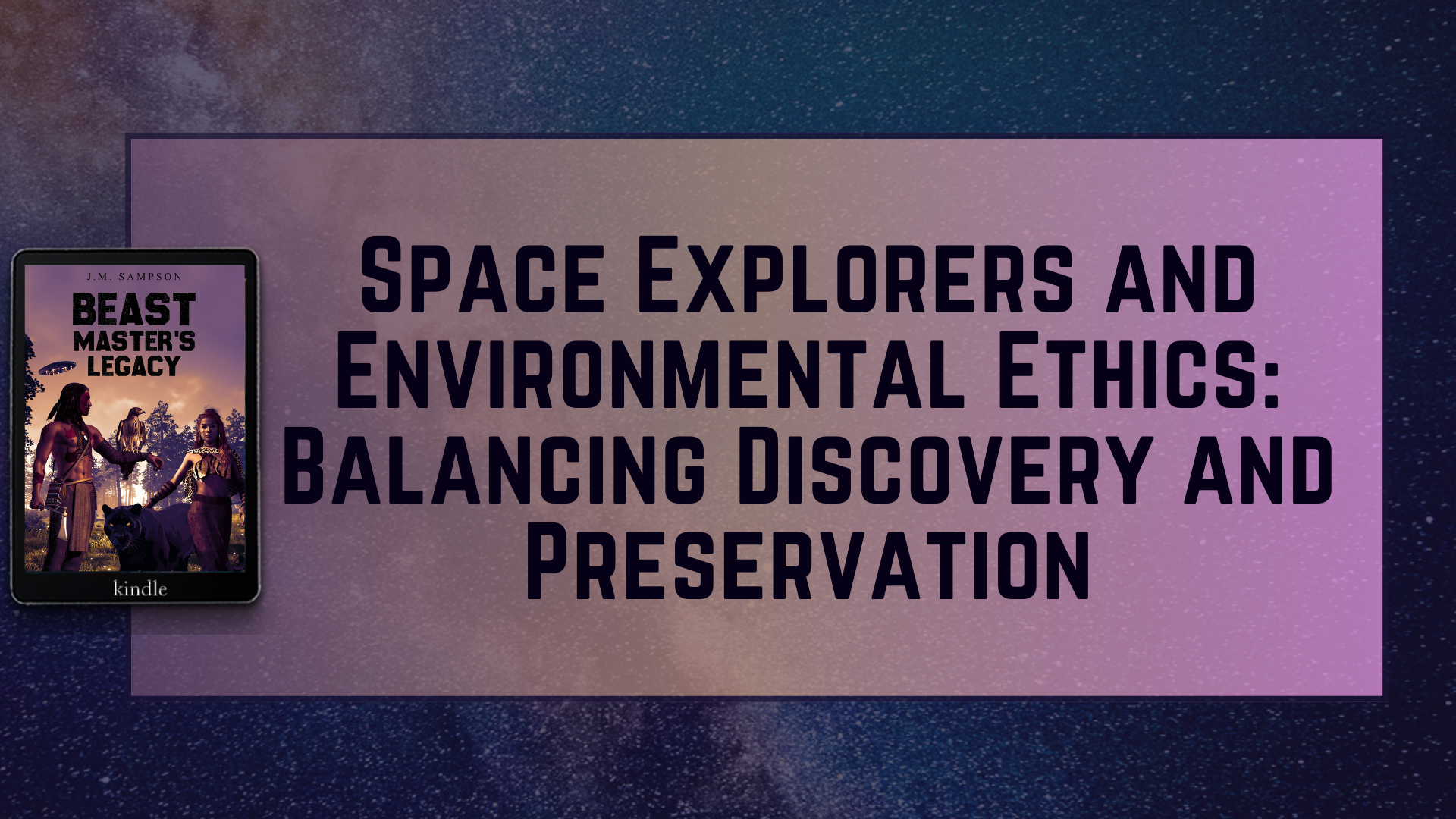
In Beast Master’s Legacy by J.M. Sampson, space exploration is not just about adventure—it’s a responsibility. Cade Storm, as a Beast Master, faces the dual challenge of discovering new worlds while protecting the animals and ecosystems he encounters. The novel delves into the ethical dilemmas of exploration, emphasizing the importance of balancing curiosity with preservation. Through Cade’s journey, Sampson offers a thought-provoking exploration of environmental ethics in the context of interstellar discovery.
Environmental Ethics in a Vast Galaxy
As Cade travels through the galaxy, he encounters planets like Io 4, an artificial world created by the forerunners, and regions threatened by the aggressive Xiks. These settings highlight the fragility of both natural and artificial ecosystems, illustrating the potential consequences of unchecked exploitation. Cade’s actions—whether ensuring the safety of Maska and Aeolus or safeguarding the habitats he visits—reflect a commitment to preservation over exploitation.
The novel portrays exploration as a double-edged sword. While it opens doors to new knowledge and resources, it also poses risks to the ecosystems that explorers encounter. This tension mirrors real-world environmental ethics, where the drive for scientific discovery must be balanced against the need to protect Earth’s biodiversity.
Cade’s Role as a Steward of the Galaxy
Cade’s role as a Beast Master places him in a unique position to bridge the gap between discovery and preservation. His telepathic bond with Maska and Aeolus deepens his understanding of the interconnectedness of life, reinforcing the need for ethical stewardship. For Cade, exploration is not about conquering new worlds but about coexisting with the life forms that inhabit them.
One of the novel’s most poignant moments occurs when Cade recognizes the need to protect Io 4’s ecosystem, despite its artificial origins. This realization reflects a broader theme: the value of all life, whether created naturally or artificially. Cade’s actions demonstrate that respect for the environment transcends species and origins, offering a model of responsible exploration.
Parallels to Real-World Environmental Concerns
The environmental themes in Beast Master’s Legacy resonate with contemporary issues on Earth, such as habitat destruction, climate change, and the ethical treatment of animals. Cade’s commitment to protecting ecosystems serves as a reminder that exploration—whether of space or our own planet—comes with ethical obligations. Just as space agencies must consider the environmental impact of their missions, individuals and nations must prioritize the preservation of Earth’s ecosystems in the face of development and progress.
Discovery and Preservation: A Delicate Balance
Through Cade’s journey, Beast Master’s Legacy illustrates the delicate balance between discovery and preservation. The novel reminds readers that exploration is not inherently destructive but requires a conscious effort to minimize harm and respect the environments we encounter. Cade’s story serves as a call to action, urging explorers—both fictional and real—to embrace their role as stewards of the worlds they discover.
In the end, Beast Master’s Legacy challenges readers to rethink the ethics of exploration. By placing preservation at the heart of Cade’s journey, Sampson offers a vision of discovery that is not only thrilling but also deeply responsible. This perspective encourages readers to consider how their own actions, on Earth or beyond, can contribute to a future where exploration and preservation go hand in hand.