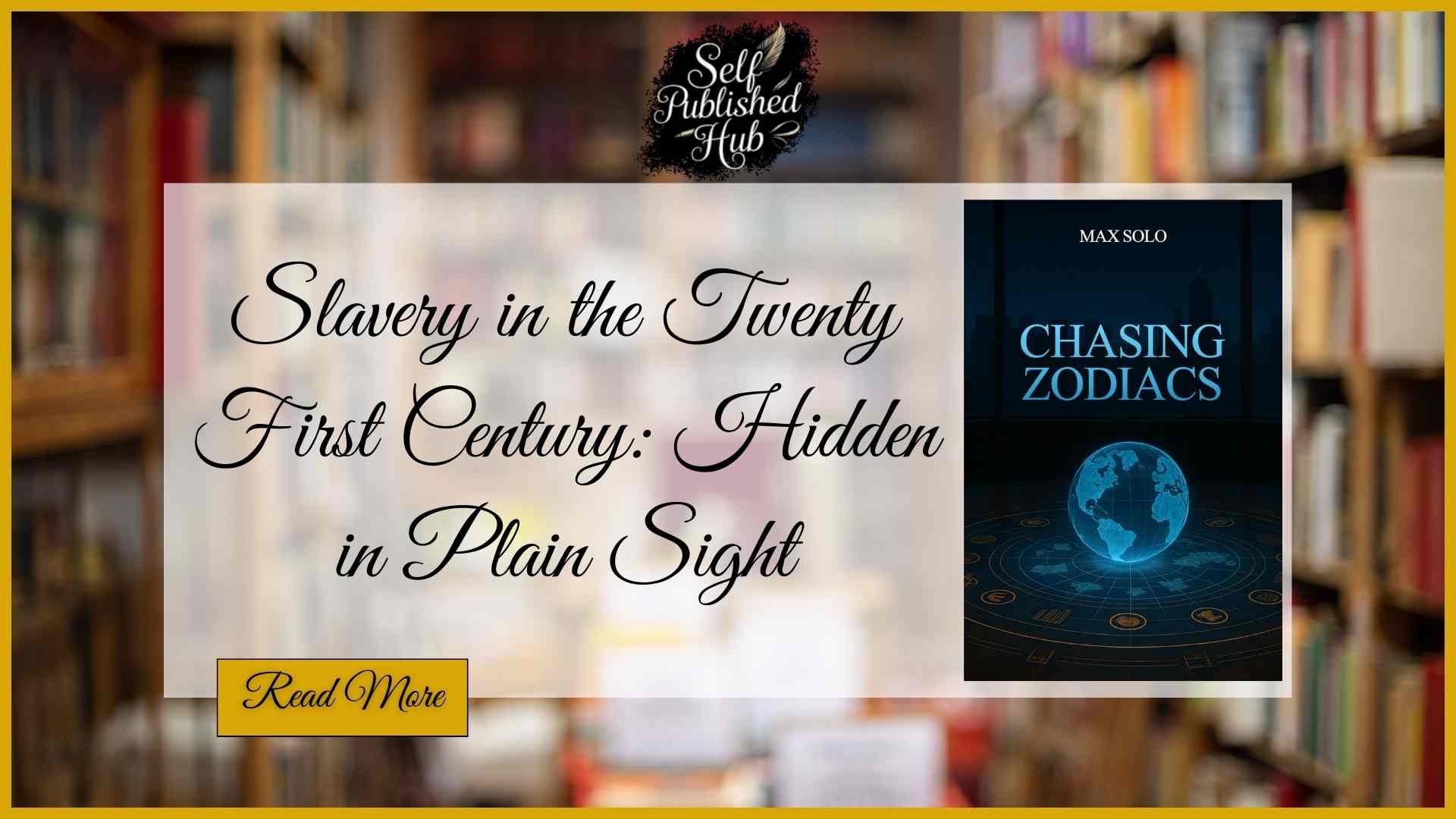
In Chasing Zodiacs: To Repair the Soul of Humanity by Max Solo, slavery is not presented as a replica of history but as a living, adaptive system embedded seamlessly into modern life. It does not wear chains or announce itself with brutality alone. Instead, it hides behind contracts, supply chains, algorithms, corporate structures, and geopolitical convenience. The novel forces the reader to confront a disturbing reality. Slavery in the twenty first century thrives precisely because it is invisible to those who benefit from it.
The opening premise that one in every 250 people on Earth lives in some form of modern slavery reframes the entire narrative. This statistic is not background color. It is the moral foundation upon which the story stands. The characters operate in a world that depends on coerced labor, trafficked bodies, economic entrapment, and psychological domination, yet they rarely acknowledge it directly. Slavery is normalized through distance. It exists elsewhere, outsourced geographically and emotionally, allowing denial to flourish.
What makes the depiction so unsettling is its ordinariness. Victims are not hidden in distant compounds alone. They are cleaners, factory workers, domestic staff, digital laborers, emigrants, and exploited professionals trapped by debt, threats, or legal ambiguity. The book exposes how modern slavery often masquerades as opportunity. Education promises, employment contracts, relocation offers, and technological advancement become tools of control rather than liberation.
The Zodiac Programme embodies this dynamic on a global scale. It is not merely a criminal enterprise but an ecosystem that relies on human resources. People are reduced to assets, liabilities, or noise. The most gut-wrenching aspect is that this system is sustained not by chaos but by order. Security is precise. Financial flows are clean. Slavery survives because it is efficient and profitable within systems designed to reward outcomes over ethics.
Max Solo’s investigation highlights another uncomfortable truth. Modern slavery persists because it is structurally convenient. Governments benefit from cheap labor and plausible deniability. Corporations benefit from reduced costs and fragmented accountability. Consumers benefit from affordability and speed. Responsibility dissolves across layers of bureaucracy until no single actor feels culpable. The result is a crime without a villain in plain sight.
The psychological impact on those who uncover this reality is central to the narrative. Knowledge becomes a burden rather than a virtue. Once seen, it cannot be unseen. Max is not haunted by isolated acts of cruelty but by scale and repetition. The horror lies not in exception but in pattern. Slavery is not an anomaly. It is a feature.
The novel also challenges the reader to reconsider freedom itself. Many of the enslaved are not physically restrained. They are bound by debt, immigration status, surveillance, threats to family, or algorithmic scoring systems that determine access to work and survival. Control has evolved. Violence is still present, but it is often implied rather than enacted, making resistance harder and escape rarer.
By placing slavery within high level international crime, finance, and technology, Chasing Zodiacs rejects the comforting myth that progress naturally leads to moral advancement. Innovation without ethics simply refines exploitation. Artificial intelligence, data analysis, and automation do not eliminate slavery. They optimize it.
In exposing this reality, Chasing Zodiacs: To Repair the Soul of Humanity does not offer easy solutions. Instead, it delivers a necessary reckoning. Slavery endures not because humanity lacks knowledge, but because it lacks the will to disrupt systems that reward looking away.
Head to Amazon to purchase your copies: https://www.amazon.com/dp/B0FVGF9G9D/.